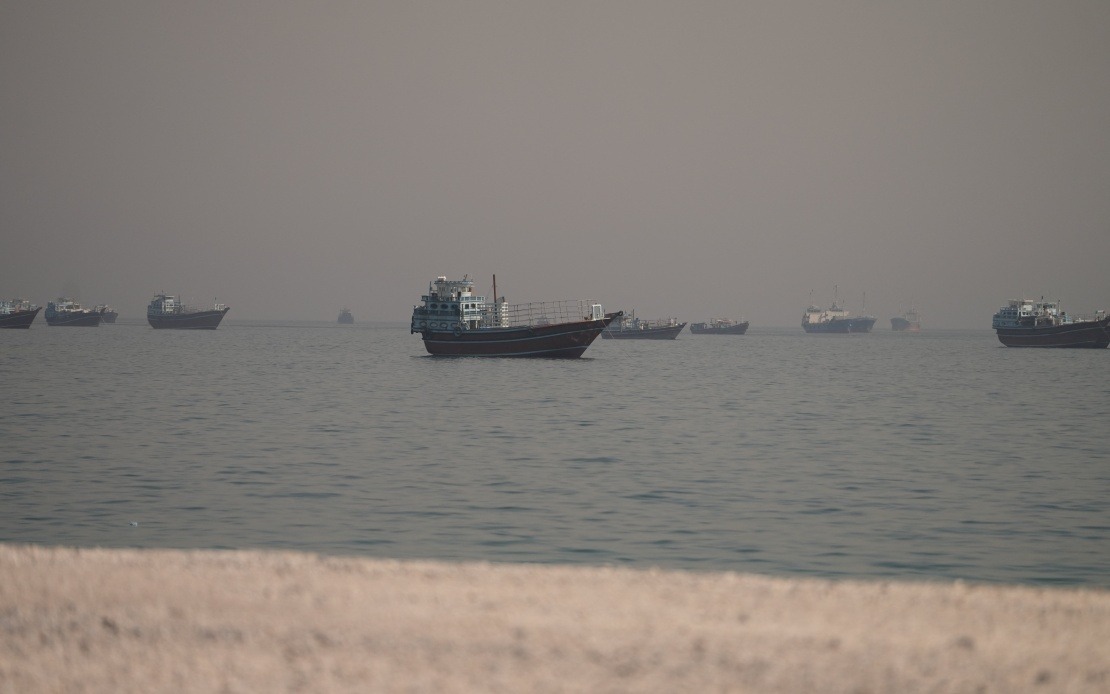
France is banking on Syria as a viable alternative energy corridor to shield European markets from disruptions at the Strait of Hormuz, a critical chokepoint through which roughly one-third of global seaborne oil passes annually. The assessment comes from Foreign Minister Jean-Noel Barrot, who outlined Paris's strategic thinking during an interview with TF1 on Thursday, just days after accompanying President Emmanuel Macron on a high-profile visit to Damascus. The initiative reflects growing European anxiety over energy security, particularly as geopolitical tensions between Washington and Tehran have repeatedly threatened to destabilise one of the world's most vital maritime passages.
Barrot's remarks underscore a broader French pivot toward securing diversified energy pathways that could insulate Western economies from single-point failures. The minister emphasised that repeated disruptions and blockages at the Hormuz strait have exposed the fragility of over-reliance on narrow geographic corridors for oil supply. By cultivating multiple transportation routes, Barrot suggested, major trading nations could better withstand regional crises without experiencing sharp price spikes or supply shortages that ripple through global markets. This diversification strategy has become increasingly urgent as climate change and geopolitical volatility make traditional supply chains less predictable.
Syria's potential as a transit hub hinges on the country's recent political transformation. Barrot specifically highlighted that Syria, having undergone regime change roughly eighteen months prior with the overthrow of Bashar al-Assad, is now in a phase of reunification and institutional strengthening. This shift has created what Paris views as a window of opportunity to engage Damascus diplomatically and economically, positioning the nation as a stabilising force in Middle Eastern energy logistics. The collapse of the Assad government fundamentally altered France's calculus regarding Syria, opening pathways for cooperation that were previously politically untenable for Western nations.
The Macron visit to Damascus, which Barrot accompanied, served as a tangible manifestation of France's recalibration toward post-Assad Syria. Rather than maintaining distance from a war-torn nation, the French presidency opted to demonstrate solidarity with Syrian reconstruction efforts and signal willingness to deepen bilateral ties. Barrot stated unequivocally that France stands with the Syrian people and seeks to expand collaboration across multiple sectors, from security and governance to economic development and trade. This diplomatic overture carries symbolic weight in a region where Western nations have historically exercised restraint following the Assad era.
For Southeast Asian observers, France's energy diplomacy holds particular relevance. Malaysia and other ASEAN nations similarly depend on stable maritime corridors and face vulnerability to Hormuz disruptions, with petroleum products and liquefied natural gas transiting the strait comprising vital import sources. Any successful diversification of Middle Eastern oil routes could influence global energy pricing and availability for the region. Additionally, France's engagement with Syria reflects broader patterns among major powers seeking to expand influence and secure resources in the Middle East, a dynamic that shapes competition for regional partnerships and investment opportunities across Asia.
The economic dimension of France's Syria strategy extends beyond energy infrastructure. Barrot explicitly committed to strengthening trade relationships and fostering economic cooperation with Damascus, suggesting that reconstruction contracts and investment opportunities may follow diplomatic recognition. French companies could potentially benefit from infrastructure projects, port development, and industrial partnerships as Syria stabilises. This commercial calculus mirrors similar approaches by other nations viewing post-conflict Syria as an emerging market with significant untapped potential, though security concerns and international sanctions complexities remain substantial obstacles.
Barrot's framing of Syria as a "new regional hub" reflects confidence that the country can transcend its recent history of civil conflict and external intervention. Achieving this transformation requires not merely political stability but functional governance, security sector reform, and rehabilitation of critical infrastructure including pipelines and port facilities. France's commitment to supporting this trajectory indicates belief that Western engagement and economic incentives can help anchor Syria within a pro-Western regional framework, potentially countering influence from other powers including Russia, Iran, and China who have maintained significant roles in Syrian affairs.
The timing of France's Syria initiative coincides with broader European efforts to reduce energy dependence on problematic suppliers and unstable routes. The European Union has actively pursued alternative natural gas sources and renewable energy expansion following disruptions related to Ukraine and Russian sanctions. Syria's geographic position, linking Middle Eastern oil fields to Mediterranean ports, theoretically positions it as a valuable node in a diversified European energy supply network. However, translating this potential into operational pipelines and shipping arrangements requires substantial infrastructure investment, international coordination, and resolution of thorny questions regarding sanctions compliance and Western security interests.
Regional reactions to France's Syria engagement remain mixed. Gulf states, particularly Saudi Arabia and the United Arab Emirates, have also begun cautious normalisation with Damascus, recognising that isolating Syria indefinitely serves neither their strategic interests nor regional stability. Conversely, Israel and some Western nations remain concerned about Iranian influence in Syria and Syrian government reliability. France's diplomatic approach appears designed to navigate these sensitivities by emphasising reconstruction, economic cooperation, and Syrian sovereignty rather than security arrangements that might alienate regional actors or raise concerns among Western allies regarding potential strategic concessions to Damascus.
The practical implementation of Syria as an alternative oil corridor faces substantial hurdles beyond diplomatic goodwill. Existing pipeline infrastructure requires modernisation or reconstruction in many cases, requiring tens of billions in investment. Port facilities in Syria would need upgrading to handle increased throughput. International shipping companies remain cautious about Syria routes given ongoing security concerns, residual sanctions, and insurance complications. Nevertheless, Barrot's public articulation of this strategic objective signals that France, as a permanent UN Security Council member with significant diplomatic weight, views Syria rehabilitation as both feasible and strategically important for European interests.
Barrot's statement that France stands with the Syrian people carries implications extending beyond energy policy. It suggests a willingness to move beyond the frozen conflict posture that characterised Western policy during the Assad period, acknowledging that rebuilding Syria serves broader European security and economic interests. This reorientation requires delicate balance between engagement and caution, particularly regarding verification that new Syrian authorities meet international norms regarding human rights, governance, and cooperation with global institutions. France's approach appears to bet that incentivising positive behaviour through economic engagement proves more effective than continued isolation.
The broader significance of France's Syria initiative lies in how it illustrates major power competition for influence and resources in the Middle East amid global energy insecurity. As renewable transitions progress unevenly and fossil fuel demand persists, controlling alternative supply routes remains strategically valuable. For Malaysia and Southeast Asia, this development underscores how Middle Eastern geopolitics and Western energy strategies directly affect regional prosperity and stability. Shifts in global oil routing, pricing mechanisms, and supply reliability cascade through Asian economies dependent on petroleum imports, making understanding these strategic calculations essential for regional policymakers navigating an increasingly complex geopolitical landscape.

