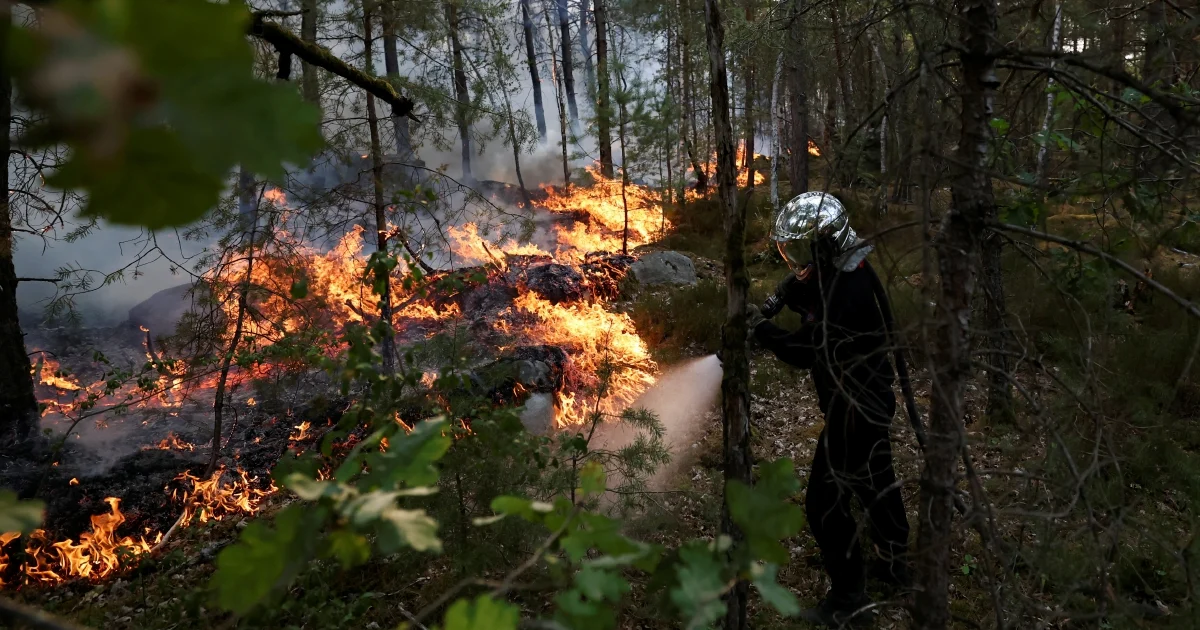
Authorities in France confronted a significant environmental crisis on Monday as two major wildfires tore through woodlands in the region south of Paris, destroying expansive tracts of forest and prompting swift law enforcement action. The fires, which engulfed more than 1,300 hectares of vegetation, marked a concerning escalation in fire-related emergencies affecting the nation's natural heritage and required intensive firefighting operations to contain the spread.
The blazes, which impacted the Arbonne-la-Foret area and its surroundings, emerged at a critical juncture when Europe continues grappling with elevated wildfire risks driven by climate factors and seasonal conditions. The sheer scale of the destroyed forest—spanning over 1,300 hectares—underscores the ferocity and rapid progression of the flames, raising immediate concerns about the long-term ecological consequences for the region's biodiversity and forest ecosystems.
Investigative efforts intensified following the outbreak, with police swiftly moving to apprehend individuals suspected of deliberately initiating the fires. Two arrests were completed during the emergency response, signalling that authorities viewed the incidents not merely as natural catastrophes but as potential criminal acts requiring prosecution. The swift apprehension suggests police possessed evidence suggesting deliberate fire-setting rather than accidental ignition from natural causes.
The implications of suspected arson carry particular weight in France, where forests represent crucial environmental assets, carbon sinks, and repositories of biodiversity. Deliberately setting fires that destroy such vast areas constitutes serious criminal conduct with profound consequences extending far beyond immediate property damage. Such acts strike at the heart of the nation's environmental stewardship objectives and climate mitigation commitments.
From a regional Southeast Asian perspective, the French wildfire crisis resonates with growing concerns about transboundary environmental degradation affecting our own region. Malaysia and neighbouring countries have experienced repeated wildfire emergencies—notably the Indonesian forest fires that generated haze blanketing the peninsula—demonstrating how environmental disasters transcend borders and national boundaries. The French precedent illustrates that developed nations equally confront challenges in fire management and prevention, suggesting universal vulnerabilities in forest protection systems.
The arrest of suspected arsonists points to a concerning dimension of modern environmental crime. Whether motivated by negligence, property disputes, or ideological motivations, deliberate fire-setting represents an insidious threat to forest preservation globally. Understanding the circumstances driving individuals toward arson becomes essential for developing prevention strategies that extend beyond merely technical firefighting capabilities.
French firefighting services mobilised substantial resources to contain the advancing flames and prevent further territorial expansion. The scale of deployment reflected the severity of the emergency and the determination to limit ecological damage. Success in containing such fires depends on coordinated inter-agency responses, adequate equipment, personnel expertise, and favourable weather conditions—elements that remain perpetually challenged during peak fire seasons.
The timing and location of these fires near Paris—France's densely populated capital region—heightened concerns about potential threats to neighbouring communities and infrastructure. Although initial reports focused on forest devastation, authorities would have assessed risks to human settlements, transportation networks, and essential services, necessitating evacuation measures and emergency protocols. The proximity to urban zones complicates firefighting operations and multiplies emergency management complexities.
Ecologically, the destruction of 1,300 hectares represents a substantial setback for forest regeneration and carbon sequestration efforts. Ancient and mature woodlands accumulate decades or centuries of ecological maturation; their sudden loss through fire erases years of environmental development and disrupts habitat systems for countless plant and animal species. Recovery and restoration efforts will extend across years or decades, requiring substantial investment in reforestation initiatives and habitat restoration programmes.
The criminal dimension underlying suspected arson elevates this incident beyond simple environmental disaster reporting. Prosecutors will examine motives, methods, and evidence establishing criminal responsibility. If convictions materialise, sentencing frameworks may reflect societal concern about environmental crimes and the serious penalties attached to deliberate forest destruction. Such legal consequences communicate broader cultural values regarding environmental stewardship and natural resource protection.
Looking forward, the incident spotlights critical deficiencies in fire prevention, detection, and response systems affecting even wealthy democracies with advanced infrastructure. France, despite considerable resources and technological capabilities, confronted fires consuming 1,300 hectares—a sobering reminder that no nation possesses complete immunity from environmental emergencies. Enhanced vigilance, improved early warning systems, coordinated community participation in fire prevention, and accelerated investigation of suspicious fire origins represent essential components of comprehensive wildfire management strategies.
For Malaysian observers, the episode underscores the transnational character of environmental challenges and the imperative for robust regional cooperation in fire prevention, emergency response, and post-disaster recovery. Whether examining European forests or Southeast Asian landscapes, humanity confronts escalating fire risks demanding innovative approaches, international coordination, and unwavering commitment to environmental preservation across political boundaries.

