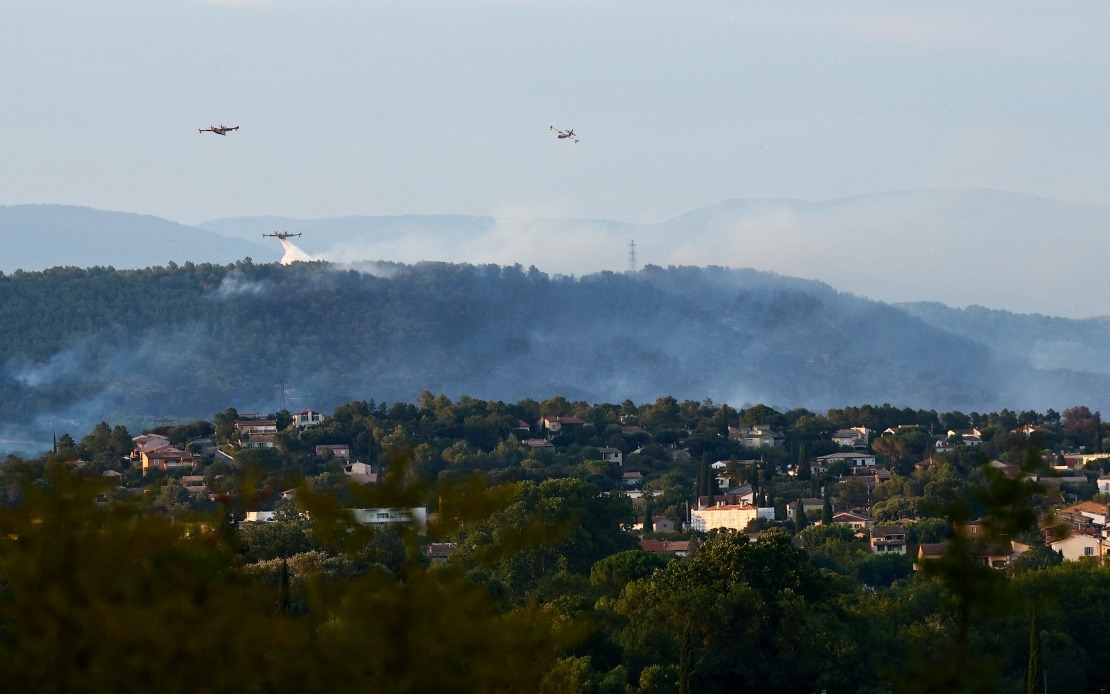
France is confronting a catastrophic wildfire season that has consumed nearly 40,000 hectares of forests and vegetation in the first seven months of 2026, Interior Minister Laurent Nunez announced this week. The scale of destruction marks a dramatic escalation compared to the previous year, with new fires erupting across the country on a daily basis. This mounting toll underscores the severe environmental and security challenges facing the European nation as climate-driven extreme weather events intensify.
The staggering acreage—equivalent to roughly 98,842 acres—reflects a crisis of unprecedented proportions in contemporary France. Nunez's disclosure came as firefighting crews continue battling active blazes across multiple regions, struggling against climatic conditions that show no signs of abating. The frequency of new ignitions has become a defining characteristic of this season, creating an exhausting cycle for emergency services and forestry management teams already stretched thin by the relentless demands of wildfire suppression.
President Emmanuel Macron characterized the situation in mid-July as the worst wildfire emergency France has experienced since the conclusion of World War II, a sobering assessment that carries significant weight given the nation's recorded history of natural disasters. This declaration positioned the current crisis alongside the most severe ecological and public safety challenges the country has faced in eight decades, emphasizing the extraordinary nature of the crisis and its potential long-term consequences for French landscapes and communities.
The underlying cause of this devastation is a relentless heat wave that has gripped much of France throughout the summer months. Temperatures have repeatedly climbed toward 40 degrees Celsius, with certain regions experiencing even more extreme conditions. This exceptional thermal environment has created ideal conditions for rapid fire spread and expansion, drying vegetation to tinder-like brittleness and overwhelming the moisture content that typically provides natural protection against combustion.
The meteorological dimension of this crisis became starkly apparent when France's national weather service issued unprecedented alerts across 72 of the nation's 96 administrative departments by the end of June—the highest number ever recorded in the country's modern climate monitoring history. This widespread warning coverage illustrated the geographic scope of the danger, indicating that the threat was not confined to isolated regions but rather constituted a national emergency affecting nearly three-quarters of French territory simultaneously.
For Malaysian and Southeast Asian observers, this European crisis offers cautionary lessons about climate vulnerability and disaster preparedness. Southeast Asia, already prone to transboundary haze from Indonesian forest fires and increasingly vulnerable to heat-related extreme weather events, may face similar challenges as global temperatures continue rising. The French experience demonstrates how rapidly wildfire situations can escalate when climatic conditions align unfavorably, overwhelming even well-resourced nations with advanced firefighting infrastructure and personnel.
The comparison between 2026 and preceding years reveals an alarming trend of intensification. The fact that current-year figures substantially exceed previous annual totals at the midpoint of the calendar year suggests that full-year statistics will represent a significant departure from historical norms. This trajectory raises questions about whether France is entering a new climate regime characterized by more frequent and severe fire seasons, a pattern that could reshape land management strategies and resource allocation for decades to come.
The daily emergence of fresh fire incidents points to systemic vulnerability rather than isolated incidents. When new blazes ignite repeatedly across a landscape, it indicates that underlying conditions remain conducive to spontaneous ignition or that human activities continue introducing ignition sources into an environment primed for rapid fire spread. This pattern complicates suppression efforts, as firefighting resources become fragmented across multiple simultaneous incidents rather than concentrated on containing major blazes.
The implications extend beyond immediate ecological damage. Wildfires of this magnitude threaten rural communities, displace residents, destroy infrastructure, degrade air quality across wide regions, and impose substantial economic costs through property loss, emergency response expenditures, and long-term ecosystem restoration requirements. Agricultural lands, forestry resources, and tourist infrastructure all face potential destruction, creating cascading economic effects throughout affected regions.
For policymakers and environmental planners throughout the Mediterranean region and beyond, the French situation underscores the urgency of climate adaptation strategies. Investments in fire prevention infrastructure, vegetation management, early warning systems, and emergency response capacity must accelerate to match the accelerating pace of climate-related extreme events. The 40,000-hectare figure is not merely a statistic but a measure of ecological transformation and a harbinger of challenges that will demand sustained attention and substantial resources.
Looking forward, France faces critical decisions about landscape management and climate resilience. The current wildfire season, however devastating, will ultimately inform policy responses and investment priorities for coming years. How authorities respond to this crisis—whether through enhanced prevention measures, improved firefighting coordination, or broader climate mitigation strategies—will determine the trajectory of French environmental resilience and set precedents for other nations confronting similar climatic pressures.

