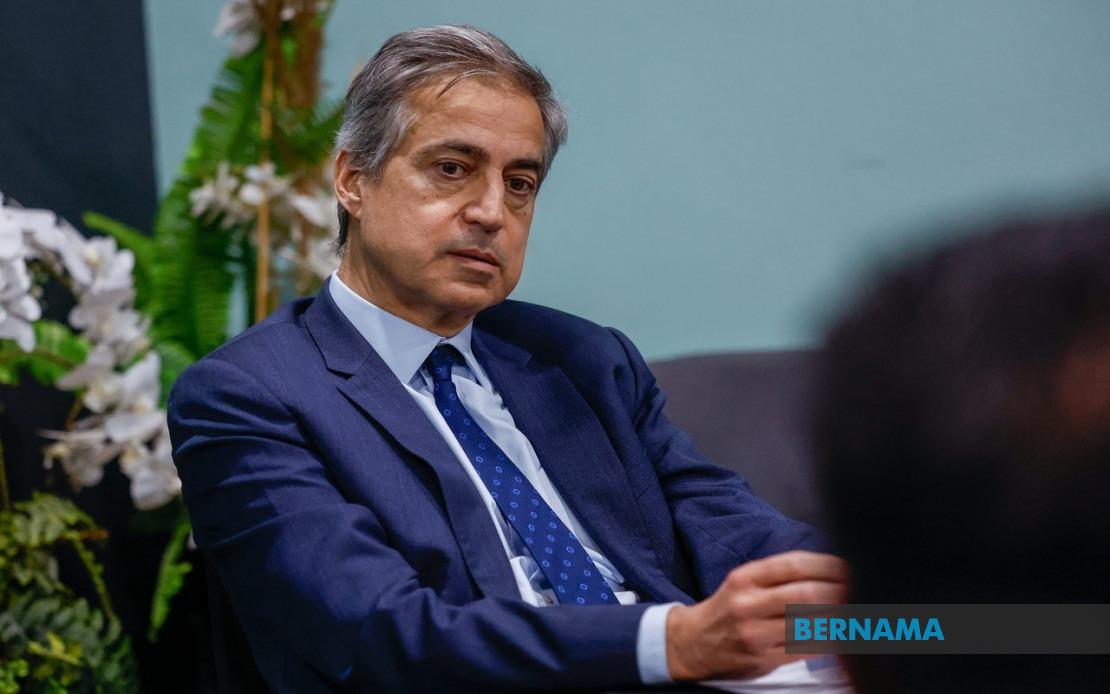
As geopolitical tensions reshape the international order, France and Malaysia are consciously positioning themselves as bridge-builders in an increasingly fractured world. French Ambassador to Malaysia Marc Abensour articulated this vision during remarks at the French National Day reception held at his residence in Kuala Lumpur on Tuesday evening, signalling that both nations view their deepening partnership as a stabilising force amid broader global uncertainty. The comments come at a moment when major powers are reasserting strategic interests across Asia, underscoring the significance of stable, cooperative relationships between established democracies in different regions.
The France-Malaysia relationship extends well beyond diplomatic courtesies, resting instead on tangible economic foundations that continue to expand. Bilateral trade registered an impressive 11 per cent growth in the previous year, reflecting sustained commercial momentum despite global economic headwinds. More substantively, France has positioned itself as a major investor in Malaysia's economy, with approximately 600 French companies now operating throughout the country and collectively generating employment for over 30,000 Malaysian workers across diverse sectors. This employment footprint underscores how foreign direct investment translates into real opportunities for local workforces, a dimension often overlooked in headline-grabbing trade figures.
Malaysia's standing within France's broader investment strategy deserves particular attention. The country ranks as the 10th-largest recipient globally of French foreign direct investment, a ranking that reflects both Malaysia's attractiveness as a business destination and the confidence French enterprises place in its market stability and governance frameworks. This positioning places Malaysia ahead of many European nations and most African states, indicating that France views Southeast Asia's largest French-speaking economy as a priority jurisdiction for capital deployment. The implication is clear: France sees Malaysia not merely as a trading partner but as a critical node within its regional economic strategy.
Educational and cultural exchanges form the connective tissue binding the two societies together at the grassroots level. The French language itself functions as a bridge between nations, and Malaysia's prominence in global French-language learning demonstrates the receptivity of Malaysian society to French culture and intellectual traditions. With more than 3,700 candidates undertaking French-language certification examinations across Malaysia annually, the country ranks third in Asia behind only India and China, a remarkable achievement for a nation where French is not an official or widely-spoken language. This linguistic engagement suggests that Malaysian interest in French culture, literature, and thought extends beyond elite circles into broader segments of the educated population.
The choice to celebrate French National Day on July 14 serves a symbolic purpose beyond mere calendar observance. The occasion commemorates the Storming of the Bastille in 1789, an event that fundamentally altered the course of European history by challenging absolute monarchy and advancing ideals of liberty, equality, and fraternity. These principles, articulated more than two centuries ago, resonate with contemporary challenges facing plural democracies worldwide. Ambassador Abensour's emphasis on building bridges in a fragmented world suggests that France views these foundational democratic values as particularly relevant to contemporary discourse on globalisation and inclusive governance.
The attendance of Federal Territories Minister Hannah Yeoh as guest of honour underscores Malaysia's official commitment to this partnership. Her presence at a ceremonial event typically reserved for diplomatic protocol indicates government-level support for strengthening French-Malaysian relations. The participation of approximately 800 guests—encompassing senior government officials, diplomats, and ambassadors representing multiple nations—transformed the occasion from a bilateral celebration into a multilateral gathering. This expanded guest list amplified the diplomatic significance of the event, signalling to the international community that Malaysia values its French partnership while maintaining its broader non-aligned posture.
The reception's menu itself reflected the conscious effort to blend French and Malaysian cultures, creating a microcosm of the bilateral relationship's character. While French cuisine formed the core offering, the inclusion of a durian-tasting booth added a distinctly Malaysian element to the celebration, acknowledging both nations' culinary traditions and the broader cultural synthesis that characterises their engagement. This culinary symbolism matters because it demonstrates that cultural exchange is not purely extractive—France is not simply exporting its traditions to Malaysia, but rather both societies are creating something genuinely hybrid and mutually enriching.
The economic dimensions of this partnership carry particular implications for Malaysia's diversification strategy. As the country seeks to reduce dependence on commodity exports and move up the value chain in manufacturing and services, French investment and expertise in sectors such as aerospace, automotive components, and telecommunications provide valuable technological pathways. French companies operating in Malaysia often bring with them advanced manufacturing techniques and quality standards that elevate the broader ecosystem. Moreover, the employment of 30,000 Malaysian workers by French enterprises creates constituencies within Malaysia's workforce with vested interests in maintaining stable, productive relations with France.
From France's perspective, deepening ties with Malaysia serves strategic objectives in Southeast Asia. As European powers increasingly recognise the Indo-Pacific's centrality to 21st-century geopolitics, France—with territories and interests in the region—seeks reliable partners to advance its vision of a rules-based international order and open maritime commerce. Malaysia, as a major Southeast Asian economy and a moderate Muslim-majority nation with significant influence in regional organisations, offers France a valuable gateway for advancing European interests while avoiding the zero-sum great power competition that characterises other partnerships in the region.
The emphasis on people-to-people exchanges reflects a sophisticated understanding of how diplomatic relationships endure. Educational exchanges, language learning, and cultural activities create networks of individuals across both societies who have personal experience of the other country and investment in maintaining good relations. When Malaysian engineers study in Paris, when French professionals work in Kuala Lumpur, and when citizens of both nations learn each other's languages, these interactions build resilience into the bilateral relationship that survives inevitable political disagreements or economic fluctuations. Ambassador Abensour's highlighting of the 3,700 annual French-language certification candidates signals that France recognises the long-term return on investment in cultural diplomacy.
Looking forward, the partnership faces evolving challenges and opportunities. Global economic uncertainty, technological disruption, and shifting geopolitical alignments will test the durability of bilateral ties. However, the concrete achievements—the trade growth, investment inflows, and educational exchanges—suggest that France-Malaysia relations rest on foundations robust enough to weather turbulence. Both nations appear committed to the vision articulated by Ambassador Abensour: that in a world of fragmenting blocs and competing strategic visions, principled democracies that choose cooperation over confrontation offer an alternative model worthy of emulation. For Malaysia, maintaining this balanced approach to great power relations while deepening specific bilateral partnerships remains a cornerstone of its foreign policy doctrine.

