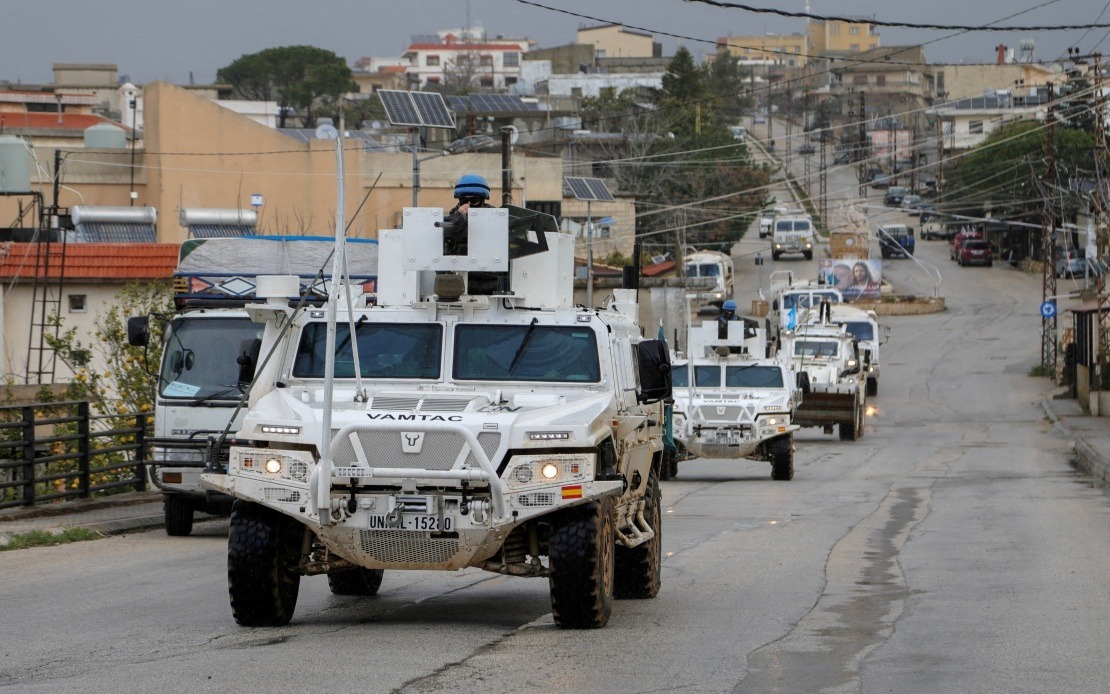
France and Italy have moved to establish a multinational coalition aimed at stabilising Lebanon following the scheduled withdrawal of the United Nations Interim Force in Lebanon (UNIFIL) at the end of December, according to French President Emmanuel Macron. Speaking during a joint press conference with Italian Prime Minister Giorgia Meloni in Antibes on the southern French coast, Macron outlined the two European nations' commitment to supporting Lebanese sovereignty as the international peacekeeping operation concludes its nearly five-decade presence in the country.
The initiative represents a significant diplomatic effort to address what both leaders view as a critical period for Lebanon's stability. Macron emphasised that the proposed coalition will operate in coordination with the European Union and the United Nations, underscoring the multinational and legitimised nature of the arrangement. The primary objective centres on strengthening Lebanon's state institutions and its armed forces during a vulnerable transition period when international oversight will sharply diminish.
Meloni reinforced France's position by highlighting the dangers of allowing a security vacuum to emerge in Lebanon. She characterised the absence of international presence as potentially "extremely dangerous" given the country's complex geopolitical position and history of sectarian tensions. Her remarks underscore growing European concern that Lebanon's volatile situation could deteriorate without coordinated international support, particularly as regional powers maintain significant influence over various Lebanese factions.
The proposed coalition framework addresses immediate concerns stemming from United Nations Security Council Resolution 2790, which mandates that UNIFIL cease operations on December 31. Following this date, the organisation must complete its full drawdown and withdrawal of all personnel from Lebanese territory within a 12-month window. This withdrawal timeline creates a practical necessity for alternative mechanisms to maintain stability during what analysts view as a potentially precarious transition.
For Malaysia and Southeast Asian observers, the Franco-Italian initiative carries important implications regarding international cooperation frameworks in regions experiencing complex security challenges. The approach demonstrates how developed nations construct multilateral responses to humanitarian and stability concerns, potentially offering models applicable to other volatile areas where peacekeeping operations face transitions. The emphasis on coordination with established international bodies like the United Nations and European Union reflects contemporary best practices in crisis management.
Lebanon's situation remains extraordinarily delicate, with the country navigating economic collapse, internal political fragmentation, and cross-border security threats. The presence of UNIFIL since 1978 has provided a stabilising framework, particularly in the southern regions bordering Israel. The withdrawal of this force creates genuine uncertainty about whether Lebanese state institutions possess sufficient capacity to maintain security independently, particularly given their limited resources and competing internal pressures.
The Franco-Italian proposal suggests that European powers view Lebanon's stability as strategically important to broader Mediterranean and Middle Eastern stability. This perspective aligns with longstanding French interests in Levantine affairs and Italy's strategic positioning across the Mediterranean. However, the success of any post-UNIFIL coalition will depend significantly on cooperation from other international actors, particularly the United States and Arab League members, whose involvement Macron indicated through his mention of UN coordination.
The timing of this announcement reflects recognition within European capitals that planning for UNIFIL's departure requires immediate diplomatic groundwork. Establishing consensus among coalition participants, securing necessary resources, and gaining acceptance from Lebanese authorities and neighbouring governments all demand careful advance negotiation. The period between now and December 2024 provides a compressed timeline for these complex arrangements.
Critically, any multinational coalition must navigate the reality that Lebanon's security challenges extend beyond what external military or institutional support can resolve. Internal political divisions, economic dysfunction, and the influence of various armed groups operating outside formal state control create structural obstacles that international presence alone cannot overcome. The coalition's effectiveness will ultimately depend on whether it complements genuine Lebanese institutional reform and national reconciliation efforts.
The French-Italian initiative also reflects broader European strategy regarding Middle Eastern engagement. Rather than military intervention, the proposed approach emphasises institutional strengthening and stabilisation, positioning European nations as responsible international actors committed to supporting state capacity rather than imposing solutions. This distinction carries particular significance given historical suspicions regarding Western intentions in the Middle East.
Regional dynamics will significantly influence the coalition's prospects. The positions of Iran, which maintains substantial influence over Hezbollah and other Lebanese actors, and Israel, which maintains security interests along Lebanon's southern border, remain crucial variables. The success of any post-UNIFIL arrangement will require either explicit or implicit accommodation of these regional powers' security interests alongside Lebanese sovereignty objectives.
Looking forward, the Franco-Italian coalition proposal represents the opening move in what will likely become extended international negotiations. The substance of such arrangements—including troop contributions, operational mandates, funding mechanisms, and relationships with Lebanese authorities—remains to be determined through ongoing diplomatic channels. For Malaysia and other nations concerned with international stability frameworks, this case study demonstrates how major powers attempt to manage the transition from formal peacekeeping to alternative stabilisation mechanisms in conflict-affected regions.

