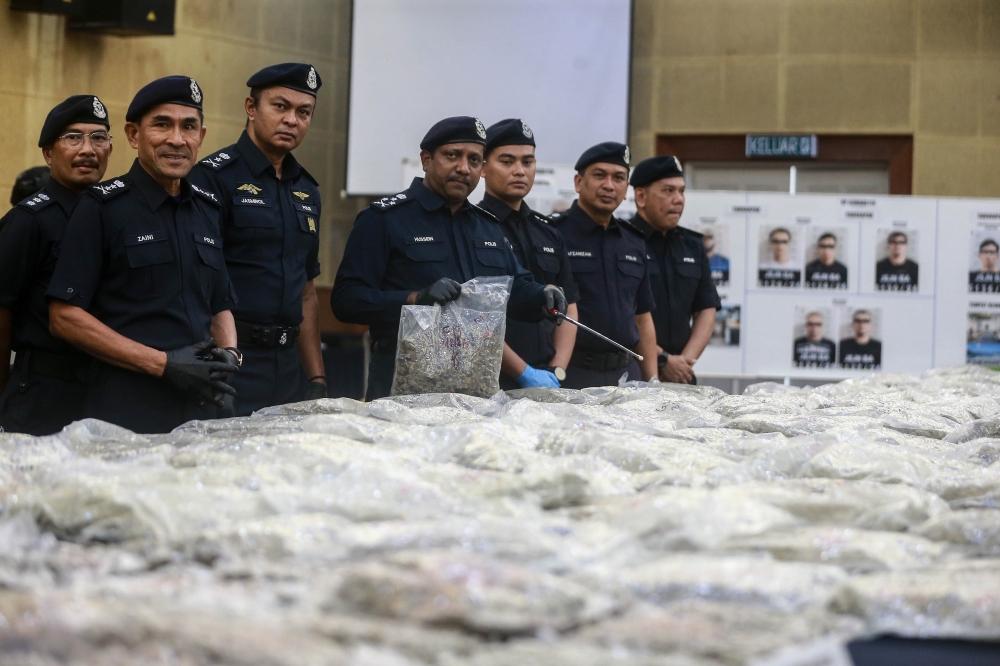
Fourteen Malaysian nationals have faced arrest in countries abroad for suspected involvement in drug trafficking since January this year, according to statements from the Royal Malaysian Police. The detentions represent part of a broader pattern of transnational narcotics operations that law enforcement agencies are increasingly confronting, particularly those involving attempts to transport contraband through Malaysia's primary international aviation hub.
The overseas arrests underscore the evolving nature of drug smuggling networks that operate across borders, exploiting established travel routes and airport infrastructure. Rather than relying solely on domestic supply chains, organised trafficking groups have demonstrated sophistication in coordinating international movements of prohibited substances, with Malaysia's position as a major transportation hub making it an attractive transit point for criminal enterprises seeking to move drugs regionally and globally.
Kuala Lumpur International Airport has emerged as a focal point in these investigations, serving as both a departure point for smugglers attempting to distribute narcotics and an entry portal for incoming contraband destined for local markets or onward distribution. The scale of operations detected suggests that airport-based enforcement, whilst increasingly robust, continues to face challenges in intercepting all suspicious movements. Criminals have adapted their methods continuously, employing concealment techniques ranging from luggage compartments to body-carrying methods that evolve alongside detection technologies.
The phenomenon of Malaysian citizens being arrested abroad for drug crimes reflects several interconnected factors within the regional drug trade landscape. Economic incentives drive recruitment into smuggling networks, with vulnerable individuals often approached with financial inducements that obscure the severe legal consequences they face in foreign jurisdictions. Once apprehended, these individuals confront judicial systems that frequently impose lengthy sentences, substantially harsher penalties than those typically administered within Malaysia's own legal framework.
Police investigations have identified the operational mechanics underlying these networks, revealing how coordination occurs between handlers in Malaysia and associates positioned at destination countries. Communication channels remain sophisticated, utilising encrypted platforms and intermediaries to distance organisers from direct involvement in physical smuggling acts. This structural arrangement insulates senior figures within trafficking hierarchies whilst exposing lower-level operatives, including couriers, to maximum legal jeopardy.
The international dimension of these arrests carries significant implications for Malaysia's international standing and diplomatic relationships. Countries receiving reports of Malaysian nationals engaged in drug trafficking activities may question the effectiveness of preventative measures at source, potentially straining cooperation frameworks essential for regional security. Conversely, coordinated responses between Malaysian authorities and foreign law enforcement agencies demonstrate mutual commitment to disrupting these operations, though gaps in intelligence sharing occasionally limit the scope of investigations.
From a domestic perspective, the overseas detention of Malaysian smugglers represents a form of enforcement that occurs beyond the direct purview of Malaysian police, necessitating diplomatic channels to secure information about cases and coordinate support for detained citizens. Families of those arrested often face prolonged uncertainty whilst consular assistance attempts to navigate foreign legal proceedings, frequently with limited prospects for sentence mitigation given the severity of drug trafficking offences across most jurisdictions.
The emergence of this smuggling pattern also highlights vulnerabilities within recruitment strategies employed by trafficking organisations. Young Malaysians, some lacking awareness of foreign legal penalties or underestimating enforcement capabilities, have been successfully targeted for courier roles. Educational campaigns and targeted community interventions have become recognised as essential components of any comprehensive counter-trafficking strategy, addressing not only supply-side interdiction but also the human factors that facilitate participation in criminal networks.
Law enforcement agencies have incrementally strengthened their capacity to identify suspicious travel patterns and detect concealed contraband at airport points of departure. Yet the persistence of these arrests overseas indicates that detection remains incomplete, with certain smuggling attempts successfully reaching international destinations before interception occurs. Enhanced baggage screening protocols, increased passenger profiling based on risk indicators, and expanded cooperation with international airport authorities continue to evolve in response to detected methodologies.
The geographic spread of arrests across multiple countries suggests these operations are not concentrated within single trafficking corridors but rather represent distributed networks serving diverse markets. This distributed approach complicates law enforcement response, as individual countries detect fragments of larger operations without necessarily understanding their complete scope or identifying central organisers. Regional intelligence-sharing mechanisms have improved but continue to face limitations in real-time information exchange that would enable proactive interventions.
Looking forward, the challenge facing Malaysian authorities involves strengthening prevention through border interdiction whilst simultaneously addressing the socioeconomic conditions that make smuggling economically attractive to recruitment targets. Partnerships with international agencies remain critical, as does sustained investment in training personnel to recognise evolving concealment methods and risk profiles associated with drug trafficking operations.

