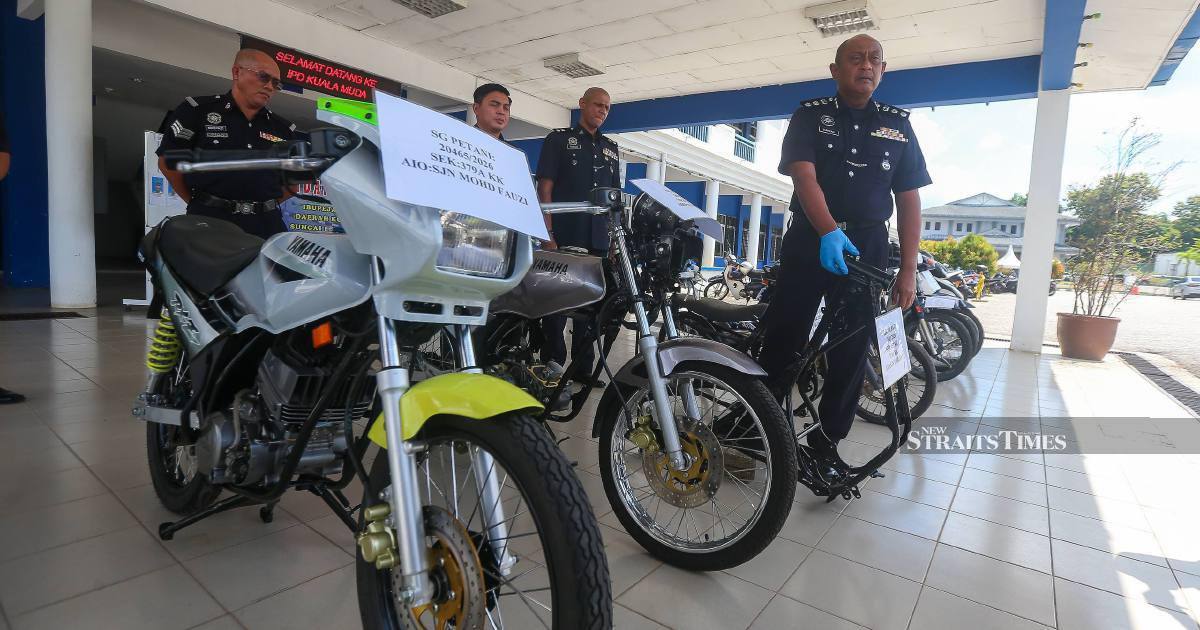
Police in Sungai Petani have apprehended four teenage suspects in what appears to be an organised motorcycle theft operation centred around the Keretapi Tanah Melayu Bhd parking facility in the area. The arrests came after investigations into thefts reported near the railway transport hub on July 14, revealing a troubling pattern of juvenile crime that authorities have moved swiftly to disrupt.
The four youths—three biological brothers and an unrelated teenager—were detained as detectives uncovered evidence suggesting their involvement in multiple motorcycle thefts. The proximity of the crimes to a public transportation facility raises concerns about the vulnerability of commuter areas to organised petty crime. Railway stations and their ancillary parking zones have long been identified as high-risk locations for vehicle theft across Malaysia, presenting a security challenge for both the transport operator and the public.
Sungai Petani, a key commercial hub in Kedah located along the busy north-south corridor, has experienced periodic spikes in vehicle-related crime. The targeting of the KTMB parking area suggests the suspects identified a commercial opportunity in stealing motorcycles used by commuters who park their vehicles during working hours or when using rail services. This particular modus operandi—targeting transportation hubs—is not uncommon among teenage offenders, who often view such locations as low-risk environments due to the transient nature of users and lower surveillance presence compared to residential areas.
The involvement of three blood relatives in a single criminal enterprise indicates potential family-level dysfunction or copycat criminality, where younger siblings emulate elder members' activities. Juvenile delinquency researchers have long documented how criminal behaviour can propagate within family units, particularly among teenagers lacking stable supervision or positive role models. The fact that authorities also apprehended an unrelated accomplice suggests the network extended beyond family bonds, pointing to a more coordinated operation with recruitment elements.
Theft of motorcycles remains a persistent problem throughout Malaysia and Southeast Asia, driven by strong demand for spare parts in the black market and the ease with which stolen bikes can be dismantled and sold piece-by-piece. Unlike automobiles, motorcycles require minimal equipment to strip, making them attractive targets for opportunistic and organised thieves. Regional supply chains for used motorcycle components mean that stolen parts from Kedah could easily flow to neighbouring states or even across borders into Thailand, complicating recovery efforts.
The timing of the July 14 incidents and the subsequent arrests suggests police received information or conducted surveillance operations targeting the KTMB facility. Keretapi Tanah Melayu Bhd, operating Malaysia's principal rail network, has increasingly invested in security infrastructure, yet parking areas remain challenging to monitor comprehensively, particularly during peak usage periods when high volumes of vehicles create natural concealment opportunities for thieves.
For commuters in Sungai Petani and across northern Kedah, the arrests provide some reassurance that law enforcement is responding to transport-hub crime. However, the youth demographics of the suspects underscore a broader phenomenon: juvenile unemployment, limited economic opportunities, and absence of recreational programmes in secondary towns can push teenagers toward petty crime. Unlike Kuala Lumpur or other major urban centres with diverse youth services, smaller municipalities often lack the social infrastructure needed to redirect at-risk teenagers.
The apprehension of four teenagers—some potentially as young as 13 or 14—also raises questions about how the criminal justice system will handle these cases. Malaysia's juvenile justice framework emphasises rehabilitation through the Juvenile Courts Act, aiming to reform rather than permanently incarcerate first-time young offenders. If this is the first serious intervention for these boys, courts may pursue rehabilitation orders, community service, or placement in juvenile rehabilitation centres, though the involvement of an organised theft operation could elevate case severity.
Investigations will likely determine whether the four suspects operated independently or were connected to larger theft networks. Police will examine recovered stolen motorcycles, searching for identifying marks and attempting to reunite vehicles with owners—a process complicated by the fact that many motorcycle owners in Malaysia use informal parking solutions and may not have registered serial numbers. Forensic examination of the youths' devices, contacts, and movements will reveal the scope of their operation and potential links to other theft rings in the region.
The incident highlights the interconnection between public transportation infrastructure security and broader crime prevention. Railway operators throughout Malaysia increasingly recognise that ensuring safe, well-lit parking facilities with functional CCTV and regular security patrols is essential to maintaining user confidence. Sungai Petani's KTMB facility may now face scrutiny regarding its security protocols and asset protection measures.
As Kedah continues developing as an economic centre linked to the Penang-Kuala Lumpur corridor, maintaining safe public spaces will remain critical to attracting commuters and business investment. The successful interception of this theft ring demonstrates police responsiveness, yet sustained reduction in transport-hub crime will require sustained investment in both security infrastructure and youth intervention programmes to address root causes of juvenile delinquency in secondary urban areas.

