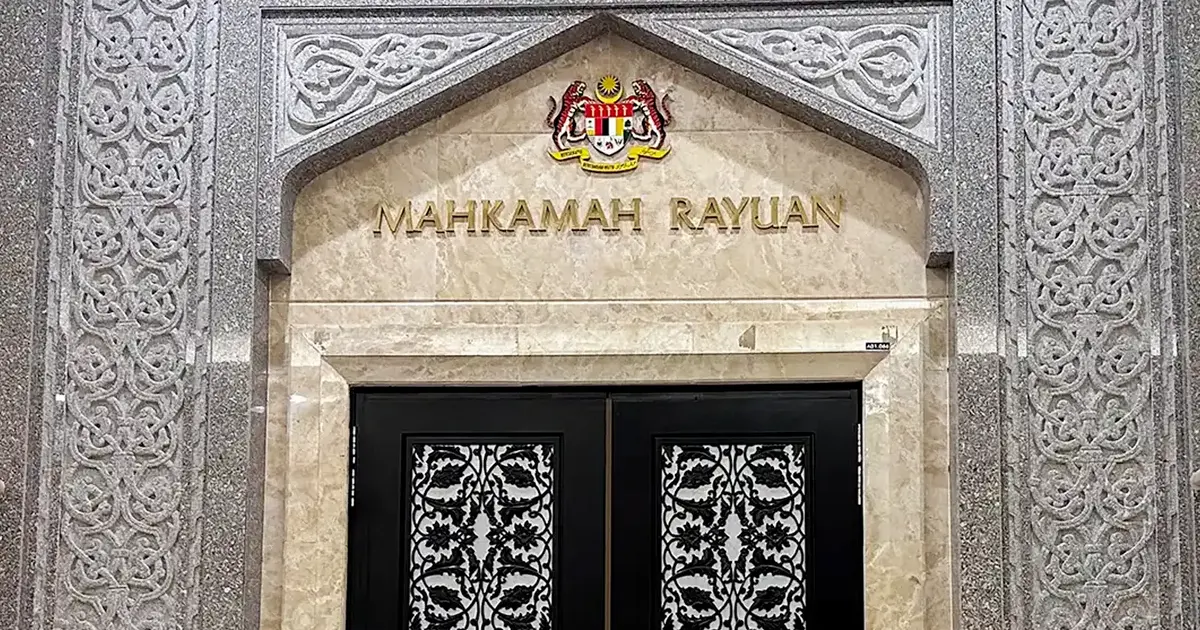
Four sisters have failed in their legal attempt to obtain remedies for damage allegedly inflicted on their ancestral property in Pedas, after the Court of Appeal determined that they had not presented sufficient evidence to identify who carried out the disputed works. The appellate court's decision marks the end of a protracted dispute over the family's land, which the siblings contended had been harmed through unauthorised trespass and drainage activities that accelerated erosion across their holdings.
The crux of the court's ruling centred on a critical evidentiary gap in the plaintiffs' case. Whilst the four sisters argued that trespass and drainage works had taken place on or adjacent to their property, causing measurable erosion damage, the Court of Appeal found that they had not demonstrated with sufficient clarity who was actually responsible for executing these activities. Without establishing the identity of the party that conducted the works, the court reasoned, any judgment in the sisters' favour would lack a proper defendant against whom relief could be enforced.
This decision carries significant implications for property owners across Malaysia and Southeast Asia who rely on family land holdings, particularly in rural or semi-rural areas where land boundaries and use rights can become contentious over generations. The ruling underscores the high evidentiary bar that courts apply in cases involving allegations of trespass and property damage, requiring plaintiffs to build a comprehensive factual foundation that extends beyond identifying the damage itself to pinpointing the responsible party with precision.
Ancestral land disputes remain a persistent challenge within Malaysian society, where family property passed down through generations often lacks clear formal documentation or demarcation. When such properties are located near development zones or agricultural areas where drainage and earthworks are commonplace, distinguishing between negligent damage and deliberate harm becomes increasingly difficult. The Pedas case exemplifies these complexities, as the sisters faced the formidable task of proving causation in circumstances where the identity of the actors was unclear.
The sisters' inability to establish who carried out the activities suggests that gathering evidence in such cases requires more than observation of damage; it demands a systematic investigation that can identify specific individuals, contractors, or organisations responsible for the works. This might have included documentary evidence such as work permits, construction contracts, correspondence between parties, witness testimony with credible detail, or expert analysis establishing temporal proximity between identified activities and observed damage. The court's judgment implies that the sisters fell short on one or more of these fronts.
From a broader perspective, the decision reflects how Malaysian courts balance the property rights of individuals against the procedural safeguards that protect defendants from being held liable on insufficiently substantiated claims. By requiring clear identification of those responsible, courts prevent scenarios where landowners might obtain judgments against parties who had no involvement in the alleged wrongdoing, or where liability is dispersed too thinly across multiple potential actors without clear proof of specific conduct.
For property owners in similar situations, particularly those with ancestral or inherited land, the judgment carries practical lessons. Maintaining detailed records of the land's condition over time, documenting any visible changes with dated photographs or video, consulting with land surveyors to establish baseline conditions, and keeping contemporaneous written records of suspicious activities or works occurring nearby can all strengthen an evidentiary position. Additionally, promptly reporting suspected trespass or unauthorised works to local authorities creates an official record that may later prove valuable in court.
The erosion issue specific to the Pedas property raises questions about land vulnerability in areas where water management and drainage systems are being altered, whether by public authorities, neighbouring landowners, or commercial operators. In regions prone to seasonal flooding or drainage challenges, improper water diversion can indeed cause accelerated soil loss and property degradation. However, proving that specific drainage works—rather than natural weathering, poor land maintenance, or other environmental factors—caused the erosion requires sophisticated analysis that the sisters apparently could not adequately present.
The appellate court's decision does not necessarily mean the sisters suffered no genuine harm to their property. Rather, it reflects a verdict on the adequacy of their legal proof within a civil litigation framework. This distinction matters because it means future action, whether through fresh legal proceedings with better evidence, administrative complaints to relevant agencies, or negotiated settlement, remains theoretically possible if the sisters can develop a stronger factual record.
For the broader Malaysian context, particularly as urbanisation accelerates and ancestral lands increasingly face pressure from development, infrastructure projects, and adjacent commercial activities, cases like this underscore the importance of clear land administration, transparent development approvals, and accessible mechanisms for resolving property disputes. Strengthening the evidentiary tools available to ordinary landowners—such as government land registries that record condition changes, accessible surveying services, and mediation systems—could help prevent protracted litigation and provide clearer pathways to justice.
The sisters' setback in the Court of Appeal highlights how property disputes, even when rooted in genuine grievance, can become legally complex when the factual foundation remains incomplete. Their experience may serve as a cautionary tale for other Malaysian families managing ancestral properties, signalling the value of contemporaneous documentation and swift intervention when land appears to be suffering damage from external activities.

