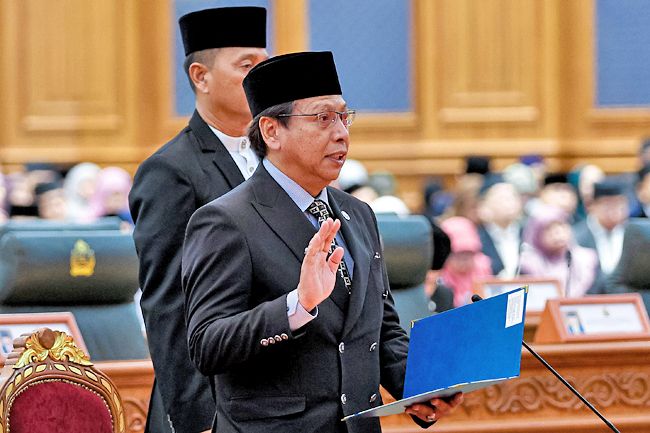
Brunei Darussalam marked a significant moment in its legislative calendar on Monday when four senior Cabinet ministers took their constitutional oaths as members of the Legislative Council, reinforcing the government's presence within the institution responsible for shaping national policy. The ceremony, held in Bandar Seri Begawan on the opening day of the Second Meeting of the 22nd Legislative Council Session, proceeded according to established constitutional protocols governing the appointment of executive appointees to the legislative body.
The formal induction process reflects Brunei's constitutional framework, which provides for Cabinet members to assume automatic membership of the Legislative Council in their capacity as ex-officio representatives. This arrangement, grounded in the 1959 Brunei Constitution, ensures continuity between the executive and legislative branches and allows senior government officials to directly participate in legislative deliberations while maintaining their ministerial portfolios.
Among those sworn in was Datuk Seri Setia Awang Sufian Sabtu, whose role as Minister at The Prime Minister's Office overseeing security and law enforcement matters positions him as a key figure in Brunei's internal security apparatus. His presence in the Legislative Council underscores the government's commitment to parliamentary oversight of sensitive national security portfolios, bridging communication between executive security operations and legislative scrutiny.
Energy sector governance received heightened legislative representation through the swearing-in of Datuk Seri Setia Awang Mohamad Azmi Mohd Hanifah, who holds the Ministry at the Prime Minister's Office responsible for both upstream and downstream energy operations. Given Brunei's historic dependence on oil and gas revenues as economic pillars, having this minister directly embedded within the Legislative Council reflects the nation's ongoing efforts to balance resource management, economic diversification, and parliamentary accountability in an increasingly complex global energy landscape.
The appointment of Pengiran Datuk Seri Setia Mohammad Tashim Pengiran Hassan as Minister of Religious Affairs to the Legislative Council carries particular significance for a Muslim-majority sultanate where Islamic governance principles intersect with state administration. This minister's legislative participation ensures that religious policy matters—ranging from Islamic education to shariah law application—benefit from direct parliamentary engagement, maintaining institutional balance in a nation where religious and civil governance frameworks are closely interwoven.
The fourth minister sworn in, Datuk Seri Setia Awang Mohammed Riza Datuk Paduka Mohammed Yunos, heads the portfolio combining transport and information communications responsibilities. This appointment reflects growing recognition across Southeast Asia of the strategic importance of connectivity infrastructure and digital policy in shaping national competitiveness. His legislative role signals Brunei's prioritisation of these sectors as drivers of contemporary economic and social development.
The ceremony was presided over by Pehin Orang Kaya Seri Lela Datuk Seri Setia Awang Abdul Rahman Datuk Setia Mohamed Taib, the Speaker of the Legislative Council, whose supervisory role underscores the formal and ceremonial dimensions of Brunei's constitutional procedures. The presence of the Speaker at the swearing-in ceremony reflects the gravity with which the institution treats the integration of new ex-officio members, affirming the sanctity of constitutional processes in the sultanate's governance structure.
This legislative expansion carries implications for Brunei's broader governance trajectory. By ensuring that senior ministers maintain direct presence within the Legislative Council, the government reinforces its capacity to implement policy initiatives while remaining attentive to parliamentary concerns. The arrangement permits ministers to respond immediately to legislative questioning and participate in debates affecting their portfolios, potentially accelerating policy development cycles and enhancing government responsiveness.
For regional observers monitoring Brunei's institutional development, these ministerial appointments exemplify the sultanate's commitment to maintaining functional legislative structures despite the relatively centralised nature of executive authority. Unlike more overtly adversarial parliamentary systems common in larger ASEAN nations, Brunei's model emphasises institutional harmony and coordinated policymaking between branches, with the Legislative Council functioning as a deliberative body rather than an oppositional forum.
The timing of these appointments—during the Second Meeting of the current Legislative Council session—suggests government planning around the sequencing of major legislative initiatives and policy announcements scheduled for the coming period. Ministers equipped with direct parliamentary presence can advocate more effectively for their sectoral priorities and address concerns raised by other council members in real-time discussions.
For Malaysia and other neighbouring ASEAN states, Brunei's measured approach to legislative representation offers a contrasting governance model. While Malaysian politics features robust parliamentary opposition and sustained executive-legislative tension, Brunei's framework prioritises consensual policymaking and bureaucratic efficiency. Understanding these different institutional approaches provides valuable context for regional diplomatic engagement and coordination on transnational issues ranging from maritime affairs to energy cooperation.
Looking ahead, the presence of these four ministers within the Legislative Council will likely shape the character and pace of legislative business throughout the current session, particularly regarding government bills requiring parliamentary sanction and budget allocations for their respective portfolios. Their positions offer leverage for ensuring that legislative processes accommodate executive timelines while maintaining the consultative dimensions that characterise Bruneian governance conventions.

