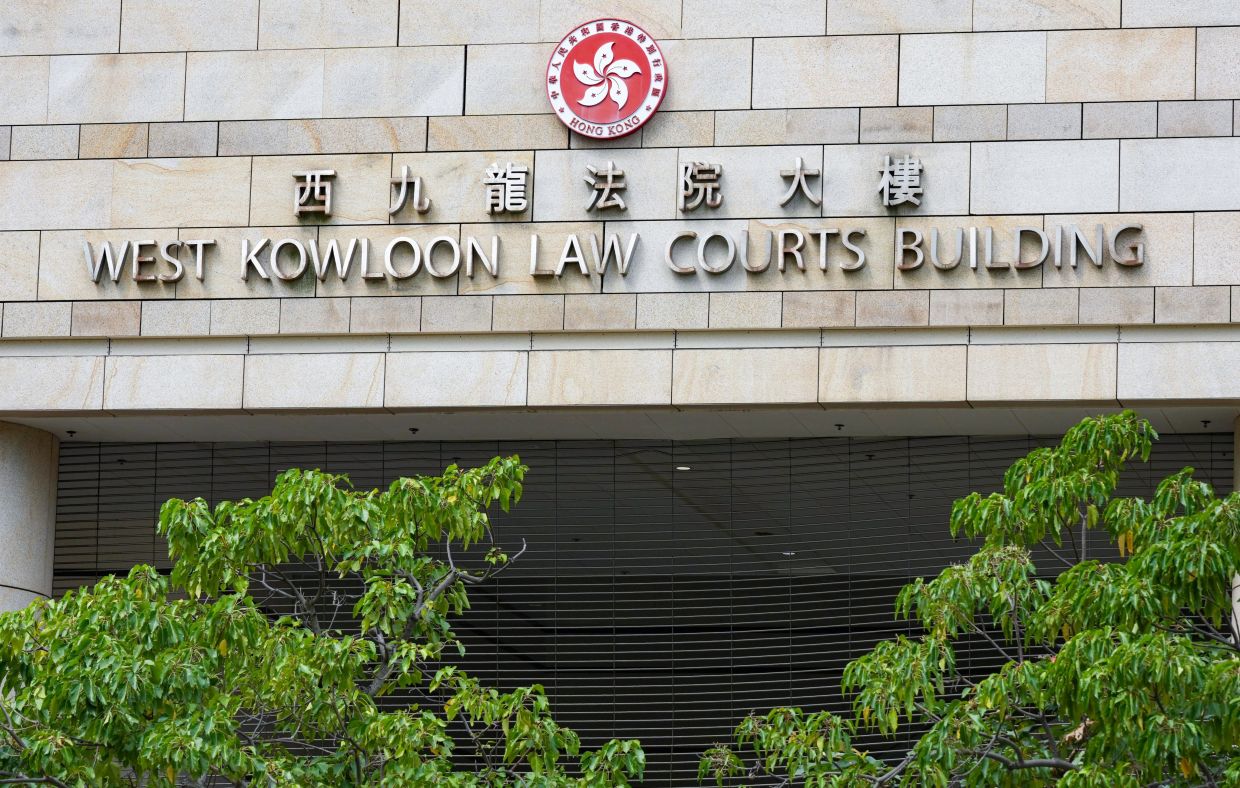
A Hong Kong court has sentenced a 65-year-old recidivist to four months imprisonment for sexually assaulting a secondary school student aboard a packed bus in Mong Kok, marking another troubling incident of predatory behaviour in public spaces that has prompted renewed discussion about harassment prevention measures across the region.
West Kowloon Court delivered the conviction on Tuesday against William Wu Yiu-shing, a former hardware salesman whose crime was captured in a 37-second video recorded by a bystander and subsequently circulated widely on social media platforms. The incident occurred on June 5 as a Kowloon Motor Bus double-decker vehicle halted at the junction of Mong Kok Road and Sai Yeung Choi Street South around 12.10pm, placing the assault in broad daylight on a busy commercial thoroughfare where witnesses were present.
Wu's conviction carries particular significance given his criminal history. Court records show three previous indecent assault convictions on his file, establishing a disturbing pattern of offending behaviour that prison authorities and judicial officials will need to address through rehabilitation mechanisms. His guilty plea, entered last month following his arrest, acknowledged the gravity of the transgression and may have influenced the sentencing decision, though the four-month term represents a relatively modest custodial period given the maximum penalty of up to ten years imprisonment for indecent assault under Hong Kong law.
The victim, a Form Three student aged seventeen, was seated directly ahead of Wu on the bus's upper deck when he extended his left arm to make contact with her chest area. In the recorded footage, the offender remained unmoved by vocal warnings from street-level observers, continuing his assault even as the bus resumed motion and carried both parties further along the route. The teenager subsequently told investigating officers that she experienced tactile contact near her armpit and witnessed Wu attempting to seize her person, yet remained frozen with fear and chose to flee homeward immediately after the bus concluded its journey.
The viral nature of the video proved instrumental in Wu's apprehension. Hong Kong Police arrested him the same day at the Hong Kong-Zhuhai-Macau Bridge border checkpoint, suggesting he had travelled into Macau immediately following the assault and was returning to Hong Kong when officers intervened. During police questioning, Wu reportedly admitted that his actions stemmed from sexual gratification motivations, providing prosecutors with straightforward corroboration of culpable intent.
Wu's legal representative acknowledged on Tuesday that his client had demonstrated genuine contrition and candidly accepted responsibility for both the immediate offence and the pattern of similar misconduct stretching across his criminal record. The defence counsel additionally highlighted the defendant's willingness to engage with psychological treatment programmes as part of his rehabilitative pathway, suggesting that institutional authorities view some prospect of therapeutic intervention, though experts would note that sexual offenders with extended histories of re-offending present notoriously challenging rehabilitation prospects.
Since Wu's prosecution commenced on June 8, he has remained in custodial remand, meaning he has already served approximately four months in detention pending trial and sentencing. This timeline suggests that subject to standard early-release protocols and good behaviour provisions, he could become eligible for liberty within approximately one additional month, raising questions about whether such brief effective incarceration adequately serves deterrent or protective functions given his demonstrable propensity for repeat offending in public settings.
The incident reflects persistent vulnerabilities within Hong Kong's public transport environment, where dense passenger loads, limited surveillance capacity in certain zones, and the transient nature of bus journeys can create environments where sexual predators exploit anonymity and victim shock. Southeast Asian transport authorities, including those in Malaysia, have grappled with comparable challenges as urban populations expand and commuting patterns intensify, though Hong Kong's comparatively advanced reporting mechanisms mean incidents receive documentation that informs policy discussions more systematically than in some neighbouring jurisdictions.
The sentencing decision warrants scrutiny given the proliferation of similar offences documented across Hong Kong's transport network in recent years. While magistrate-level courts hear indecent assault cases with a two-year imprisonment ceiling, the four-month term handed to Wu—combined with his existing criminal record—raises considerations about whether proportionate penalties adequately address the particular vulnerability of teenage victims and the documented repetitive nature of Wu's offending behaviour. Judicial practitioners must balance principles of proportionality against public safety imperatives when confronting offenders whose prior convictions demonstrate institutional incapacity to modify conduct following previous periods of incarceration.
For Malaysian observers, the case underscores the necessity of robust victim support frameworks, effective transport security protocols, and multidisciplinary approaches to managing individuals with established sexual offending histories. The viral video documentation also highlights how digital technology enables accountability mechanisms when official enforcement responses might otherwise prove inadequate, though it simultaneously exposes privacy tensions and vigilante justice risks that democracies must navigate carefully. As Hong Kong, Malaysia, and other Asia-Pacific jurisdictions contend with persistent sexual harassment challenges in shared public spaces, this conviction will likely feature prominently in discussions about sentencing adequacy and rehabilitation efficacy for repeat offenders.

