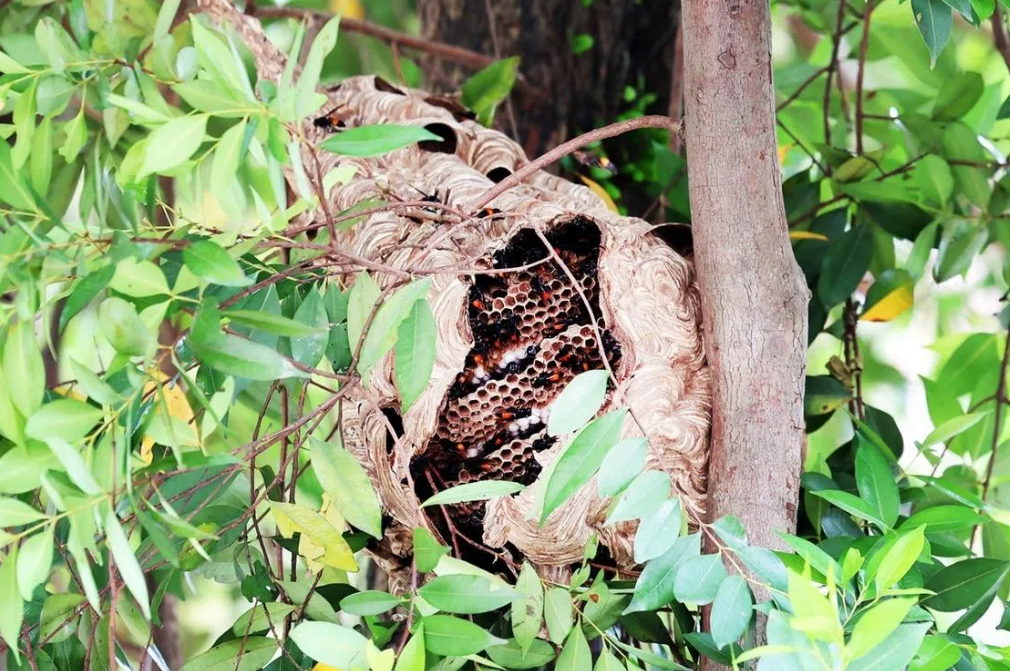
Four individuals were admitted to Singapore General Hospital following a hornet attack that occurred near Redhill Market on the afternoon of July 10. The incident, which unfolded in a busy residential and commercial precinct, underscores the persistent wildlife management challenges faced by densely populated urban environments in Southeast Asia, where human habitation increasingly encroaches on the habitats of potentially dangerous insects.
The Singapore Civil Defence Force and Tanjong Pagar Town Council responded to emergency alerts around 1pm that afternoon. Officials identified a hornets' nest situated on a tree along the footpath between Block 78 Redhill Lane and a nearby Shell petrol station—a location that places the insects in close proximity to high foot traffic and commercial activity. The town council's rapid mobilisation of its pest control contractors resulted in the swift and safe removal of the nest, with the affected area subsequently declared safe for public use.
Eyewitness accounts painted a harrowing picture of the attack's severity. Chen, a bystander who was having coffee at the market when chaos erupted, recounted hearing shouts about hornets in the tree and witnessed an elderly man being pursued and stung by the aggressive insects. Another observer, Mei Zhen, discovered a woman in her seventies in considerable distress at a nearby toilet facility, with visible injuries to her ears—swollen, reddened, and bleeding. The victim complained of headaches and dizziness, symptoms consistent with significant envenomation. Zhen's account revealed the scale of the assault, describing more than ten hornets circling the woman's head, some crawling through her hair and others scattering across the toilet floor and door.
The medical severity of hornet stings lies in the potency of their venom composition. According to information from the National University Hospital, hornets deliver substantially larger quantities of venom per sting compared to bees or smaller wasps, making each individual sting more dangerous. This venom contains multiple toxic compounds that work in concert to cause harm. Histamine triggers allergic responses within the body, while melittin produces acute pain at the sting site. The venom further contains proteins including phospholipase and hyaluronidase—compounds with direct toxic effects on human cellular tissue.
In severe cases, the systemic effects of multiple hornet stings can escalate rapidly into life-threatening medical emergencies. Victims may experience dangerous drops in blood pressure, reduced blood flow to vital organs, and most critically, swelling of the airway that restricts breathing and causes suffocation. These complications explain why the four victims from the Redhill incident required hospital-level care, and they underscore why public health authorities treat hornet attacks as serious medical events rather than minor insect sting incidents.
Tanjong Pagar Town Council has issued specific guidance for residents encountering hornets or their nests. The primary recommendation is to remain composed and vacate the immediate vicinity without sudden movements, as aggressive behaviour from humans can trigger defensive responses from the insects. Individuals should seek refuge inside a nearby building and absolutely refrain from attempting to disturb, provoke, or personally remove any hornet nest they discover. For those who sustain stings, immediate departure from the area is essential, followed by calling 995 for emergency ambulance dispatch if symptoms suggest severe reactions or if victims require immediate medical intervention.
Singapore has experienced multiple serious hornet incidents in recent years, reflecting a broader pattern of wildlife-human conflict in the city-state. During 2024 alone, two significant incidents made headlines. A hornet attack at Sungei Buloh nature reserve resulted in five people requiring hospitalisation, while a separate and tragically fatal incident occurred when a man was attacked by hornets while cycling along the Sembawang Park Connector. That fatality highlighted the potentially lethal consequences when hornet attacks occur in locations distant from immediate medical assistance, such as park connectors where help may take longer to arrive.
These recurring incidents raise important questions about hornet population dynamics in Singapore's urban landscape. The presence of suitable nesting locations on public footpaths and in parks suggests either increasing hornet populations or heightened human awareness of their presence. Environmental factors including temperature, availability of food sources, and urban vegetation management practices likely influence where hornets establish colonies. The concentration of attacks along park connectors and in semi-developed residential areas indicates that hornets favour transitional zones between natural and urban spaces.
For Malaysian readers, these Singapore incidents carry particular relevance given Malaysia's similar tropical climate, rapid urbanisation, and extensive park and nature reserve systems. Hornets are present throughout Malaysia, and as urban development continues to expand into previously undeveloped areas, the potential for human-hornet conflicts will likely increase. Cities like Kuala Lumpur, Penang, and Johor Bahru are experiencing similar wildlife-urban interface challenges, making Singapore's experience instructive for Malaysian public health and urban planning authorities.
The Straits Times has contacted Singapore's National Parks Board for additional information regarding hornet management and prevention strategies. Understanding the ecology and behaviour of these insects, as well as implementing effective nest monitoring and removal protocols, remains crucial for authorities seeking to minimise public risk while respecting the ecological role these insects play in the environment.

