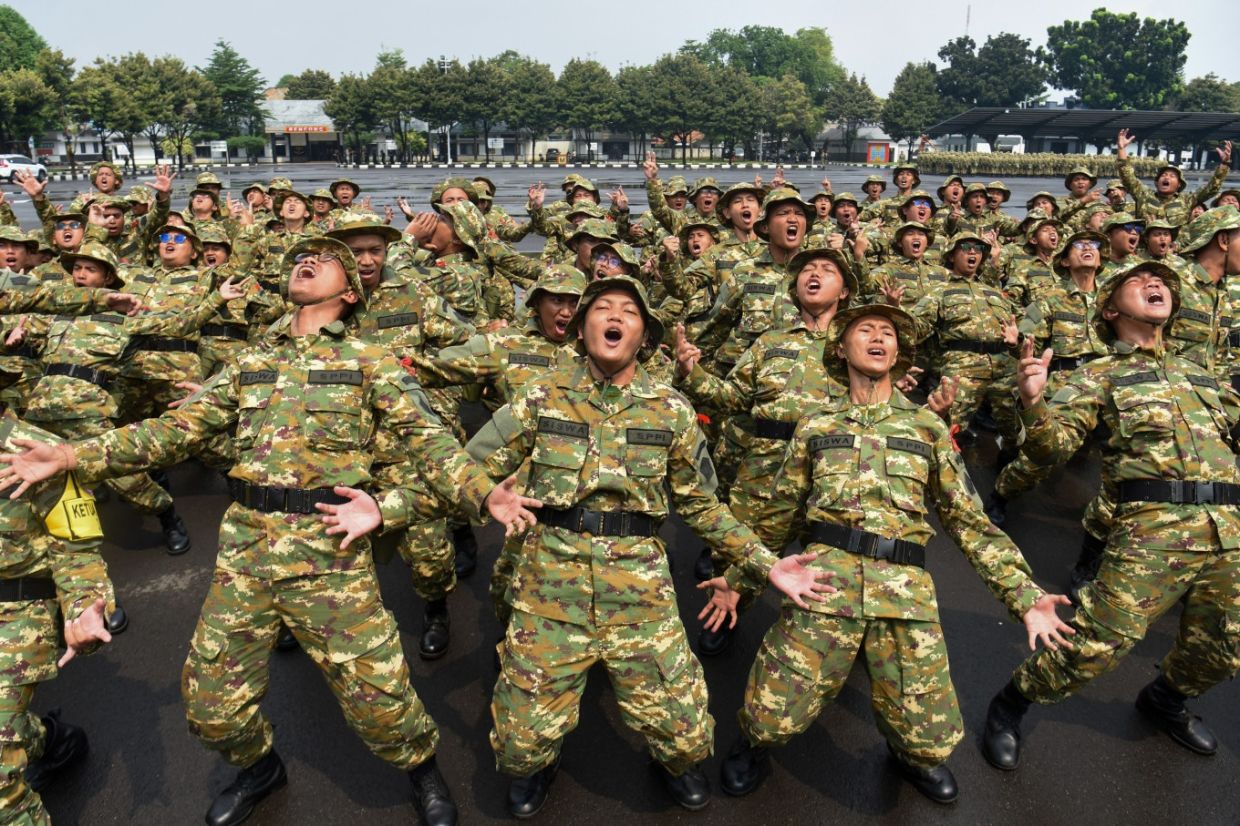
Four participants in Indonesia's mandatory military-style training scheme for cooperative managers have died within the opening days of the 30-day programme, intensifying pressure on President Prabowo Subianto's administration to halt or substantially reform the initiative. The deaths—among more than 35,000 trainees enrolled in the Defence Ministry's reserve component training—have triggered formal calls for investigation and revision from both lawmakers and civil society organisations, highlighting mounting concerns about whether civilian managers require military conditioning.
The fatalities span different locations and circumstances. Anisa Muyassaroh succumbed to heat stroke during training in Balikpapan, East Kalimantan, while Yonanda Muhammad Taufiq collapsed from cardiac arrest following introductory exercises at a training facility in Baturaja, South Sumatra. In Jakarta, Novia Rahmadhani Sihotang died after developing health complications related to tuberculosis. Most recently, Muhammad Rifqi Renaldi Gunawan experienced severe respiratory distress while undergoing training at an Air Force facility in the capital on Thursday, June 26, and died early the following morning despite hospital treatment. The clustering of deaths in rapid succession has alarmed observers monitoring the programme's implementation.
The Defence Ministry responded to the latest death by announcing a "comprehensive review" of training protocols. Spokesperson Brigadier General Rico Ricardo Sirait outlined plans to strengthen health screening before enrolment, implement early medical detection systems, enhance participant monitoring throughout the course, and upgrade emergency response procedures. These commitments suggest the ministry acknowledges gaps in safeguarding mechanisms, though critics argue such piecemeal adjustments miss the fundamental question of whether military-style training suits the needs of cooperative managers at all.
Amphesty International Indonesia has taken the strongest position, demanding immediate suspension of the military component. Executive director Usman Hamid characterised the training as "a fatal mistake that must be stopped immediately," calling instead for replacement with education focused exclusively on cooperative management and business administration. Beyond immediate safety concerns, Usman framed the initiative as emblematic of expanding militarisation in civilian governance under Prabowo's presidency. He drew historical parallels to Indonesia's controversial "dual function" military doctrine during the Suharto era, when armed forces wielded authority across civilian institutions and society, raising questions about the administration's broader governance trajectory.
The cooperative training programme exemplifies a deeper tension within Prabowo's policy agenda. Usman argued that military-structured training fundamentally contradicts cooperatives' foundational principles, which emphasise democratic participation, transparent decision-making, and collective benefit-sharing rather than hierarchical command structures. Imposing military discipline and obedience frameworks onto managers responsible for democratic cooperative operations risks distorting their fundamental character and undermining the collaborative ethos essential to their function within rural and fishing communities.
Parliamentary oversight bodies have adopted a more cautious approach than rights advocates, calling for systematic improvements rather than cancellation. House Commission I deputy chair Dave Laksono of the Golkar Party acknowledged lawmakers' close monitoring while maintaining that the training's underlying objectives—instilling discipline, leadership capacity, and nationalist sentiment—remain valid. However, he contended that implementation methods require refinement and that emergency response systems need strengthening to guarantee participant safety. This position reflects legislative reluctance to directly challenge presidential initiatives while acknowledging legitimate public concern.
Commission member Imas Aan Ubudiyah of the National Awakening Party focused on risk mitigation specifics, emphasising that health screening protocols should be substantially more rigorous before participants enter the physically demanding programme. Ubudiyah advocated for integrated medical supervision, continuous assessment of physical fitness levels, and curriculum modification to eliminate unnecessarily strenuous elements. These recommendations suggest parliamentary recognition that current safeguards are inadequate, without necessarily questioning whether military training should occur at all.
The government's formal response, delivered by Presidential Chief of Staff Dudung Abdurachman, cautiously resisted suggestions of systemic failure. Abdurachman stated that preliminary investigation had found no evidence of negligence, attributing deaths potentially to pre-existing health conditions or undisclosed medical complications rather than training intensity or supervision failures. He characterised the training itself as "not particularly strenuous," a characterisation that appears at odds with the pattern of deaths from heat stroke and cardiac complications. Future sessions would prioritise safety, Abdurachman indicated, though he did not specify concrete changes or acknowledge that underlying health conditions might have been identifiable through adequate pre-screening.
The programme's scale underscores its strategic significance within Prabowo's broader rural development agenda. Upon completing the 30-day military training, survivors proceed to 15 days of managerial instruction before assignment to operational roles. The government targets establishing 80,000 cooperative units and 5,000 fishing villages by 2029, making the training pipeline essential to achieving these numerical goals. This timeline pressure may inadvertently create incentives to maintain training schedules despite safety concerns, potentially explaining why comprehensive health screening and risk assessment have apparently been secondary priorities.
For Malaysian observers, Indonesia's experience carries relevance beyond immediate humanitarian concern. Southeast Asian governments increasingly look to military-led approaches for civilian programme implementation, often justified through appeals to discipline and efficiency. Malaysia's own history with military-style youth programmes, from National Service initiatives to civil-military engagement in development projects, offers comparative context for evaluating when such structures prove appropriate and when they risk compromising programme integrity or participant safety. The Indonesian case demonstrates that large-scale implementation without adequate preparatory assessment and safeguarding infrastructure can prove fatal.
The deaths have exposed tension between Prabowo's political emphasis on military values and governance realities in managing civilian institutions serving vulnerable populations. Whether Indonesia's government ultimately reforms, restructures, or suspends the military training component will signal its commitment to both rural development outcomes and participant welfare. The coming weeks will likely determine whether parliamentary pressure, civil society advocacy, and accumulated deaths prove sufficient to change trajectory, or whether administrative adjustments constitute the extent of official response.

