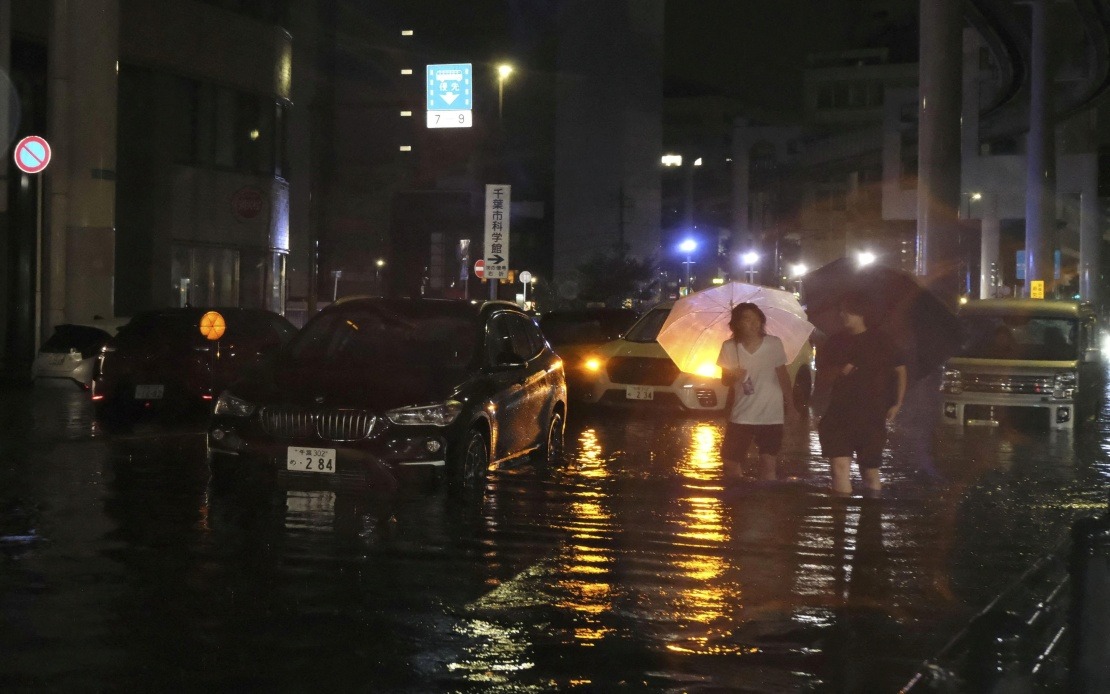
Japan's Chiba Prefecture has been battered by destructive rainfall since Thursday, triggering a humanitarian response involving mass evacuations and emergency shelter operations across multiple prefectures. The weather system delivered such intense precipitation that more than a third of municipalities in the region received the Japan Meteorological Agency's Level 5 warning—the most severe category available on its scale. The fatality toll has risen to four deaths, with one additional person reported unresponsive, according to official accounts. This represents a significant natural disaster for one of the most densely populated areas near Tokyo, home to millions of residents and critical transportation networks.
The scale of the evacuation effort underscores the severity of the threat posed by the unusual weather patterns. At their peak, evacuation orders affected more than 400,000 people across Chiba and neighbouring Ibaraki prefectures. By Friday morning, as conditions began to stabilize slightly, approximately 126,000 people remained under mandatory evacuation orders across both prefectures. The Fire and Disaster Management Agency coordinated these operations, and local authorities in major cities including Chiba and Ichikawa issued urgent directives for residents to seek higher ground and secure shelter immediately.
Physical damage and disruption spread rapidly as the deluge overwhelmed drainage infrastructure. Throughout Chiba Prefecture, road flooding became widespread, transforming many routes into impassable waterways. In the prefecture's Chuo Ward, meteorological instruments recorded hourly precipitation of 115 millimetres during Thursday night—equivalent to the typical total rainfall for August in an average year, concentrated into mere hours. Water surged from underground utility access points in central Chiba city, while scenes of residents wading through waist-deep water became emblematic of the disaster's human cost as people attempted to reach their homes.
The Japan Meteorological Agency attributed the unprecedented rainfall to a collision between two distinct air masses. Warm, moisture-laden air streaming into eastern Japan encountered a mass of cold air positioned overhead, creating intensely unstable atmospheric conditions. This meteorological setup produced the torrential precipitation that continued through Thursday evening and into Friday morning, with forecasts indicating additional heavy rain could persist throughout the affected region during Friday. The agency similarly issued Level 5 landslide warnings for numerous municipalities, including Chiba city and the adjacent city of Ichihara, recognizing the danger posed by water-saturated soil on hillsides and elevated terrain.
Emergency infrastructure strained under the weight of displaced residents seeking shelter from the catastrophic weather. Government authorities activated over 200 evacuation centres distributed across Chiba, Ibaraki, Saitama, and Gunma prefectures to accommodate those unable to remain in their homes. The Chiba prefectural government building itself became a makeshift refuge facility, accommodating approximately 1,800 stranded commuters who found themselves unable to return home as transportation networks collapsed. These centres provided essential services including food, water, and medical care for evacuees, many of whom faced an uncertain timeline for returning to their properties.
The disruption extended to essential services beyond housing and transportation. Power infrastructure proved vulnerable to the extreme weather, with Tokyo Electric Power Company Holdings Inc.'s subsidiary reporting approximately 45,000 homes without electricity at the crisis's height. Restoration efforts proceeded as conditions improved on Friday, though many residents remained disconnected from power grids for extended periods. The combination of flooding, landslide risks, power losses, and evacuation orders created a cascading series of challenges for residents attempting to maintain basic functions.
For Malaysian and Southeast Asian observers, this disaster illustrates the escalating frequency and intensity of extreme weather events that characterize the region's new climate reality. Japan's response mechanisms—coordinated evacuation protocols, tiered warning systems, and distributed emergency shelter networks—represent institutional preparedness that extends beyond what many developing nations maintain. However, the event demonstrates that even well-resourced, technologically advanced societies face mounting challenges from meteorological extremes. The weather system's origin in a collision between warm and cold air masses reflects climate patterns increasingly common across East and Southeast Asia, where warming tropical waters meet temperate air systems with greater regularity.
The economic implications for the affected prefectures will unfold over coming weeks and months, as property damage assessments proceed and businesses calculate losses from interruption and flooding. Chiba Prefecture's proximity to Tokyo creates amplified urgency, as disruptions to the greater metropolitan region's periphery threaten broader economic activity. Supply chains, manufacturing operations, and distribution networks tied to one of Asia's largest economic centres could experience secondary effects from infrastructure damage and transportation network disruption in the prefecture.
On Friday morning, as the Japan Meteorological Agency downgraded its highest-level warnings, conditions began showing signs of improvement, though the agency cautioned that substantial rainfall would continue through the day. Cleanup and recovery operations would commence once precipitation subsided sufficiently, revealing the full extent of structural damage and environmental degradation caused by the extraordinary rainfall event. The incident serves as a reminder of natural disasters' capacity to overwhelm even sophisticated infrastructure systems and disrupt the lives of hundreds of thousands of citizens within hours.

