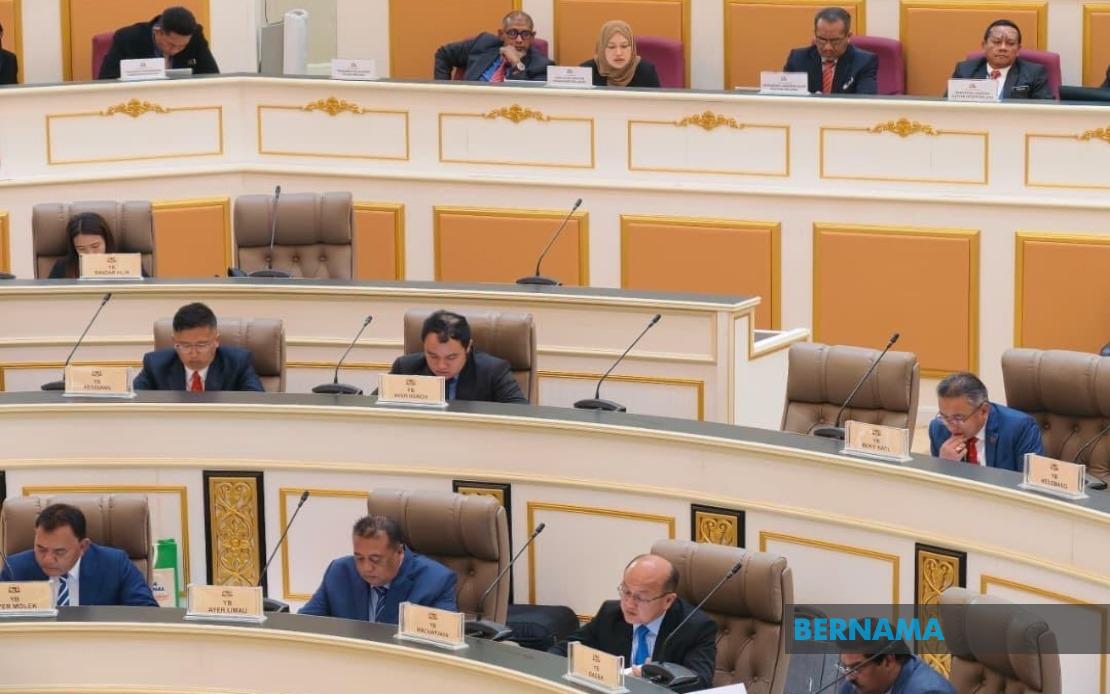
The political landscape in Melaka shifted noticeably during the final session of the State Legislative Assembly when four Democratic Action Party representatives formally crossed to the opposition benches on July 15, marking a significant fracturing of the ruling coalition. The four assemblymen—Allex Seah Shoo Chin from Kesidang, Low Chee Leong from Kota Laksamana, Leng Chau Yen from Banda Hilir, and Kerk Chee Yee from Ayer Keroh—announced their departure from the government bloc just a day earlier, following a controversial constitutional amendment passed in the assembly.
Their defection splits the Pakatan Harapan representation in the state house, as the sole Amanah representative, Adly Zahari, who chairs the Melaka PH coalition, has chosen to remain aligned with the government benches. This divergence between the two major coalition partners highlights underlying tensions within the opposition-turned-ruling alliance that governed Melaka following the 2022 state elections. The repositioning of the DAP assemblymen means they now sit alongside Perikatan Nasional and Independent representatives, fundamentally altering the chamber's composition and political balance.
The precipitating factor behind this realignment was the assembly's passage of amendments to the Melaka State Constitution permitting the appointment of nominated assemblymen—a measure that the DAP contingent vigorously opposed. Khoo Poay Tiong, chairman of Melaka DAP, articulated the party's principled stance by contending that the constitutional changes violated fundamental democratic norms and the sanctity of electoral representation. The party framed its withdrawal as a defence of democratic integrity rather than a political manoeuvre, underscoring concerns about unelected officials gaining seats in a democratic legislature.
This constitutional amendment represents a broader governance concern that extends beyond Melaka's borders. The introduction of nominated seats in state assemblies has become increasingly contentious across Malaysia, with opposition parties arguing that such mechanisms undermine the democratic mandate provided by voters. The practice allows governments to strengthen their legislative majorities without facing electoral scrutiny, effectively reversing the outcomes of elections by injecting additional representatives loyal to the ruling administration. For Melaka specifically, the amendment raises questions about whether such changes might become templates for other state governments seeking to consolidate control.
Prime Minister Datuk Seri Anwar Ibrahim had attempted to forestall the DAP departure by urging the party to postpone its decision, framing the development agenda and public welfare as priorities that should supersede internal coalition disagreements. His intervention suggested recognition at the federal level that losing DAP support in Melaka could destabilise the broader Pakatan Harapan coalition nationally, particularly given DAP's critical role in federal governance under the Unity Government framework. However, the DAP's resolve to maintain its oppositional stance on the constitutional matter demonstrated the party's unwillingness to compromise on what it viewed as a fundamental democratic principle.
The assembly's seating arrangements on July 15 served as a visual representation of this political fragmentation. Assembly Speaker Datuk Ibrahim Durum called for orderly proceedings and urged members to conduct themselves with discipline, decorum and courtesy while adhering to house rules—language that subtly acknowledged the chamber's heightened tensions. The physical relocation of the four DAP representatives to the opposition benches effectively reconfigured the legislature's working geography and signalled a formal institutional recognition of the coalition breakdown.
From a Malaysian political perspective, this episode reflects the increasingly fractious nature of coalition governance in the post-2022 electoral landscape. Whereas previous decades saw relatively stable ruling coalitions, the contemporary political environment demonstrates how even partners in government can become sharply divided over specific policy questions. The Melaka situation illustrates how constitutional and governance issues can transcend typical partisan calculations, forcing coalition partners to choose between broader ideological principles and pragmatic political considerations.
The DAP's departure also carries implications for the state's administrative stability and legislative agenda. With the government losing four assemblymen, its parliamentary advantage narrows considerably, potentially complicating the passage of future legislation and budgetary measures. Conversely, the strengthened opposition bloc gains negotiating leverage on important state matters, creating a more balanced legislature than previously existed under the BN-PH alliance.
For Southeast Asian observers, the Melaka episode demonstrates how Malaysia's decentralised federalism allows significant political experimentation at state level, where constitutional amendments and power-sharing arrangements can vary substantially. This flexibility, while providing laboratories for governance innovation, also creates vulnerabilities to internal coalition fractures that might prove destabilising. The willingness of individual coalition partners to withdraw support over principle rather than merely accepting collective responsibility raises questions about the durability of multi-party governing arrangements in Malaysia's complex political ecosystem.
Looking ahead, the Melaka situation will likely influence how other state-level coalitions manage internal disagreements, particularly regarding governance reforms and constitutional matters. The four DAP assemblymen's repositioning demonstrates that even sitting legislators view certain questions as sufficiently important to justify breaking with their governing partners, suggesting that Malaysian politics increasingly operates according to issue-based principles rather than pure coalition loyalty. This development carries broader ramifications for the stability and coherence of the Unity Government at federal level, which similarly encompasses multiple parties with potentially divergent policy preferences.

