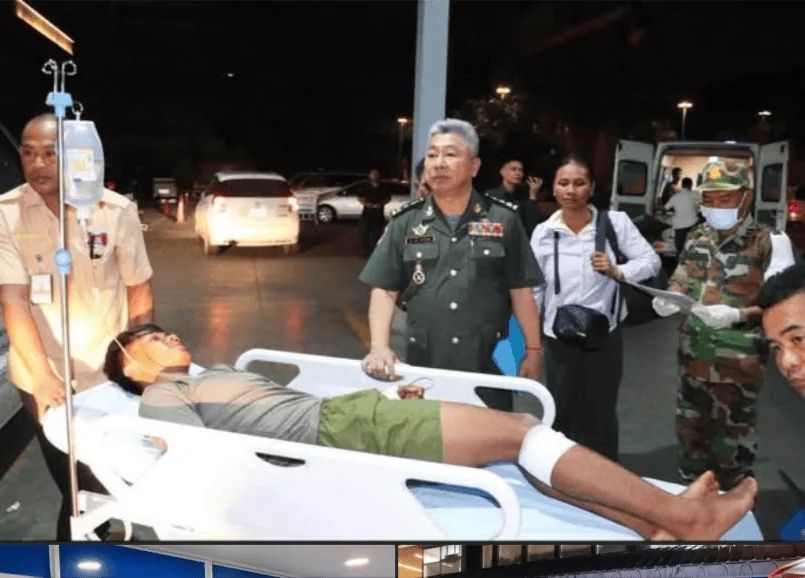
A roadside blast along the Cambodia-Thailand frontier has left four military personnel wounded, authorities announced on Monday, raising fresh concerns about the volatile security situation in the border region where landmines and unexploded ordnance continue to pose significant hazards. The incident underscores the lingering dangers that both nations face in demilitarised zones stretching across their shared boundary, areas where decades of conflict have left dangerous legacies.
Cambodia's Ministry of National Defence confirmed the detonation occurred on Sunday afternoon at 12:35 p.m. in a cashew plantation setting within the villages of Chouk Kruos and Thma Don in Oddar Meanchey province. Lieutenant General Maly Socheata, an undersecretary of state serving as the ministry's official spokeswoman, provided limited details on the explosion but stressed that injured personnel were receiving appropriate medical attention from assigned medical teams and supporting staff. The defence ministry did not immediately specify the exact nature of the explosive device or provide casualty updates beyond the initial injury count.
The incident unfolded as Cambodian military units conducted routine patrol activities across the border region, an area historically significant for regional trade and agriculture but persistently problematic due to unresolved boundary disputes and residual weapons from past conflicts. Cashew cultivation has emerged as a key economic activity in northern Cambodia, and maintaining security along farmland in border zones remains an ongoing operational priority for the military. These patrols represent standard security protocols maintained by Cambodia to monitor its frontier and respond to unauthorised activities or trafficking.
Thai military command moved swiftly to distance itself from the blast, with Army spokesperson Winthai Suvaree issuing a statement on Sunday clarifying that Thai forces stationed on their side of the border had been executing standard patrol duties when they detected the explosion emanating from Cambodian territory. The Royal Thai Army explicitly denied deploying any ordnance during the incident, stating unequivocally that its personnel neither discharged weapons nor deployed grenades. Such clarifications reflect sensitivities surrounding border incidents that have occasionally sparked diplomatic friction between the two Southeast Asian neighbours.
A preliminary Thai military investigation concluded that the explosion originated exclusively within Cambodian territory and bore no connection to Thai military action. This finding was corroborated by responsible Thai units operating in the vicinity, effectively ruling out cross-border fire or accidental discharge as contributing factors. The quick assessment appears designed to prevent misunderstandings and reinforce that established border protocols were followed, preventing potential escalation of tensions along a frontier where military incidents occasionally generate regional concern.
Border security challenges between Cambodia and Thailand have evolved significantly since the closure of land checkpoints and resolution of major disputes in recent years. However, the frontier remains scattered with mines and unexploded remnants of war from multiple conflict periods spanning decades, transforming routine military operations into hazardous undertakings. Both nations have undertaken demining initiatives, yet progress has been incremental given the enormous scale of contamination across northern regions. Casualties from improvised explosive devices and landmines occur periodically, affecting both military personnel and civilians engaged in economic activities near border areas.
For Malaysian observers, this incident illuminates broader Southeast Asian security dynamics where historical conflicts continue generating contemporary operational challenges. The region's shared experience with post-conflict reconstruction, particularly regarding mine clearance and ammunition disposal, resonates across ASEAN nations including Malaysia, which has managed comparable legacies in border regions. The cooperative approach demonstrated by both Cambodia and Thai commands in issuing timely clarifications represents a model for responsible border incident management that neighbouring countries have increasingly adopted to prevent miscalculation.
The incident also highlights vulnerabilities facing agricultural workers and military personnel operating in frontier zones where economic development increasingly encroaches upon contaminated territories. Oddar Meanchey province has witnessed agricultural expansion, particularly in cashew farming, creating competing demands between economic activity and security considerations. Civilians engaged in farming operations face comparable risks, though military patrols typically occur in designated corridors attempting to separate development zones from the most hazardous areas.
Cambodia and Thailand have maintained relatively stable relations in recent years despite the persistent border demarcation issues inherited from colonial-era boundary definitions. Both nations have invested in military-to-military cooperation mechanisms and regular diplomatic engagement addressing security matters. This incident, while serious, appears unlikely to generate major diplomatic complications given the swift clarifications issued and the established protocols governing border operations. However, it underscores the necessity for continued investment in mine clearance programmes and hazard awareness training for military personnel regularly stationed in frontier regions.

