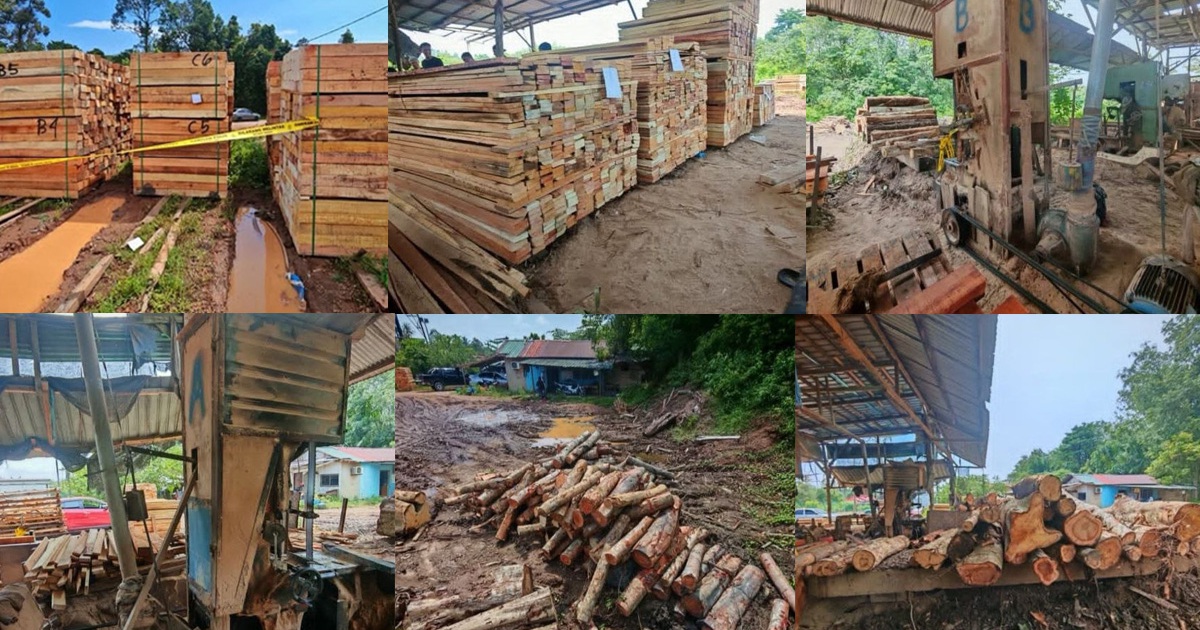
Law enforcement authorities have intensified crackdowns on illegal timber operations in peninsular Malaysia, with a significant raid in Kelantan's Tanah Merah district yielding four arrests and the seizure of substantial assets. The operation, conducted at an unlicensed sawmill facility in Kampung Bukit Kechik, resulted in the detention of one operator and three employees as officials moved to curtail illicit wood processing activities in the state.
The combined value of materials and machinery confiscated during the enforcement action reached approximately RM600,000, demonstrating the scale of illegal timber trading that persists despite regulatory oversight. The raid represents part of a broader initiative by Malaysian authorities to combat unauthorised forestry operations that circumvent environmental regulations and deprive the government of legitimate timber licensing revenue.
Kelantan has long remained a focal point for timber-related enforcement operations, given the state's significant forest resources and historical challenges with illegal logging and processing. The Kampung Bukit Kechik area, situated within the Tanah Merah municipality, has reportedly been subject to previous regulatory scrutiny, suggesting persistent non-compliance issues at the specific location.
The operation underscores the distinction between licensed and unauthorised timber processing facilities in Malaysia. While legitimate sawmills operate under strict environmental and safety protocols, unlicensed operations typically bypass mandatory compliance measures, operate without proper permits, and avoid taxation obligations. The arrested operator now faces potential prosecution under relevant legislation governing timber processing and environmental protection.
For Malaysia's forestry sector, illegal timber operations represent a significant economic and environmental concern. Beyond the immediate loss of government revenue that should accrue through licensing fees, such operations contribute to inefficient resource utilisation and undermine the competitive position of legitimate timber businesses that comply with regulations and incur substantial compliance costs. The seizure demonstrates that despite these challenges, enforcement mechanisms remain active and capable of identifying and dismantling unauthorised operations.
The three workers apprehended alongside the operator may face charges as accomplices, though their level of culpability and whether they were aware of the facility's unlicensed status will likely factor into any legal proceedings. In many cases, workers at such facilities may have limited understanding of regulatory requirements or may be employed under precarious conditions with minimal awareness of operational legality.
Kelantan's timber sector has historically generated considerable controversy, with competing interests between environmental conservation advocates, indigenous communities, licensed operators, and state economic priorities. The state government has periodically faced criticism regarding the balance between timber harvesting permits and environmental protection, making enforcement actions symbolically important for demonstrating regulatory commitment.
The raid's timing and scale suggest coordinated enforcement effort, likely involving forestry department officials, police, and potentially customs or environmental agency personnel. Such multi-agency operations typically occur following intelligence gathering or complaints from legitimate industry participants, who often report competitor violations to regulatory bodies.
Matters related to illegal timber processing have gained elevated profile across Southeast Asia, where both environmental organisations and governments increasingly recognise the connection between illicit forestry operations and forest degradation, climate impact, and revenue loss. Malaysia, as a significant timber-producing nation with international market presence, faces particular scrutiny regarding supply chain integrity and sourcing legitimacy.
The four detained individuals now enter the Malaysian judicial system, where they will face investigation and potential prosecution. If convicted, penalties may include substantial fines and imprisonment terms, though exact sentencing depends on specific charges and applicable legislation. Previous cases involving illegal timber operations in Malaysia have resulted in sentences ranging from several months to multiple years, depending on violation severity.
For the broader business environment, the raid reinforces that unlicensed operations face genuine enforcement risk despite the apparent ease with which such facilities sometimes operate. This should encourage marginal operators to formalise their status or cease operations, though experience suggests that enforcing compliance across Malaysia's diverse forestry landscape remains an ongoing challenge requiring sustained commitment.
The confiscated machinery and timber will likely be processed through government channels, with materials potentially auctioned or transferred to state forestry management, while equipment becomes government property. Such assets occasionally face disposal difficulties, creating storage and maintenance costs that represent another dimension of the enforcement effort's economic impact.
Government authorities have not yet released detailed statements regarding the specific timber species or equipment types seized, or whether any materials originated from protected forest reserves. These details may emerge during investigation or prosecution proceedings, potentially revealing additional regulatory violations beyond the fundamental unlicensed operation charge.

