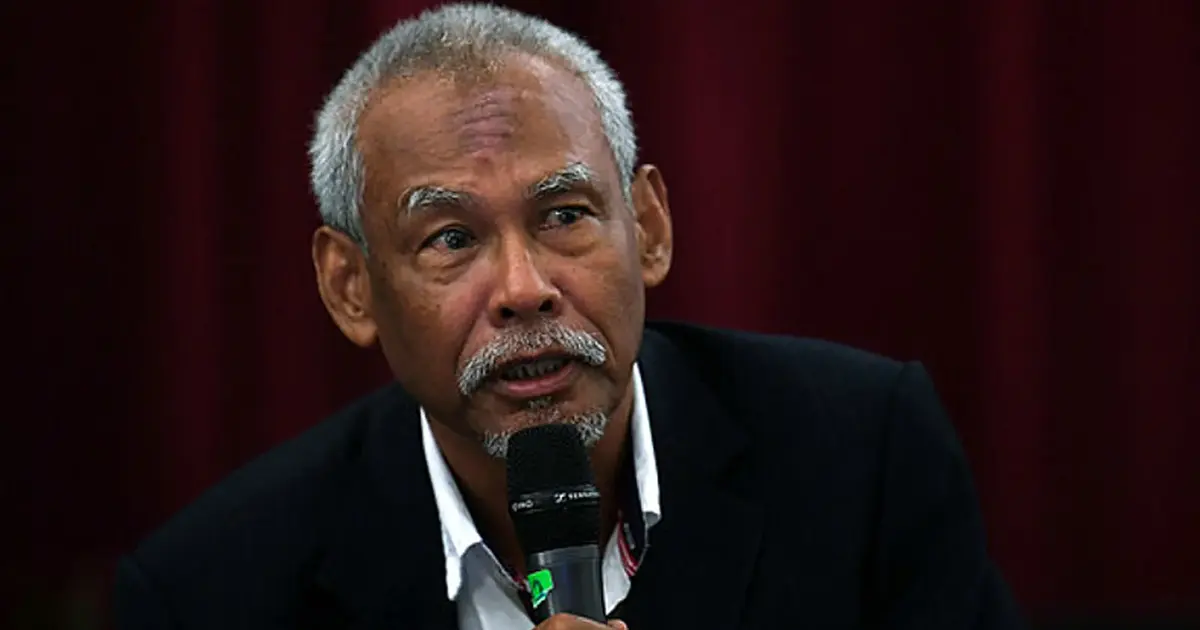
In a significant legal setback for former Inspector-General of Police Musa Hassan, Malaysia's apex court has declined to entertain his bid to appeal a defamation lawsuit through constitutional review. The court's decision marks the end of a lengthy procedural battle and allows the original case to proceed without the fundamental questioning of public officials' litigation rights that Musa Hassan had sought to establish.
Musa Hassan had presented nine distinct legal questions to the court, centring on whether public officers retain the right to initiate defamation actions and how such suits interact with constitutional protections for freedom of speech. His argument fundamentally challenged the balance between an individual's reputation and society's interest in unfettered public discourse. The former police chief contended that the constitutional framework should be clarified to address potential conflicts between these competing interests, particularly when high-ranking government officials are involved in litigation against citizens.
The apex court's rejection of his application signals that the judicial body found these nine questions did not meet the threshold required for constitutional review. In Malaysia's legal system, constitutional review is a mechanism reserved for cases that raise genuine questions about the interpretation or application of fundamental constitutional provisions. The court's determination that Musa Hassan's arguments did not qualify suggests the judiciary views the existing legal framework as adequate to address the issues he raised, or that his concerns fall outside the scope of constitutionally significant questions.
This ruling has important implications for understanding how Malaysian courts balance public accountability with personal reputation rights. The decision effectively upholds the existing framework that permits public officials to pursue defamation claims, without requiring a broader constitutional recalibration of when such suits should be permitted. For Malaysian legal scholars and practitioners, the judgment represents a judicial preference to resolve such disputes through conventional defamation law rather than through sweeping constitutional interventions.
The defamation action itself centres on allegations made against Musa Hassan, though the specific nature of the disputed statements and the identity of Hannah—the opposing party—underscores the contemporary tensions surrounding political speech and official accountability in Malaysia. Defamation cases involving prominent figures often attract significant public attention, as they sit at the intersection of personal reputation protection and the democratic need for robust public criticism of government officials and their actions.
Musa Hassan's strategy of appealing through constitutional review represented an ambitious attempt to shift the legal battlefield. Rather than defending himself within conventional defamation law—where the focus would be on whether statements were factually accurate, damaging, and made without justification—he sought to establish that public officers should face higher barriers to bringing such suits in the first place. This approach, if successful, would have established new precedent limiting the litigation rights of government officials, a substantial shift in Malaysian jurisprudence.
The court's rejection of this approach indicates judicial reluctance to impose categorical restrictions on public officials' ability to seek legal remedies for reputational harm. Malaysian courts have historically maintained the position that all individuals, regardless of official status, retain rights under defamation law. However, defamation doctrine does incorporate protections for speech on matters of public interest, and qualified privilege doctrines already provide some safeguards for legitimate commentary and reporting on government conduct.
For Malaysian citizens and media practitioners, the judgment clarifies that public interest defences remain available in cases involving official figures, even as the court declines to establish blanket restrictions on official litigation rights. This balanced approach preserves the ability of individuals—including public officials—to protect their reputations while maintaining existing doctrines that protect commentary on public affairs and official conduct.
The dismissal of Musa Hassan's application also has practical consequences for the broader legal community. It suggests the apex court will not readily entertain constitutional review applications that seek to fundamentally restructure defamation law, preferring instead to allow such questions to develop through incremental case-by-case adjudication. This approach maintains consistency with the court's broader jurisprudential trend of exercising restraint in constitutional review, reserving such applications for cases involving clearer violations of fundamental rights.
For Southeast Asia more broadly, Malaysia's handling of defamation cases involving prominent figures has regional relevance. Several neighbouring jurisdictions face similar challenges in calibrating defamation law to accommodate both reputation protection and robust public discourse. The apex court's decision implicitly endorses the view that existing legal frameworks, despite their complexity, remain adequate to address these competing concerns without constitutional intervention.
Moving forward, the defamation action will proceed through the ordinary court system, where a judge will assess the specific allegations, their factual basis, and whether applicable defences—particularly those protecting speech in the public interest—apply. This resolution returns the matter to conventional jurisprudential channels, where the development of defamation law will continue incrementally through individual decisions rather than through broad constitutional pronouncements.

