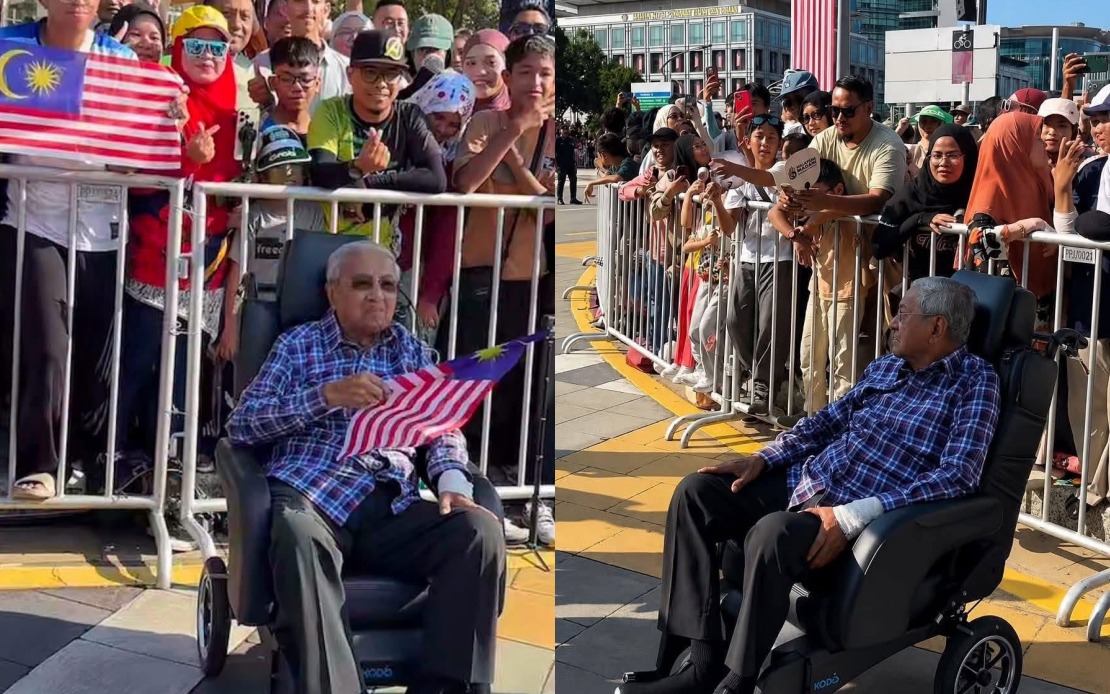
The question of whether Malaysia's former prime ministers should automatically attend National Day celebrations has been formally addressed by the government, with officials confirming that no such standing entitlement exists. The clarification emerged following public interest in former Prime Minister Tun Dr Mahathir Mohamad's presence at this year's ceremony held at Dataran Putrajaya, prompting the National Day Celebration 2026 Secretariat to release a statement outlining the actual procedures governing such attendances.
According to Datuk Abdul Halim Hamzah, chairman of the 2026 National Day and Malaysia Day Celebration Working Committee and secretary-general of the Communications Ministry, the protocol for extending invitations to major federal government functions rests with the Prime Minister's Department's Protocol and International Conference Secretariat Division, known locally as BIUPA. This centralised arrangement ensures consistency and prevents ad-hoc decisions that might lack transparency or fairness. The existence of a formal institutional mechanism underscores the government's intention to treat such matters according to predetermined standards rather than personal preference.
The stated practice since 2018 represents a departure from any presumed automatic rights that former prime ministers might previously have enjoyed. Under the current framework, invitations to National Day Celebration are not granted simply by virtue of having held the office. Instead, the process requires former leaders interested in attending to submit formal applications through appropriate channels. This shift toward a merit-based or case-by-case evaluation reflects a broader modernisation of government protocol, though it may surprise those accustomed to older conventions where such figures occupied a permanent place at state occasions.
However, the government has been careful to emphasise that former prime ministers are not barred from attending these celebrations. The distinction is subtle but significant: attendance is possible and not forbidden, but it must be arranged through formal channels and follows established procedures. This language suggests that the government wants to appear neither dismissive of former leaders nor committed to indefinite privileges for them. Applications must navigate the same approval processes as any other special request, suggesting an equalising principle at work.
In Dr Mahathir's specific case, his attendance appears to have been facilitated through a different administrative mechanism rather than a direct invitation as a former premier. The Prime Minister's Office received an application from him regarding the Overseas Rest Facility, with Dr Mahathir indicating that his scheduled travel abroad spanned August 28 to 31, 2026. Prime Minister Datuk Seri Anwar Ibrahim approved this application in accordance with the Remuneration of Former Prime Ministers provisions outlined in the Members of Parliament (Remuneration) Act 1980, also known as Act 237.
This arrangement highlights the complexity of Malaysia's governance framework, where multiple statutes and facilities intersect with ceremonial obligations. The Overseas Rest Facility operates under a separate legislative basis than National Day invitation protocols, yet it appears to have enabled Dr Mahathir's participation. The approval came through remuneration-related entitlements rather than through celebration-specific invitations, suggesting that former prime ministers retain certain benefits and access rights that differ from ceremonial privileges. Understanding this distinction is important for assessing what the government actually changed regarding former leaders' access to state occasions.
The 2018 date marking the beginning of the current practice is noteworthy, as it falls within a period of significant political transition in Malaysia. The change in invitation protocols may reflect efforts by successive administrations to establish clearer boundaries around the privileges attached to having served as prime minister. By formalising the application process and removing automatic entitlements, the government appears to have sought greater control over ceremonial participation while maintaining a facade of inclusivity and non-discrimination.
For Malaysian observers following this issue, the practical implications are worth considering. If former prime ministers must apply for attendance at major state functions, their presence becomes less predictable and potentially more politically charged. Each attendance becomes a deliberate choice by the sitting government rather than an inevitable occurrence. This shift grants the Prime Minister's Office discretionary power over who appears on the platform during celebrations, which could be viewed either as necessary administrative modernisation or as a means of controlling optics and messaging around the incumbent's relationship with predecessors.
The precedent set by this arrangement will likely influence how future governments treat former prime ministers seeking to participate in public ceremonies. Should some former leaders' applications be approved while others are declined, questions of fairness and political motivation would inevitably arise. The government's reliance on established procedures and formalised processes seems designed to insulate these decisions from such criticism, though sceptics might question whether procedural regularity truly eliminates subjective judgment in approval decisions.
Regionally, Malaysia's approach to integrating former leaders into public life differs from some neighbouring countries where such figures either retain prominent ceremonial roles automatically or face more explicit exclusion from state occasions. Thailand's constitutional framework, for instance, imposes specific restrictions on certain former prime ministers, whereas Singapore tends toward more discrete handling of such matters. Malaysia's middle path—neither automatic inclusion nor explicit prohibition—reflects the country's attempt to balance respect for institutional history with contemporary governance preferences.
The secretariat's statement, while clarifying that no automatic right to attendance exists, stops short of explaining the underlying rationale for this practice or identifying circumstances under which applications might be approved or rejected. This opacity may itself generate further questions about the criteria applied to former leaders' requests. The government has chosen to establish a formal procedure without necessarily making transparent the decision-making process that follows application submission, leaving room for speculation about how political considerations might influence approval determinations.

