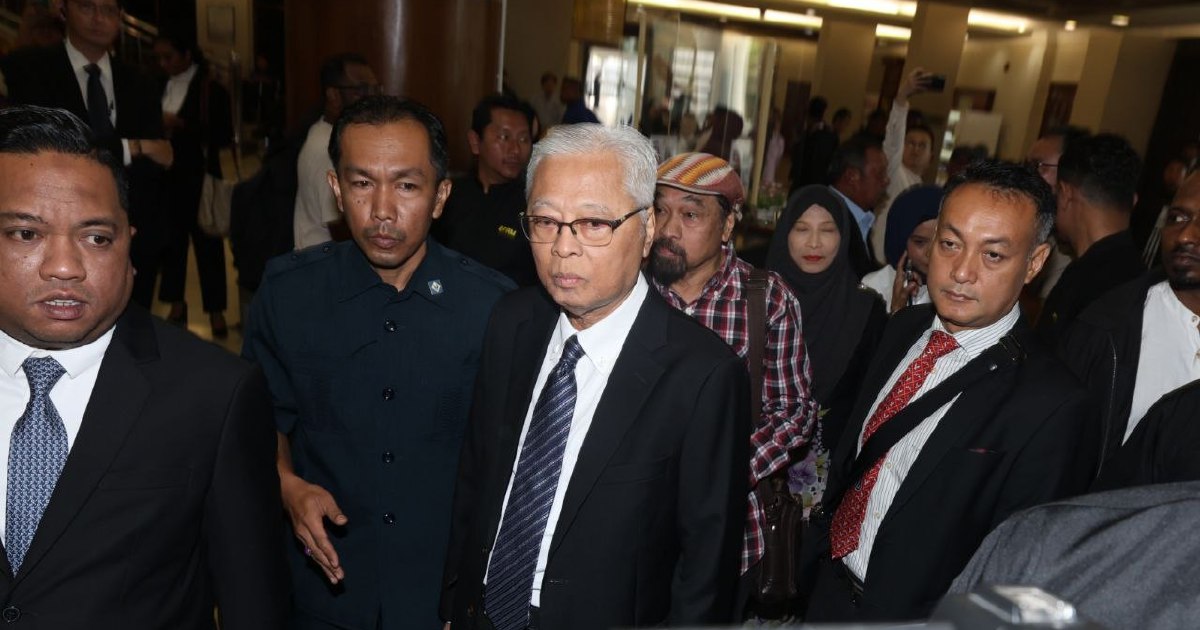
Former Prime Minister Datuk Seri Ismail Sabri Yaakob stepped into the Kuala Lumpur Sessions Court today to confront asset declaration allegations, continuing a pattern of legal scrutiny affecting Malaysia's recent political leadership. The charge centres on his failure to declare assets, a requirement mandated under Malaysian law for public officials seeking to maintain transparency and public trust in governance.
The appearance represents a significant moment in Malaysia's efforts to strengthen accountability mechanisms within its political establishment. Over the past several years, the country has intensified investigations into financial discrepancies and undisclosed holdings among former government officials, reflecting broader public concern about governance standards and the proper use of public office. These prosecutions signal the judiciary's willingness to pursue cases against high-ranking figures regardless of their former positions.
Asset declaration requirements form a cornerstone of anti-corruption frameworks across Southeast Asia. Malaysia's regulations compel political office-holders to maintain complete and accurate records of their financial positions and material holdings. The rationale behind such transparency measures lies in detecting potential conflicts of interest and preventing officials from accumulating unexplained wealth during or immediately after their tenure in government. When such declarations are incomplete or deliberately concealed, they trigger formal investigations by relevant authorities.
For Malaysian observers, this case carries particular resonance given the nation's recent political trajectory. The country has witnessed considerable upheaval in its leadership structures, with multiple transitions of power over the past several years creating opportunities for scrutiny of predecessors' conduct. Citizens have increasingly demanded that accountability mechanisms operate evenhandedly across political affiliations, viewing equitable application of the law as essential to rebuilding confidence in institutions.
The Sessions Court proceedings will likely attract considerable public and political attention, as Ismail Sabri remained a prominent figure within the United Malays National Organisation (UMNO) and served as Prime Minister until his government's collapse in 2022. His tenure, though relatively brief, occurred during a turbulent period in Malaysian politics marked by frequent coalition realignments and governmental instability. Public interest in his legal matters reflects broader concerns about how Malaysia's political elite have conducted themselves during these uncertain times.
Asset declaration cases present particular investigative challenges, requiring authorities to trace financial transactions, property ownership records, and other documentation spanning extended periods. Prosecutors must establish clear evidence of intentional non-disclosure rather than mere administrative oversights, a distinction that becomes crucial during trial proceedings. The complexity of such investigations explains why prosecutions often emerge months or years after officials have departed from office.
The timing of charges against former political leaders carries implications beyond individual cases, influencing how prospective candidates approach compliance with transparency requirements. When enforcement appears rigorous and consequences meaningful, officials at all levels face incentives to maintain meticulous records and accurate declarations. Conversely, if accountability appears inconsistent or selective, confidence in the system's credibility deteriorates among both the political class and the public.
For Malaysia's international standing, these proceedings demonstrate the country's commitment to institutional governance and rule of law principles. Foreign investors and international observers often assess countries partly through their willingness to pursue corruption and accountability cases against powerful figures. When the judiciary operates independently and prosecutes prominent officials when evidence warrants, it strengthens perceptions of institutional integrity.
The broader Southeast Asian context also merits consideration, as Malaysia competes with regional neighbours in attracting investment and talent by demonstrating good governance standards. Several countries in the region have implemented similar asset declaration frameworks, though enforcement levels vary considerably. Malaysia's visible prosecution of high-profile figures sends signals about the seriousness with which it treats compliance, potentially influencing behaviour throughout the political and bureaucratic establishment.
Civil society organisations and governance watchdogs have monitored this case closely, viewing it as indicative of whether Malaysia's anti-corruption mechanisms possess genuine teeth or function merely as ceremonial exercises. The eventual court verdict will likely shape public perception of the justice system's impartiality and effectiveness. Beyond the immediate verdict, how thoroughly the prosecution presents its evidence and how rigorously the court examines the charges will communicate important messages about institutional independence and commitment to accountability.
The court proceedings are expected to unfold over an extended period, with multiple dates potentially scheduled for evidence presentation, witness testimony, and legal arguments. The outcome remains uncertain, as the burden of proof rests with prosecutors to demonstrate beyond reasonable doubt that the asset declaration failures were deliberate and substantive rather than technical or inadvertent. Whatever the verdict, the case will contribute to ongoing conversations about strengthening Malaysia's governance frameworks and ensuring political leaders conduct themselves according to established legal standards.

