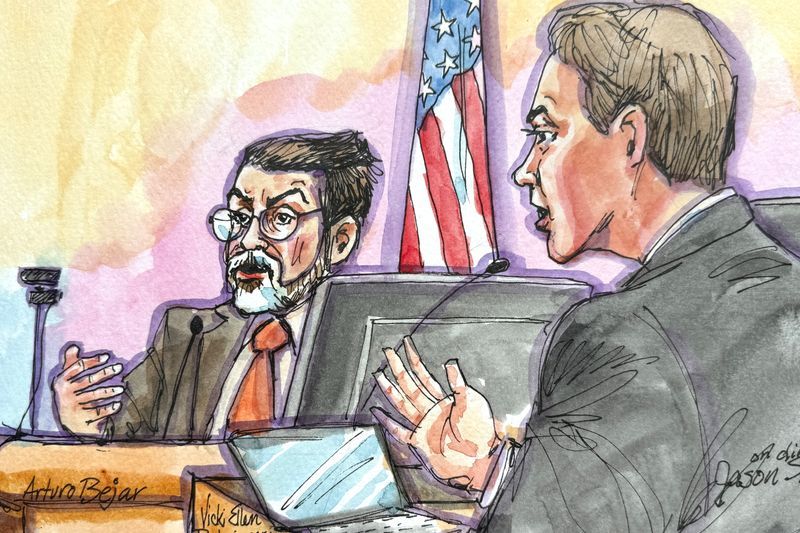
Arturo Bejar, who spent years as an engineering director at Meta before criticising the company's approach to child safety, has resumed his pivotal testimony in a landmark federal trial that could fundamentally reshape how Facebook and Instagram operate. The case centres on allegations from four states—California, Colorado, Kentucky and New Jersey—that Meta deliberately architected its platforms to trap young users in addictive cycles while systematically downplaying documented harms and collecting data illegally from children under 13. The trial, expected to last six weeks in an Oakland federal courthouse, represents the most significant legal examination yet of social media's impact on adolescent wellbeing, with profound implications not only for American tech regulation but also for how platforms operate globally, including across Southeast Asia.
Bejar's unique credibility stems from his insider perspective. He served as an engineering director at Meta from 2009 to 2015, then returned as an independent contractor from 2019 to 2021, positioning him as someone with intimate knowledge of the company's internal decision-making processes across different eras. During his second stint with the company, he led research initiatives examining how teenagers experienced Instagram, conducting surveys and analysing user data to assess the platform's impact on wellbeing. Rather than remaining silent about concerning findings, Bejar escalated his worries through proper channels, documenting his concerns in communications to senior leadership including Meta's chief product officer Chris Cox. His willingness to criticise his former employer publicly—including testimony before the US Senate in 2023—has made him a target for Meta's legal strategy but also a credible voice for the prosecution.
The crux of Bejar's testimony centres on a fundamental disconnect between how Meta measured harm and the actual suffering experienced by young users. He has explained to the court that Meta's internal surveillance mechanisms were structured primarily to track policy violations rather than to measure genuine user harm. This distinction matters enormously. A platform might suppress explicit hate speech while simultaneously promoting content designed to provoke emotional reactions, keeping teenagers engaged for longer periods. Bejar highlighted in his testimony that young people were experiencing harm at extraordinarily high rates—a reality he argued any responsible parent would have insisted upon knowing before allowing their children access to the platforms.
A particularly damaging piece of evidence Bejar presented was an email he sent to Chris Cox pointing out a substantial gap between the prevalence of harmful content that Meta publicly reported and the actual harm users reported experiencing. This email potentially demonstrates that Meta had internal data contradicting its public safety messaging, raising questions about whether the company knowingly misled consumers, regulators and parents about its platforms' safety records. Such evidence, if accepted by the jury, could expose Meta to liability not merely for negligence but for deliberate deception.
Meta's legal team has vigorously contested Bejar's credibility, arguing that his opinions exceed the scope of his actual work at the company and that he should be barred from testifying at all. The company also attempted—unsuccessfully—to block his testimony by arguing he destroyed evidence by deleting Signal conversations with other former Meta employees. US District Judge Yvonne Gonzalez Rogers rejected this attempt, characterising it as a long-shot effort to eliminate a key witness. Meta maintains it stands by its protective measures for teenagers and denies the states' core allegations that it deliberately designed addictive systems for young people.
The trial brings together claims from 33 states total, creating unprecedented legal pressure on Meta. Beyond the four states leading the addiction and deception charges, 29 additional states are pursuing separate allegations that Meta violated federal law by improperly collecting and using personal data from children using its platforms. This multi-pronged approach significantly multiplies the company's legal exposure and reflects growing consensus among American state attorneys general that social media regulation has become a matter of urgent public concern.
Context matters here for understanding why this trial carries such weight. Meta already faces thousands of similar lawsuits alleging harm to children, and Bejar has already testified in three cases that proceeded to trial. His involvement in the New Mexico case proved particularly consequential—that trial resulted in Meta facing $942 million in damages and penalties alongside a court order requiring the company to implement specific platform changes within that state. Success in the Oakland trial could establish legal precedent and potentially trigger broader systemic changes across Meta's global operations.
For Malaysian and Southeast Asian readers, this trial carries significance beyond American borders. Meta's business model remains largely consistent across all markets, meaning findings about manipulative design, inadequate child protection and data collection practices could have direct relevance to how the company operates in Malaysia, Singapore, Indonesia and elsewhere in the region. Young people across Southeast Asia use Facebook and Instagram at some of the highest rates globally, making them potentially vulnerable to the same harms that US regulators are now examining. Additionally, regulatory approaches adopted in the United States frequently influence how other nations—including Malaysia—approach technology governance.
The trial also reflects a broader shift in how societies view the relationship between technology companies and child safety. Rather than accepting companies' self-regulatory commitments at face value, governments and courts are increasingly demanding evidence-based accountability. Bejar's testimony is particularly powerful because it comes from someone who attempted to work within Meta's systems to improve child safety but concluded the company prioritised engagement metrics over wellbeing. His willingness to speak publicly, despite potential professional consequences, signals that internal dissent exists even among those who have benefited from Meta's success.
The stakes extend beyond financial penalties. If the court accepts the plaintiffs' framing—that Meta deliberately designed addictive platforms while concealing harms—judges may impose structural remedies requiring fundamental changes to how these platforms operate. Such changes could include algorithmic modifications, reduced use of engagement-maximising features targeting teenagers, enhanced transparency requirements, or even forced separation of platform functions. These remedies would likely affect how the platforms operate everywhere, including in Malaysia.
Bejar's cross-examination will be telling. Meta's lawyers will likely attempt to highlight limitations in his knowledge, challenge the reliability of his survey methodologies, and suggest that correlation between platform use and mental health issues does not necessarily prove causation. Yet his documented internal communications and his credibility as an insider make him a formidable witness. As testimony continues, the trial will reveal whether American courts agree that major social media platforms have crossed ethical and legal lines in their pursuit of young users.

