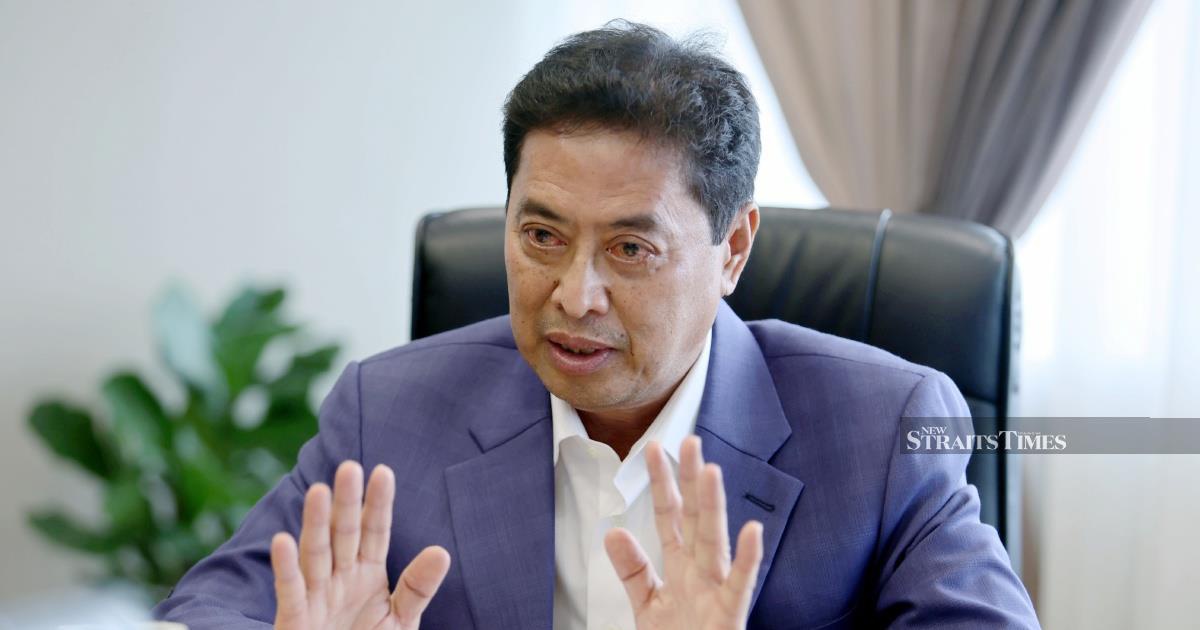
Former Malaysian Anti-Corruption Commission chief commissioner Tan Sri Azam Baki has emphatically denied any involvement in a RM178.29 million government contract awarded to a company with ties to his brother, asserting that he possesses no information regarding the matter. The statement represents a significant development in recent scrutiny surrounding the former anti-graft agency leader and comes amid growing public interest in how such high-value government contracts are allocated across the country.
The emergence of this matter highlights ongoing concerns about potential conflicts of interest involving senior public officials, particularly those who have held positions overseeing transparency and accountability. Malaysia's approach to monitoring such situations has come under increased examination, especially given the MACC's historically pivotal role in investigating corruption allegations affecting government procurement processes. The timing of Azam's denial underscores the heightened sensitivity surrounding government spending in an environment where citizens and civil society groups remain vigilant about irregular business dealings.
Questions have naturally arisen regarding how a contract of such magnitude—RM178.29 million represents substantial government expenditure—came to be awarded to an entity connected to a family member of one of the country's most prominent law enforcement figures. In Malaysia's institutional framework, the MACC chairman traditionally occupies an influential position with considerable authority over corruption investigations, making statements from former officeholders about government transactions worthy of careful public attention. The nature of the relationship between Azam's brother and the company in question has become a focal point for observers seeking clarity on procurement integrity.
Azam's categorical dismissal of any involvement reflects a broader pattern wherein figures facing questions about family business connections attempt to establish clear separation between their official roles and their relatives' commercial activities. Such denials, while procedurally important, do not automatically resolve underlying public concerns about whether decision-making processes remain properly insulated from personal relationships. The statement's categorical nature—claiming complete lack of knowledge—will likely invite further scrutiny from parliamentary oversight bodies and investigative journalism outlets.
The RM178.29 million figure itself merits consideration within Malaysia's budgetary context. Government contracts of this size typically fall under significant procurement frameworks and require various levels of approval, documentation, and oversight. Understanding which ministry or government agency awarded this contract, what services or goods were provided, and through what tendering process it was allocated would be essential for the public to form informed judgments about whether proper procedures were followed. Such information often reveals whether competitive bidding occurred or whether the selection process contained irregularities.
Azam's tenure as MACC chief concluded after his leadership of the institution during a period marked by substantial corruption investigations affecting various government levels. His stewardship of the anti-corruption agency positioned him as a central figure in Malaysia's efforts to combat graft, making his subsequent involvement—or even appearance of involvement—in business arrangements particularly sensitive from a governance perspective. The public's capacity to have confidence in anti-corruption institutions depends significantly on whether their leadership maintains visible distance from activities that might create even theoretical conflicts of interest.
The relationship between senior officials and their family members' business activities remains inadequately regulated in many jurisdictions, including Malaysia. While statutory requirements exist regarding declaration of interests, the mechanisms for enforcing these provisions and ensuring genuine recusal from relevant decision-making processes often lack sufficient transparency or robust enforcement. This case exemplifies why stronger institutional safeguards and clearer guidelines about what constitutes appropriate distance may be necessary to preserve public confidence in government procurement systems.
Neighbouring Southeast Asian countries have grappled with analogous challenges, developing varied approaches to preventing nepotistic advantage in government contracting. Some nations have implemented more rigorous asset declaration regimes, while others have established independent procurement monitoring authorities with actual investigative powers. Malaysia's existing frameworks could potentially be strengthened by studying these comparative models and considering how heightened transparency in government spending decisions might reduce opportunities for suspicious arrangements to flourish.
The broader context of this statement involves Malaysia's ongoing efforts to rebuild institutional credibility following years marked by substantial corruption scandals that penetrated multiple government levels. Public perception of how authorities handle allegations affecting prominent former officials directly impacts societal confidence in governance institutions. Whether this contract situation results in formal investigations, parliamentary inquiries, or other accountability mechanisms will likely influence public assessment of whether Malaysia's anti-corruption infrastructure operates evenhandedly regardless of officials' seniority or positions.
Moving forward, this matter may prompt renewed discussions about strengthening conflict-of-interest frameworks applicable to senior public officials, both during and after their tenure in key positions. Enhanced requirements for independent oversight of major government contracts, particularly those involving entities connected to officials' families, could represent constructive policy responses to the concerns this situation has raised. Such preventive measures might ultimately prove more effective than reactive denials in restoring public confidence.

