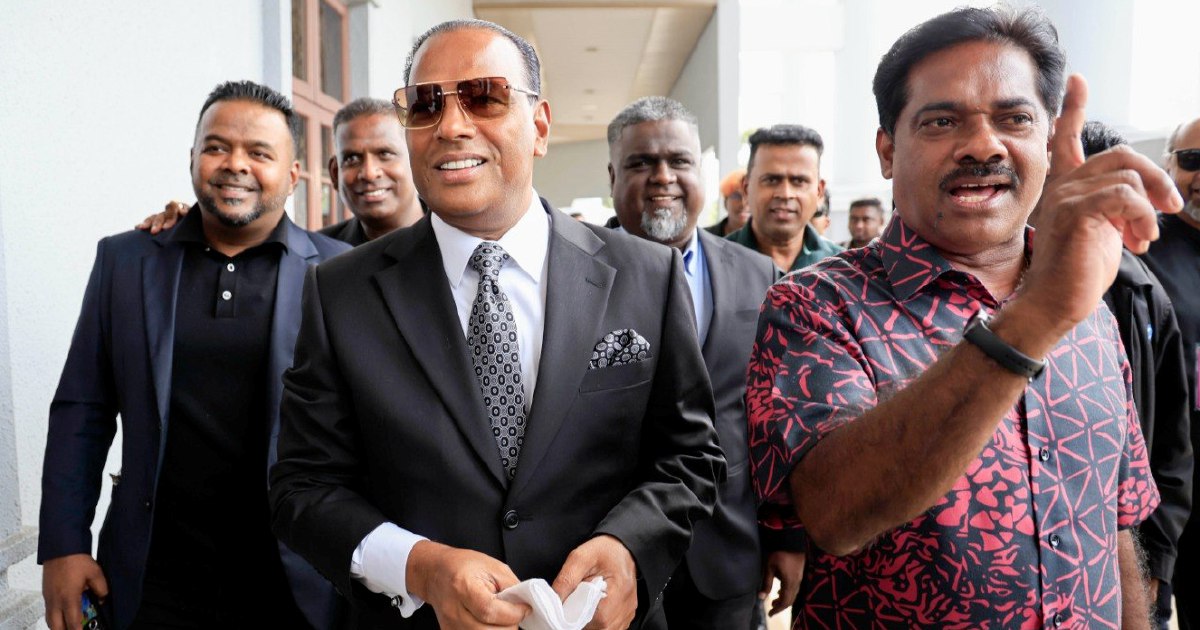
Former Human Resources minister Datuk Seri M. Saravanan has forcefully rejected three corruption charges alleging he accepted RM1.097 million in bribes, describing the accusations as lacking credibility and foundation. Speaking in Kuala Lumpur, the ex-minister characterised the allegations as a "wild accusation", signalling his intention to mount a vigorous legal defence against the charges brought against him.
The charges represent a significant development in Malaysia's ongoing anti-corruption efforts, which have intensified in recent years following heightened public scrutiny of government officials and administrative conduct. Saravanan's categorical denial underscores the polarised nature of high-profile corruption cases in the country, where both accusers and the accused typically maintain entrenched positions from the outset of legal proceedings.
The specific amount mentioned—RM1.097 million—suggests a methodical investigation into Saravanan's financial dealings during his tenure as Human Resources minister. Such precision in allegations typically indicates that investigating authorities have identified concrete transactions or financial transfers that form the basis of their case. The three separate charges imply multiple instances of alleged bribery rather than a single transaction, which prosecutors would argue demonstrates a pattern of misconduct.
Saravanan's role as Human Resources minister would have positioned him at the centre of significant procurement decisions, labour policy implementation, and contractual arrangements with private entities and service providers. Government procurement and ministerial appointments in this portfolio can attract commercial interest from contractors seeking favourable policy treatment or contract awards, creating potential opportunities for corruption if safeguards are inadequate.
The public rebuttal by Saravanan reflects a common strategy in Malaysian political and legal circles, where senior figures facing corruption allegations often move swiftly to discredit charges through media statements and public pronouncements. This approach serves multiple functions: it maintains support among political allies, signals confidence to supporters, and establishes a counter-narrative ahead of court proceedings. However, such statements also carry risks, as they can be scrutinised during legal hearings and potentially used as evidence if defendants' courtroom testimony differs materially from earlier public claims.
For Malaysian readers, this case carries broader implications regarding institutional accountability and the independence of anti-corruption enforcement. The Malaysian Anti-Corruption Commission (MACC), which typically investigates such matters, operates within a framework that has faced periodic criticism from transparency advocates regarding selective prosecution and political considerations. Whether charges against Saravanan reflect genuine malfeasance or represent part of a broader political calculation remains a subject of public debate, particularly given Malaysia's turbulent political environment.
The allegation's timing and context within Malaysia's recent political history cannot be divorced from the charges themselves. The country has witnessed successive cycles of power transitions, coalition reshuffles, and disputes over ministerial appointments that have occasionally resulted in corruption investigations against political opponents. This pattern has contributed to public scepticism about the motivations underlying certain prosecutions, even as genuine instances of ministerial misconduct certainly occur.
Saravanan's assertion that the charges are baseless will face examination once the case proceeds through Malaysia's court system. The defence will likely scrutinise the methodology of investigators, the reliability of witnesses, the documentary evidence undergirding the allegations, and whether the transactions in question were properly authorised or conducted within his ministerial authority. The prosecution, meanwhile, must establish beyond reasonable doubt that funds were received with corrupt intent—a requirement that transforms straightforward financial transfers into proven criminal conduct.
The RM1.097 million figure, if substantiated through documents and testimony, would represent a substantial illicit enrichment for a public servant. The scale of the alleged bribery suggests either a concentrated incident or accumulated smaller transactions. Understanding the sources of these funds, their recipients, and the quid pro quo arrangements they allegedly represented will prove central to determining Saravanan's culpability. Defence counsel will likely argue for alternative explanations for any funds identified, ranging from political contributions to legitimate business transactions.
For Southeast Asian observers, Malaysia's handling of this case will signal the region's broader commitment to tackling high-level corruption among sitting and former officials. While regional anti-corruption bodies have expanded their reach and countries have strengthened legislative frameworks, enforcement against politically connected figures remains inconsistent across Southeast Asia. Malaysia's example, whether conviction or acquittal, will influence expectations regarding accountability in comparable cases across the region.
The resolution of charges against Saravanan also carries implications for public trust in Malaysia's civil service. The Human Resources ministry oversees employment standards, worker protections, and occupational safety—functions affecting millions of Malaysian employees. If systemic corruption corrupted these functions during Saravanan's tenure, broader institutional reform may be warranted. Conversely, if charges prove unfounded, such cases risk eroding public confidence in anti-corruption institutions themselves, deepening cynicism about legal processes already strained by perceptions of political interference.

