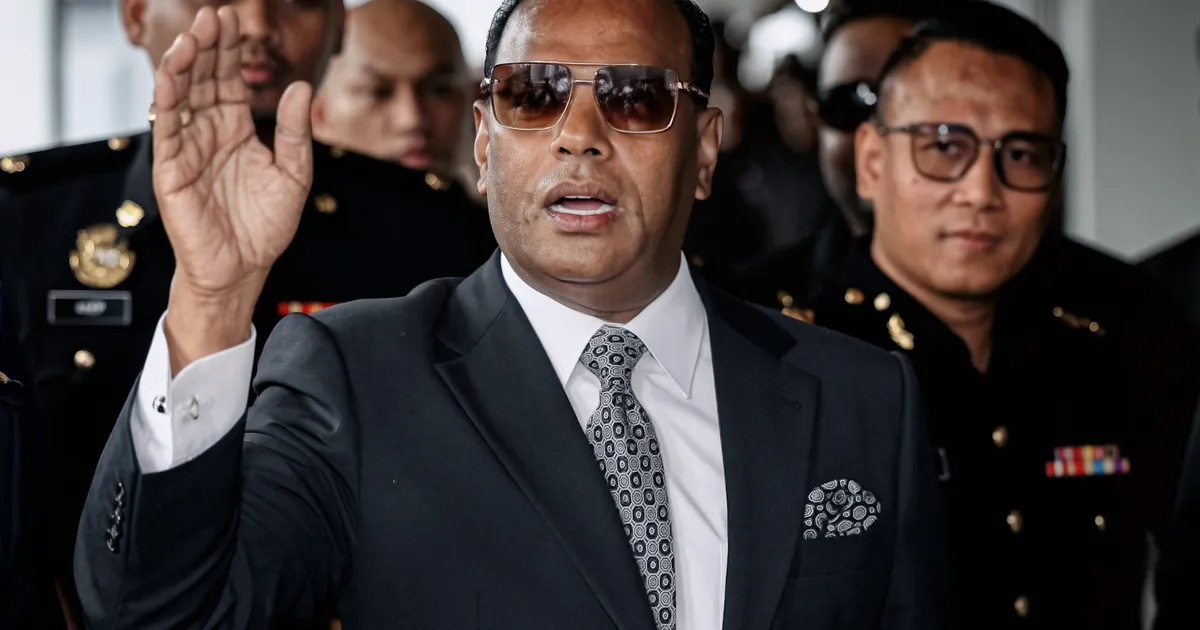
Former Human Resources Minister Saravanan has firmly rejected suggestions that correspondence sent to Prime Minister Anwar Ibrahim was designed to suppress or conceal allegations against him, emphasising instead that the letter requested a comprehensive and impartial review of the corruption charges he faces.
The distinction Saravanan drew between seeking a thorough investigation and attempting to obstruct justice reflects the delicate political backdrop against which anti-corruption proceedings continue across Malaysia. His clarification comes as the country's leadership navigates heightened scrutiny of how the judiciary and investigative agencies handle cases involving prominent political figures, a sensitivity that remains acute within both government circles and the broader public discourse.
According to Saravanan's account, the communication to Anwar focused specifically on the substantive merit of the allegations lodged against him rather than requesting preferential treatment or institutional interference. He maintained that the charges themselves lack credibility and foundation, a position he appears intent on emphasising through official channels and public statements alike. This approach represents a calculated strategy to reframe the narrative surrounding his legal predicament, transforming what could be perceived as behind-the-scenes political maneuvering into a principled demand for fair judicial scrutiny.
The former minister's insistence on the legitimacy of his concerns speaks to a broader pattern within Malaysian politics where individuals facing criminal allegations attempt to shift focus toward procedural fairness and evidentiary strength. By characterising his letter as seeking transparency and rigorous examination rather than discretionary leniency, Saravanan positions himself as someone confident in exoneration through proper legal channels. This rhetorical strategy carries particular weight in a jurisdiction where perceptions of bias or favouritism can significantly influence public confidence in institutions.
Saravanan's case exemplifies the intersection of executive authority and judicial independence that continues to generate tension within Malaysia's constitutional framework. The very act of a former cabinet minister writing to the sitting Prime Minister about pending corruption charges raises questions about the appropriate separation between political leadership and criminal investigations, even when the letter's ostensible purpose is to request fairness rather than intervention. These institutional relationships remain underdeveloped in Malaysian jurisprudence and political practice, leaving considerable ambiguity around what constitutes proper conduct.
The timing and context of such correspondence merit consideration within Malaysia's recent political trajectory. The current administration, led by Anwar, has positioned itself as a champion of anti-corruption efforts and accountability. Against this backdrop, any perception that prominent political figures receive differential treatment could undermine the government's credibility on reform initiatives. Conversely, the appearance of pursuing cases against political opponents with excessive vigour could invite accusations of weaponised justice. Saravanan's intervention attempts to navigate this minefield by appealing to institutional norms around thorough review rather than requesting political intercession.
The nature of corruption allegations in Malaysian politics frequently involves complex financial transactions, contractual arrangements, and documentary evidence that requires substantial investigative resources to evaluate properly. When former officials contest the credibility of charges against them, they typically invoke procedural concerns alongside substantive defences. Saravanan's reliance on both arguments—that his letter sought comprehensive review and that the charges themselves lack foundation—reflects a dual-pronged legal and political strategy increasingly common among defendants in high-profile graft cases.
From a Southeast Asian governance perspective, Malaysia's handling of corruption cases involving former ministers attracts regional attention, particularly given ongoing efforts across the ASEAN bloc to strengthen anti-corruption frameworks and institutional autonomy. Neighbouring countries observe how Malaysian authorities and political leadership navigate pressures to pursue investigations zealously without succumbing to perceptions of selective or vindictive prosecution. Saravanan's case contributes to a broader regional narrative about the efficacy and legitimacy of anti-corruption institutions in established democracies.
The distinction Saravanan draws between seeking cover-up and requesting fair review fundamentally hinges on what constitutes appropriate Prime Ministerial involvement in criminal proceedings. Malaysian constitutional conventions do not expressly prohibit correspondence between charged officials and the head of government, yet such communications exist in a grey zone where political propriety and legal protocol intersect uncomfortably. His clarification attempts to occupy defensible ground within this ambiguous terrain, arguing that requesting institutional review of case credibility differs qualitatively from requesting obstruction of justice.
Moving forward, the substance of Saravanan's defence will likely depend on how comprehensively the investigative and prosecutorial authorities can establish the charges against him. His public statements insisting on the weakness of the allegations against him represent preliminary positioning for what could become protracted legal proceedings. The interaction between his political advocacy through correspondence and his legal defence through court proceedings will continue to generate scrutiny from oversight bodies, civil society, and regional observers monitoring Malaysia's commitment to anti-corruption governance standards.
Ultimately, Saravanan's insistence that his letter sought thorough review rather than cover-up reflects a calculated effort to reframe potentially problematic conduct within acceptable institutional parameters. Whether this characterisation withstands public and legal scrutiny will depend on the substantive content of the correspondence itself and the broader trajectory of his case through the courts. For Malaysia's political establishment and citizens invested in anti-corruption reform, the episode underscores enduring tensions between ensuring accountability and protecting procedural fairness.

