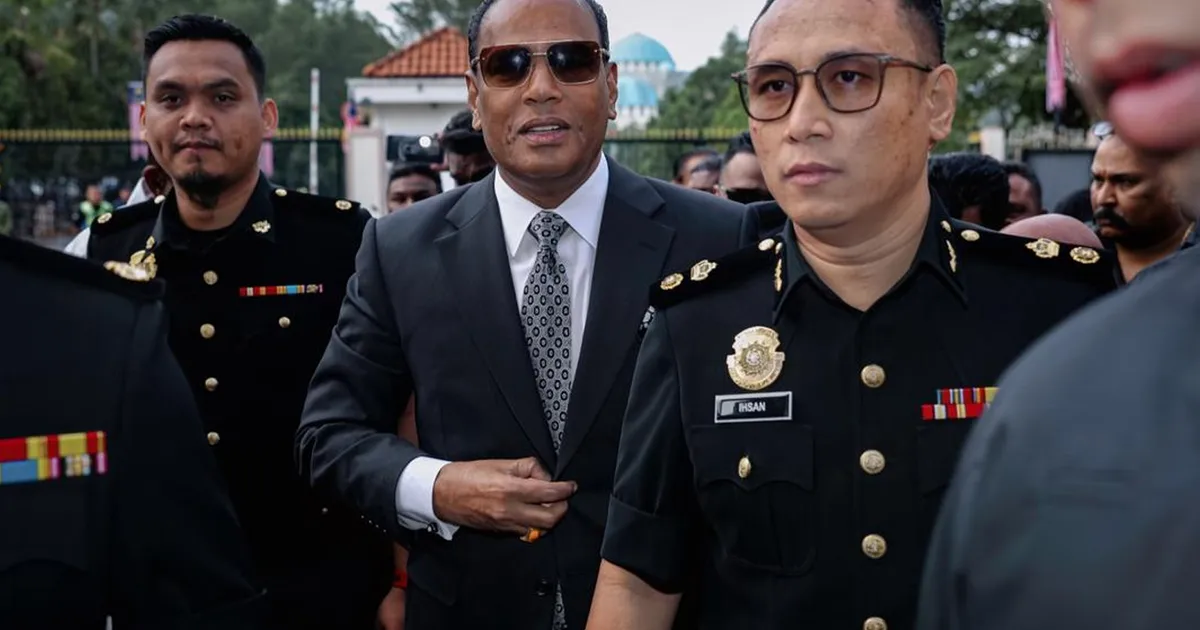
Former human resources minister Saravanan made his way through the Kuala Lumpur courts complex in the early morning hours, arriving shortly after 8:25am for what appears to be a continuation of legal proceedings. The former cabinet minister's appearance at the judicial facility comes as part of an ongoing matter that continues to draw attention to his post-ministerial activities and legal obligations.
The timing of the morning arrival underscores the structured nature of court proceedings, where scheduled appearances require punctuality and formal attendance. Saravanan's presence at the complex signals that his case remains active within Malaysia's legal system, with successive hearing dates maintaining momentum through the judicial process. Such regular court appearances have become a notable aspect of his life since leaving his ministerial portfolio, shifting his public profile from administrative leadership to a defendant navigating courtroom procedures.
The Kuala Lumpur courts complex serves as the venue for numerous high-profile cases involving public figures and former government officials. Its prominence in Malaysia's legal landscape makes any appearance by a former minister a matter of public record and media interest, reflecting the transparency expected in judicial proceedings involving individuals who previously held positions of public trust. The facility itself represents the nation's commitment to upholding the rule of law and ensuring that all individuals, regardless of prior status, are subject to equal treatment under the legal system.
Former human resources ministers in Malaysia have occupied positions of considerable responsibility, overseeing employment policies, labour relations, and ministerial staff matters. When such figures find themselves in legal proceedings, their cases often attract broader scrutiny regarding accountability, governance standards, and institutional integrity. Saravanan's sustained involvement in court appearances suggests ongoing legal complexities that extend beyond any single hearing or preliminary matter.
The formality of his courthouse appearance, conducted during standard business hours when the judiciary is in full operation, indicates that his case follows standard legal protocols rather than emergency or closed-door proceedings. The early morning timing reflects the established schedule of the Kuala Lumpur courts, where multiple cases are heard sequentially throughout the day. His punctual arrival demonstrates compliance with court summonses and procedural expectations, a factor that may weigh on judicial consideration of his overall standing.
Political figures facing legal challenges in Malaysia often experience significant shifts in their public standing and professional opportunities. The transition from ministerial responsibility to courtroom defendant represents a stark contrast in circumstances and authority, one that captures the attention of political observers and the general public alike. For those who previously wielded executive power, such appearances mark a fundamental change in their relationship with institutional systems they once helped to shape.
The attention afforded to Saravanan's court attendance reflects broader Malaysian interest in governance accountability and the principle that public office does not confer immunity from legal scrutiny. Media documentation of his appearances serves as a public record of judicial processes involving former government officials, contributing to the transparent operation of the country's legal institutions. This visibility also reinforces the concept that ministerial positions carry both authority and corresponding legal responsibility.
Court proceedings involving former officials often extend over considerable periods, with multiple hearings required before final determinations are reached. Each successive appearance, including Saravanan's recent morning visit, represents a step within this extended judicial timeline. The accumulation of these appearances can significantly impact the individual's public reputation and the public's perception of justice delivery, particularly when cases remain unresolved for extended periods.
For Malaysian readers and observers of governance matters, Saravanan's continuing legal involvement serves as a reminder of the evolving relationship between political office and personal accountability. The documentation and reporting of such judicial appearances contributes to informed public discourse regarding institutional performance and the mechanisms through which the legal system addresses questions involving former public servants. The case's progression through regular court hearings maintains public awareness of how Malaysia's judicial institutions handle matters involving individuals who previously occupied positions of governmental responsibility and public trust.
As Malaysia continues to strengthen institutional integrity and democratic governance standards, the visibility of such proceedings reinforces the importance of consistent judicial process and equal application of legal principles. Saravanan's continued appearances at the Kuala Lumpur courts complex remain part of this broader narrative of institutional accountability and the rule of law in contemporary Malaysia.

