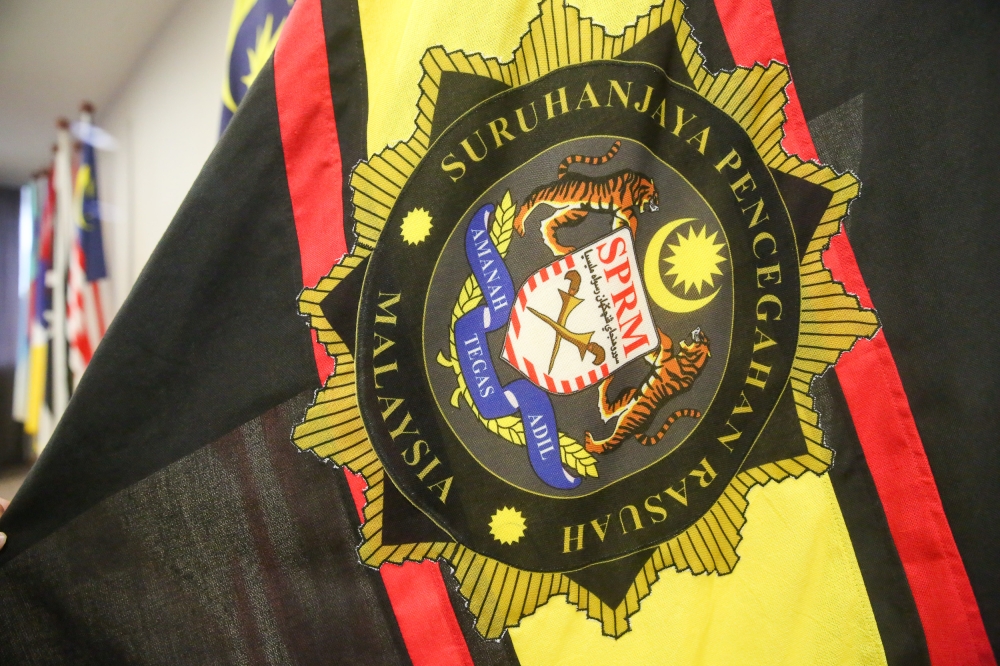
The Malaysian Anti-Corruption Commission (MACC) has arrested a former estate manager employed by a rubber sapling supply company operating in the Klang Valley region, marking a significant development in a sprawling corruption inquiry. The detention relates to investigations into RM8 million in supply transactions that emerged during proceedings of the Tabung Haji Royal Commission of Inquiry, a high-level review ordered into the pilgrimage savings body's finances and governance.
The arrest signals MACC's widening investigation into potential irregularities and misconduct within the Tabung Haji ecosystem. The royal commission, established to examine controversial transactions and management decisions at the Islamic pilgrimage fund, has become a catalyst for anti-corruption authorities to scrutinise connected individuals and businesses that benefited from substantial institutional procurement. The RM8 million in question appears to centre on questionable supply arrangements that the RCI flagged as warranting deeper criminal investigation.
Tabung Haji, officially the Tabung Haji Corporation, serves as Malaysia's premier pilgrimage savings scheme, managing billions in assets accumulated from millions of depositors preparing for the Hajj pilgrimage. The fund's governance failings and previous financial losses have been subjects of intense public scrutiny and political debate. When the royal commission was convened to examine problematic transactions and management oversight, it opened pathways for agencies like MACC to pursue criminal charges where evidence warranted.
The rubber sapling supply contract under examination appears to involve inflated pricing or questionable procurement practices typical of corruption schemes that exploit institutional purchasing power. The Klang Valley location suggests proximity to Kuala Lumpur's decision-making centres, potentially indicating a sophisticated supply chain designed to funnel institutional funds toward connected interests. MACC's focus on the estate manager implies suspicion of involvement in facilitating such arrangements, whether through documentation manipulation, procurement bypassing, or collusion with purchasing officers.
For Malaysian readers, this case demonstrates the interconnected vulnerability of large institutional funds to corruption when oversight mechanisms are weakened. Tabung Haji's experience exemplifies how state bodies managing collective assets—particularly those with religious or social significance—require robust internal controls and transparent procurement processes. The fact that irregularities only surfaced through a royal commission inquiry suggests previous auditing and governance structures failed to detect or prevent problematic transactions.
The detention's timing and specificity also reflect MACC's operational priorities under renewed political attention to institutional corruption. Following governmental transitions and public pressure over financial mismanagement, anti-corruption bodies have expanded investigations into previously untouchable organisations and individuals. The willingness to detain a commercial figure tied to institutional dealings represents escalating enforcement against white-collar misconduct in Malaysia's corporate-government nexus.
The Tabung Haji RCI itself has broader implications for Malaysian governance accountability. Royal commissions of inquiry, when appropriately resourced and insulated from political interference, can investigate matters beyond routine parliamentary oversight and auditing procedures. By identifying specific transaction anomalies and referring them to law enforcement, the RCI has created legal accountability pathways that might otherwise remain dormant. This model has relevance across other Malaysian institutions currently facing scrutiny.
For the Islamic banking and financial sector specifically, investigations into Tabung Haji's governance have repercussions for reputational confidence and regulatory credibility. Muslim depositors viewing Tabung Haji as a trusted institution partly because of its religious character face discomfort when corrupt practices undermine that trust. The anti-corruption investigation, while necessary for institutional cleansing, simultaneously highlights the need for strengthened Islamic financial governance standards that rival private-sector corporate controls.
The detained estate manager's position as a mid-level operative in a supply company raises questions about network complexity within these schemes. Typically, such arrangements involve multiple stakeholders—company directors, procurement officers, middlemen, and sometimes government officials—creating webs of complicity. MACC's detention strategy often targets individuals across different tiers to unravel these networks, applying investigative pressure to extract information about senior involvement or organisational links.
Regional observers watch Malaysia's anti-corruption trajectory closely given similar institutional vulnerabilities across Southeast Asia. Fund management bodies, development agencies, and state enterprises throughout the region face comparable corruption risks. Malaysia's commitment to prosecuting these cases, when genuine, sets precedents for regional governance standards and investor confidence in institutional integrity.
The investigation's scope remains unclear, with questions persisting about whether the RM8 million represents the full extent of questionable Tabung Haji transactions or merely the quantity triggering current charges. Subsequent detention extensions or charges against other individuals would suggest broader systematic problems requiring organisational restructuring beyond personnel accountability. Malaysian observers await further disclosures to assess whether this detention represents genuine corruption prosecution or selective enforcement targeting lower-ranking scapegoats while shielding senior officials from liability.

