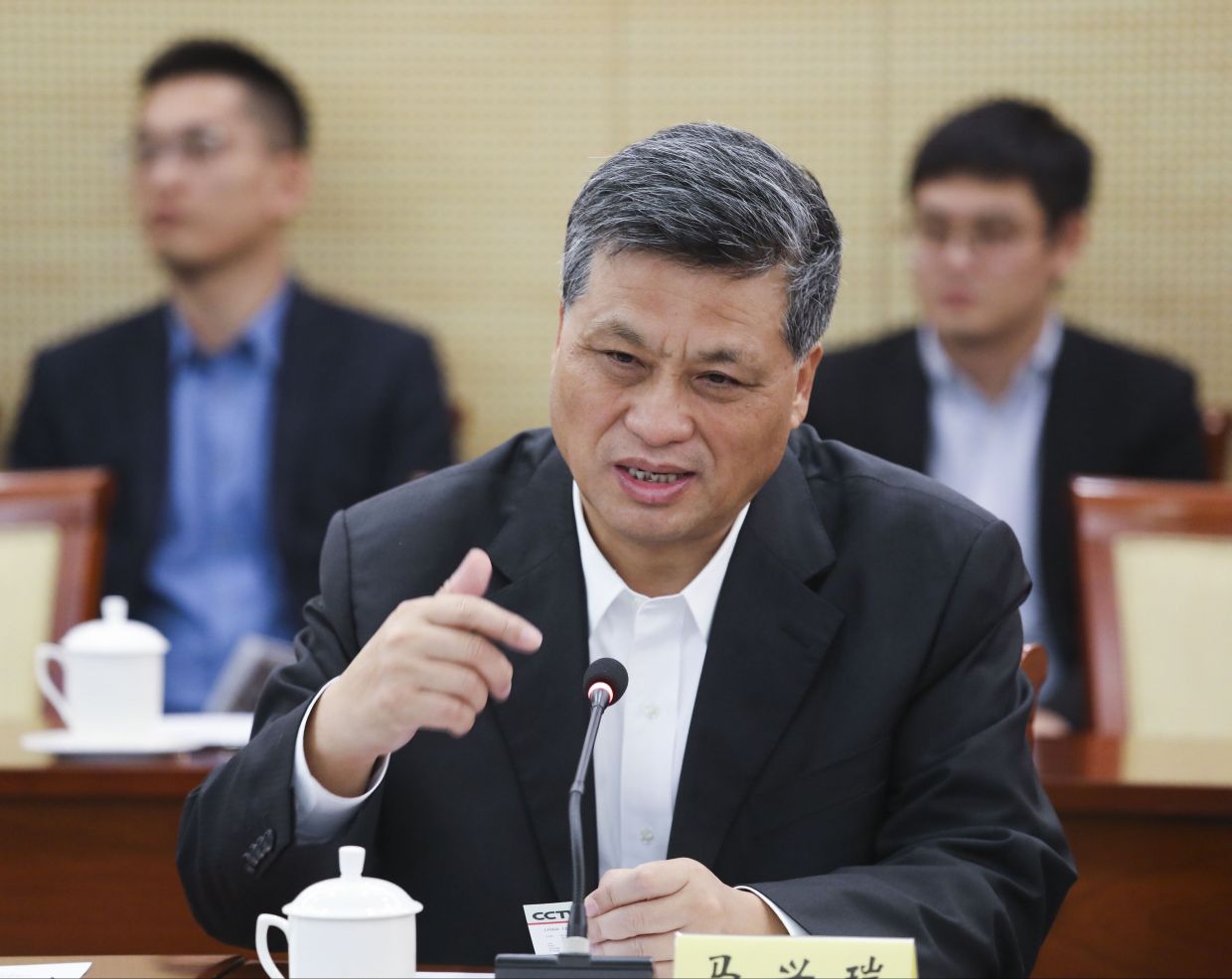
China's top disciplinary body has formally documented extensive corruption allegations against Ma Xingrui, 67, a former member of the Politburo who previously oversaw the western region of Xinjiang as the Communist Party's top official there. The Central Commission for Discipline Inspection submitted its findings to the Politburo on June 30, which approved the report and cleared the way for prosecution, state media confirmed this week. The development represents a significant moment in China's ongoing anti-corruption efforts under President Xi Jinping, with Ma becoming the third Politburo member to face investigation since the current leadership cycle began in 2022—a frequency that party officials have acknowledged has not occurred for decades.
The charges levelled against Ma paint a portrait of systemic misconduct spanning his tenure across multiple high-profile positions. Investigators found that he weaponised his authority to benefit relatives and close associates, facilitating property purchases at below-market rates and orchestrating advantageous business deals and employment placements. Beyond these direct favours, the disciplinary commission determined that Ma fostered what it characterised as "rampant corruption" within his extended family network, suggesting a household where misconduct became normalised rather than exceptional. The former official stands accused of accepting substantial bribes through intermediaries, accumulating illegal property and funds that authorities intend to seize and redistribute.
Ma's career trajectory before his downfall reflected the meritocratic advancement typical of China's technical elite. He spent over a decade at the China Aerospace Science and Technology Corporation, ultimately serving as its general manager between 2007 and 2013. During this period, he held dual responsibility as deputy commander-in-chief of China's manned space programme and as commander-in-chief overseeing development of the nation's new-generation carrier rocket initiative. This background positioned him as a trusted figure within the party's scientific establishment, credentials that facilitated his transition into provincial politics after a brief assignment at the Ministry of Industry and Information Technology.
His political ascent accelerated significantly in Guangdong, the economically powerhouse southern province. Appointed deputy party secretary in 2013, Ma climbed through successive positions including party chief of Shenzhen—the showcase special economic zone that symbolises China's reform and opening period—before assuming provincial vice-governor and ultimately governor roles. These positions granted him authority over economic policy, personnel appointments, and urban development projects worth hundreds of billions of yuan, resources that investigators concluded he systematically diverted toward personal enrichment and family benefit. His colleagues and subordinates became vehicles for channelling wealth, with Ma directing lucrative contracts, promotions, and other opportunities to those within his network.
The investigation uncovered a pattern of what authorities characterised as deliberate concealment and obstruction. When initially questioned by the disciplinary commission, Ma did not provide truthful accounts of his misconduct, instead offering incomplete or misleading explanations. This evasiveness persisted even after the 18th Party Congress in 2012, when Xi Jinping explicitly prioritised anti-corruption work and implemented strict conduct standards for officials. Rather than reforming his behaviour in response to these signals, Ma continued accumulating improper gains and enabling relatives to exploit his position throughout his tenure in Xinjiang, which lasted from 2021 until his removal.
Ma's appointment to lead Xinjiang represented a significant moment in the region's political management. He succeeded Chen Quanguo, the controversial figure whose tenure oversaw the extensive surveillance infrastructure and mass detention policies that drew international criticism. Ma's transition to this sensitive posting, followed by elevation to the Politburo at the 20th Party Congress in 2022, suggested the leadership viewed him as dependable for managing the party's complex security and governance agenda in Xinjiang. His subsequent investigation demonstrates that even officials positioned within the party's highest decision-making circles remain subject to disciplinary scrutiny regardless of their previous trajectory or perceived institutional importance.
The geographic concentration of recent corruption investigations raises questions about systemic vulnerabilities within Xinjiang's administrative apparatus. Beyond Ma's case, Chen Weijun, the region's former executive vice-chairman, came under investigation with charges announced in December, while Li Xu, previously deputy commander of the Xinjiang Production and Construction Corps, faced similar scrutiny beginning in January. This cluster of high-level cases suggests either widespread misconduct among officials serving in the region or intensified scrutiny reflecting broader concerns about governance standards. For outside observers, the pattern illustrates the party's determination to assert control over regional administration through disciplinary mechanisms, even as it maintains strict oversight over information flows regarding specific allegations.
Ma's removal follows the earlier expulsion of He Weidong, a former vice-chairman of the Central Military Commission who was stripped of party and military membership in October. These departures have reduced the Politburo to 21 members, down from its intended size. The removals underscore Xi Jinping's consolidation of power through disciplinary mechanisms targeting rivals or those perceived as insufficiently aligned with his vision. While party officials frame these investigations as expressions of anti-corruption commitment, the political dimensions remain evident, particularly given that senior military figures and regional administrators constitute disproportionate targets.
For Malaysia and Southeast Asia, Ma's case carries implications for understanding how China manages governance and institutional loyalty. The willingness to investigate and prosecute elite officials reflects the party's internal accountability mechanisms, though these operate according to standards that differ substantially from Western judicial systems. The concentration of power within disciplinary bodies answerable ultimately to Xi suggests that anti-corruption efforts serve simultaneously as instruments of political management. Southeast Asian leaders observing these developments may draw lessons regarding the complexities of engaging with Chinese counterparts whose authority remains contingent upon party approval rather than formal constitutional protections.
The aerospace sector connection adds another dimension to the investigation. Multiple officials from Ma's previous tenure at the China Aerospace Science and Technology Corporation have faced corruption charges in recent years, suggesting either that the sector harboured systematic misconduct or that investigations into Ma's activities triggered broader scrutiny of his professional networks. This pattern illustrates how individual corruption cases can catalyse cascading investigations through institutional hierarchies, potentially disrupting personnel continuity within strategically important sectors. For countries monitoring Chinese technological development and space programmes, such personnel disruptions warrant attention given their potential impact on project continuity and decision-making quality.
Authorities have determined that Ma's conduct was "extremely serious in nature" and exerted "extremely bad influence," language suggesting that his misconduct extended beyond personal enrichment to compromise institutional integrity. The decision to transfer his case to judicial authorities for formal prosecution initiates a legal process that will likely conclude with substantial penalties including lengthy imprisonment. However, the broader institutional consequences remain less clear. His removal creates vacancies within Xinjiang's administration and the Politburo itself, requiring the party to identify replacements capable of managing competing interests and maintaining the delicate balance the leadership seeks in the region.

