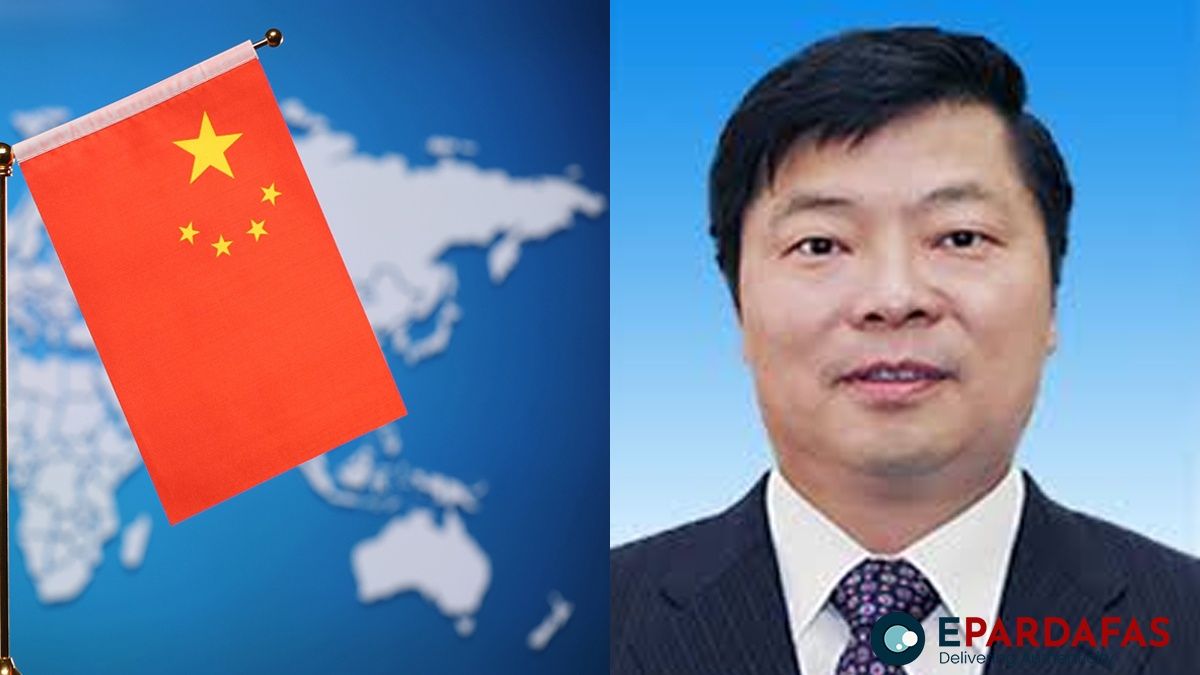
Ouyang Weimin, the former president of China Development Bank, has become the latest high-ranking official to face scrutiny under Beijing's expansive anti-corruption drive. The Central Commission for Discipline Inspection announced on Sunday that it had launched an investigation into Ouyang on suspicion of serious violations of party discipline and the law, alongside the National Commission of Supervision. The terse official statement offered no elaboration on the specific allegations, following the typical pattern of such announcements in China's opaque disciplinary process.
Ouyang's career trajectory reflects the interlocking nature of China's state financial apparatus. He first entered the Chinese Communist Party workforce in 1986, establishing his credentials early in the reform era. His formative decades were spent at the People's Bank of China, where he built experience navigating the complexities of financial policy and institutional hierarchy. This background in central banking positioned him for progressively senior roles within China's state-controlled financial system, where connections and political alignment prove as critical as technical competence.
Before his appointment to the development bank helm, Ouyang served as vice-governor of Guangdong province, one of China's most economically significant regions and a traditional powerhouse of industrial output and foreign investment near Hong Kong. His elevation to the presidency and deputy party secretary position at China Development Bank in 2019 represented a capstone achievement for his decades of bureaucratic advancement. However, his tenure at the helm proved relatively brief, lasting only until 2023 when he stepped down from the presidential role, setting the stage for his current predicament.
The China Development Bank itself occupies a unique position in China's state apparatus. Established in 1994, it operates as a state-owned development finance institution directly answerable to the State Council, China's highest administrative body. Unlike commercial banks focused on profit maximization, the institution is explicitly tasked with mobilizing capital for strategic sectors aligned with national development priorities. Its mandate encompasses supporting infrastructure projects, industrial modernization, and economic development in regions and sectors deemed underdeveloped or strategically important to Beijing's long-term ambitions.
Ouyang's investigation must be understood within the broader context of President Xi Jinping's decade-long anti-corruption campaign, launched shortly after Xi consolidated power in 2012. This initiative has systematically targeted hundreds of thousands of officials across party, government, and military hierarchies. The scale is extraordinary: senior officials, provincial governors, military generals, and corporate executives have all faced investigation, prosecution, and removal. The campaign has fundamentally reshaped power dynamics within the Communist Party, concentrating authority around Xi and his loyalists while marginalizing rivals and competing factions.
Critics and analysts have long characterized the anti-corruption drive as serving dual purposes that extend beyond addressing genuine malfeasance. While corruption undoubtedly exists within Chinese institutions and merit exists in systemic oversight efforts, observers note that the selectivity of investigations often aligns suspiciously with factional politics. Officials connected to rival power centers have disproportionately faced scrutiny, while allies of Xi have been insulated from similar pressure. This dynamic has led many analysts to view the campaign as an instrument of political consolidation rather than impartial institutional reform, allowing Xi to eliminate potential challengers under the legitimate banner of fighting corruption.
The financial sector has proven particularly vulnerable to these investigations. Given that control over credit allocation and capital deployment directly influences economic outcomes and political patronage networks, major financial institutions like the China Development Bank become natural targets for factional struggle. Officials within these institutions possess significant leverage over investment decisions worth billions of dollars, making their loyalty and allegiance matters of paramount political concern. Investigations into senior bankers therefore serve multiple purposes: eliminating potential rivals, signaling to surviving officials the importance of political obedience, and maintaining centralized control over economic levers.
For Malaysia and other Southeast Asian economies, developments within China's financial hierarchy carry concrete implications. The China Development Bank has been instrumental in financing major regional infrastructure projects under the Belt and Road Initiative, including ports, railways, and industrial parks across Southeast Asia. The investigation and potential removal of top leadership at such institutions can affect decision-making processes, lending criteria, and the prioritization of projects in recipient countries. Changes in institutional leadership within Beijing's financial system inevitably reverberate through capital flows and investment patterns across the region.
The absence of detailed charges or evidence in Ouyang's case exemplifies a fundamental opacity in China's legal and disciplinary system. Unlike Western legal traditions that emphasize presumption of innocence and public disclosure of evidence, China's process typically begins with investigation and announcement of suspected violations, followed by proceedings conducted largely beyond public view. Individuals under such investigation face enormous pressure to confess, and outcomes are often predetermined before formal proceedings commence. The lack of specificity in Ouyang's case—merely citing violations of party discipline and the law without elaborating—suggests either that investigations remain preliminary or that the system deliberately withholds information to maintain leverage over the accused.
Ouyang's fall also illustrates the precariousness of even very senior positions within China's political system. Decades of service, successful career advancement, and association with major state institutions provide little protection when factional realignment occurs or when an individual's patron loses political influence. The absence of term limits, institutional checks, or transparent succession processes means that loyalty and connections ultimately matter more than expertise or performance record. This reality shapes behavior throughout China's bureaucracy, with officials prioritizing political signals and patronage relationships over institutional mandates or economic efficiency.
The investigation's timing and announcement style conform to established patterns. By declaring investigations without substantive detail, Beijing maintains maximum flexibility in outcomes while signaling to the broader official class that no position remains secure. Other senior financial officials will likely interpret Ouyang's predicament as a warning to maintain unwavering political alignment with Xi and his faction. This creates a corrosive institutional environment where fear of investigation can paradoxically become an impediment to effective governance, as officials prioritize self-protection over institutional missions.
As Ouyang's case unfolds through China's opaque disciplinary machinery, the broader question remains how such concentrated anti-corruption authority ultimately affects institutional governance and economic outcomes. While eliminating genuine corruption serves legitimate state interests, systems that wield such power without transparency or checks risk creating dysfunction that extends far beyond the targeted individual. For external observers monitoring developments within China's financial hierarchy, Ouyang's investigation serves as a reminder that institutional position and professional accomplishment offer limited protection in a system where political allegiance supersedes all other considerations.

