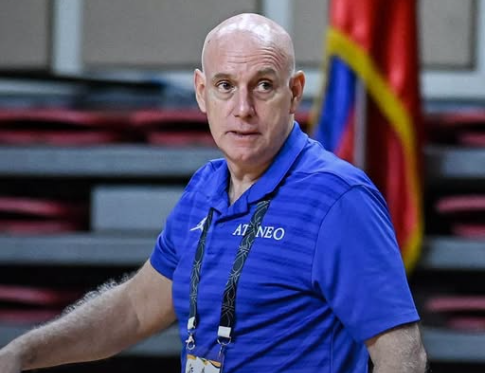
Philippine law enforcement has moved to prosecute a former university basketball coach and ten staff members over the deaths of two athletes during a training activity that authorities have characterised as hazing, marking a significant development in a case that has raised fresh questions about athlete safety and institutional accountability in Philippine sports.
The Philippine National Police Criminal Investigation and Detection Group has formally recommended charges against Thomas Anthony 'Tab' Baldwin, the former head coach of Ateneo de Manila University's men's basketball team, alongside strength and conditioning coaches, assistant coaches, student managers, and utility staff. All eleven individuals face violations of Republic Act No. 11053, the nation's Anti-Hazing Act, following the drowning of players Rene Baterbonia and Divine Adili during a training session in Dipaculao, Aurora on June 8.
The PNP CIDG's recommendation carries particular weight because it redefines how authorities interpret the hazing statute in the context of modern athletic training. Rather than confining the law to traditional initiation rites, investigators have determined that the Aurora activity crossed into hazing territory through what they classify as forced calisthenics and intentional exposure to hazardous environmental conditions. According to officials, all eleven accused were present at the beach during the incident and neither intervened nor raised objections to what unfolded, despite the mounting physical demands placed on participants.
The chronology of events on June 8 reveals a pattern of escalating physical stress that authorities argue constituted deliberate conditioning for squad selection rather than genuine team development. The twenty basketball players were roused at 4am and compelled to complete a four-kilometre run before engaging in intensive physical games where losing participants faced additional punishment exercises. This phase alone consumed much of the morning and left athletes fatigued before they entered the water at approximately 2 to 2.30pm. The timing proved critical, as the active high tide for that date occurred at 2.27pm, meaning athletes entered the ocean during conditions characterised by strong rip currents, forceful waves, and unstable seabed depths.
Investigators have emphasised that the supposed team-building exercise functioned simultaneously as a selection mechanism. Only seventeen of the twenty athletes present would ultimately make the final roster submitted to the University Athletics Association of the Philippines, making the Aurora activity a trial-by-ordeal determining who would continue on the squad. This dual purpose strips the activity of any legitimate training classification and instead reveals it as a mechanism for exclusion masked as development, a distinction that carries legal significance under the Anti-Hazing Act's definition of hazing as conduct causing physical or psychological harm as a prerequisite for membership continuation.
The individuals facing charges represent the full hierarchy of the basketball programme's support structure. Beyond Baldwin, the list includes Grant Dearns and Ceasar Vicent Javellana Elumba as strength and conditioning specialists, three assistant coaches identified as Dean Caesar B. Castaño, Sandro Nicholas Romero Soriano, and Reynaldo Jacinto, paired student managers Paolo Manuel Maceda Adevoso and Andrew Lorenzo 'Drew' Bondoc Salud, physical therapist John Eric Quiambao Rueca, and utility personnel Aris Ramos Pronce and Joel 'Boy' Palmiano Rapa. The breadth of the accused reflects the institutional nature of the conduct, suggesting systematic oversight failure rather than isolated incidents.
Baldwin has previously issued a public apology through a nearly nine-minute video posted on Ateneo's social media platforms, acknowledging responsibility for the deaths of Baterbonia and Adili. Nevertheless, the formal recommendation for criminal charges indicates that authorities have determined his expression of remorse insufficient to excuse the conduct that preceded the tragedy. The distinction between personal accountability and institutional accountability remains crucial as the Department of Justice evaluates the case for prosecution.
The PNP CIDG's findings have added forensic detail to the understanding of events. When authorities recovered the bodies of the two drowning victims, no weights were attached to their corpses, contrary to some initial speculation about whether external implements had been used in initiation practices. This discovery neither exonerates the accused nor diminishes the hazard posed by the combination of exhausted athletes, dangerous oceanic conditions, and the apparent absence of adequate safety protocols or rescue readiness.
For Malaysian observers and Southeast Asian sports administrators, this case illustrates the vulnerability of athlete welfare systems when training methodologies prioritise selection and toughness over participant safety. The case also demonstrates how statutory frameworks like the Anti-Hazing Act, when properly invoked, can extend liability beyond dramatic initiations to encompass ostensibly standard training activities that nonetheless incorporate coercive elements, environmental hazards, and exclusionary consequences. The recommendation for prosecution signals that contemporary legal standards increasingly recognise the psychological and physical harm inherent in practices designed to test which athletes merit programme membership through ordeals.
The case arrives at a moment when Malaysian universities and sports organisations face increasing scrutiny regarding athlete treatment and institutional oversight. The charges recommended against Baldwin and his colleagues provide a framework through which similar activities in Malaysia might be evaluated. Whether universities here host comparable team-building exercises featuring forced physical exertion in potentially hazardous environments, the Aurora drownings and subsequent legal proceedings serve as a cautionary precedent for what authorities may now classify as unlawful hazing rather than acceptable coaching methodology.
The Department of Justice will now undertake the evaluation and case build-up necessary to determine whether formal charges will be filed. This process typically requires prosecutors to assess evidence strength and statutory compliance before deciding whether to proceed to court. The authorities' framing of the conduct as hazing rather than mere negligence or accident substantially affects potential penalties and sentencing ranges, should convictions follow. For Baterbonia and Adili's families, the police recommendation represents institutional acknowledgement that the deaths resulted from systemic failures rather than tragic mischance.
As the investigation progresses toward potential trial, Philippine sports institutions will likely face intensified scrutiny regarding training practices, safety protocols, and the line separating demanding athletic preparation from coercive harm. The case has already prompted broader reflection on whether institutional cultures that equate suffering with commitment, or treat athletic selection as an endurance test rather than a merit assessment, can continue in their current forms. The eleven individuals accused face a legal reckoning that may ultimately reshape how Philippine universities and their coaching staff approach athlete development and team building.

