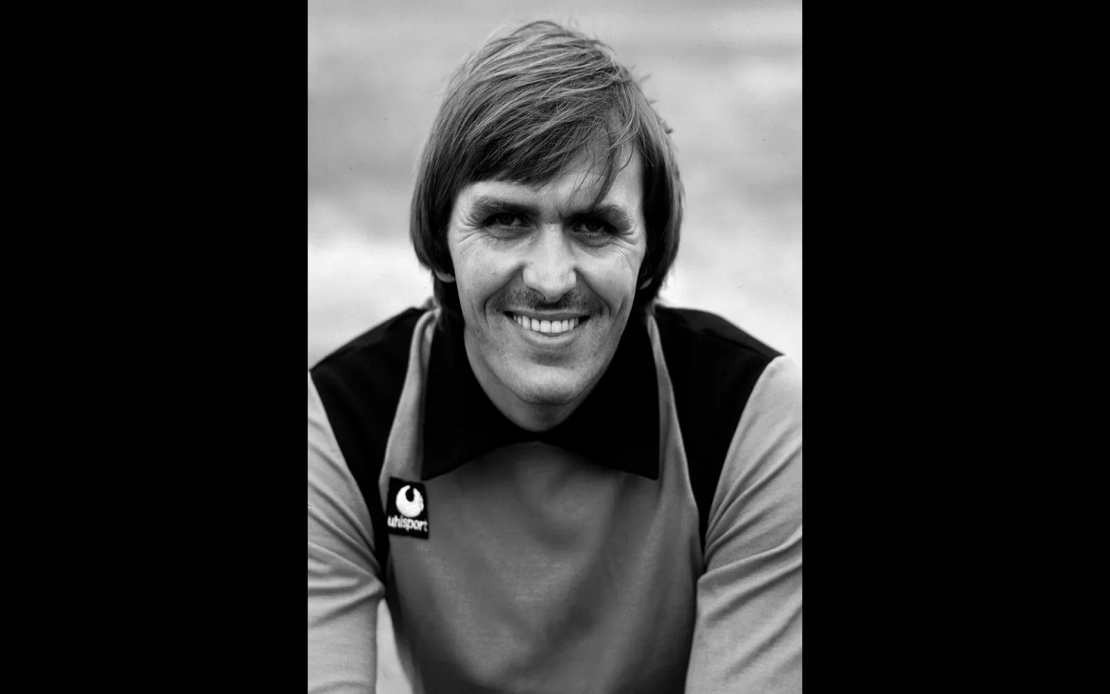
Jimmy Rimmer, the English goalkeeper whose career was defined by extraordinary misfortune in major finals despite winning prestigious honours, has died at the age of 78. Rimmer's passing marks the end of an era for Aston Villa supporters who witnessed one of English football's most successful periods in the early 1980s, though the goalkeeper's own story remains bittersweet—a tale of achievement shadowed by circumstance.
Rimmer secured his place in footballing history as the ever-present custodian during Aston Villa's 1981 First Division championship campaign. That season represented the pinnacle of consistency for the goalkeeper, who played every match as the Birmingham club claimed their third English top-flight title. Yet within a year, his most famous moment would come not on the pitch but in the technical area, watching from the sidelines as his teammates pursued glory in Europe.
The 1982 European Cup final in Rotterdam encapsulates the cruel irony that shadowed Rimmer's career. Just nine minutes into the match against Bayern Munich, he suffered a neck injury that forced him from the field. His replacement, understudy Nigel Spink, entered the annals of European football history by keeping a clean sheet as Peter Withe's second-half strike secured a 1-0 victory. That single moment—when Spink produced a commanding display to see off the German champions—effectively shifted the balance of power at Villa Park. Rimmer, despite his name on the European Cup winners' medal, would never recover his number-one status at the club.
The cruel symmetry of Rimmer's misfortune extended further back into his playing history. Fourteen years earlier, as a Manchester United player, he had watched from the bench when his club defeated Benfica at Wembley in the 1968 European Cup final. Two European Cup finals, two instances of sitting out the climax—a statistical rarity that underscores the randomness of sport and the devastating impact of injury at precisely the wrong moment.
Aston Villa released a statement acknowledging Rimmer's significance to the club's history whilst emphasising the paradox of his career. The club recognised him as one of the finest goalkeepers of his generation, yet simultaneously highlighted how he became arguably one of the unluckiest when major occasions demanded his presence on the pitch. Holding two European Cup medals without playing in either final remains a uniquely poignant footnote in his legacy.
Rimmer's injury proved transformative for the club's future trajectory. Spink's assured performance in Rotterdam established him as Rimmer's successor, and the younger goalkeeper went on to command Villa's defence for the remainder of the 1980s and beyond, securing his position as the club's clear number one. By contrast, Rimmer's time at the Midlands club wound down relatively swiftly after that fateful evening in the Netherlands. The following year, in 1983, he was transferred to Swansea City, bringing to an end a stint at Villa Park that encompassed more than 200 appearances across all competitions.
Before arriving at Villa in 1977, Rimmer had navigated a career trajectory that demanded considerable resilience. He began at Manchester United's Old Trafford, where he found himself competing against Alex Stepney, the club's established first-choice goalkeeper. Unable to displace Stepney from the starting lineup, Rimmer was sold to Arsenal in 1974, where he spent three seasons before joining Aston Villa. That move to Birmingham proved his most successful period in terms of sustained league football, even if European success would ultimately elude him in the way he might have hoped.
Rimmer's career reflects broader patterns within English football during a transitional era. The late 1970s and early 1980s represented a period of genuine achievement for English clubs in European competition, yet also witnessed the structural changes in squad management and rotation that would define modern football. Rimmer became a symbol of that shift—a thoroughly competent footballer whose career was fundamentally altered not by diminished ability but by circumstance, timing, and the emergence of a talented rival at precisely the moment when his own future hung in balance.
For Malaysian and Southeast Asian football supporters familiar with the challenges of forging successful international careers, Rimmer's story resonates beyond mere nostalgia. His trajectory illustrates how elite-level sports outcomes depend not solely on individual merit but on factors beyond personal control—the availability of opportunities, freedom from injury at critical junctures, and the emergence of competitors for the same position. These dynamics play out in football leagues across Asia just as they did in 1980s England.
The goalkeeper's legacy within English football remains secure, secured through his contribution to Aston Villa's championship season and his association with one of the club's greatest achievements in European competition, even if the details of his own participation remained ambiguous. Aston Villa's statement emphasised that the club's thoughts remained with Rimmer's family and friends during this period of loss, recognising both his professional significance and his human dimension beyond the statistics recorded in match reports.

