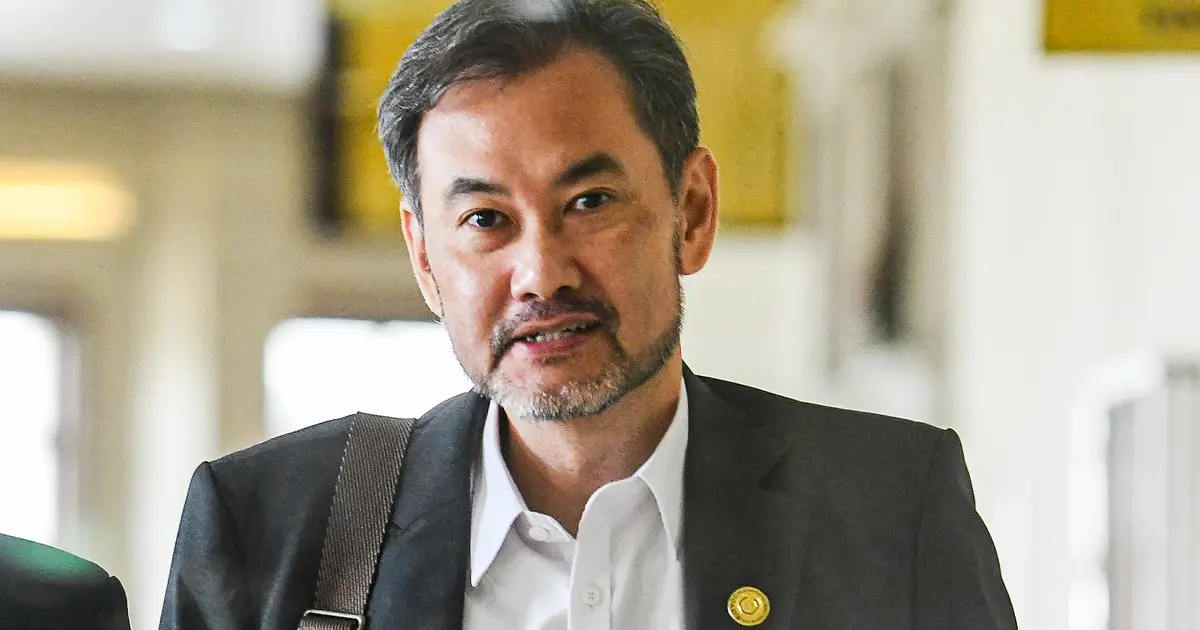
Shahrol Azral Ibrahim Halmi, who led 1Malaysia Development Berhad during its most controversial period, has moved to clarify the nature of his interactions with Malaysia's political leadership, specifically addressing contentious claims about the role of fugitive financier Jho Low in the fund's governance. Speaking publicly about his communications with former Prime Minister Najib Razak, Shahrol insisted that his engagement with the country's top political office occurred through established channels rather than via the now-infamous intermediary, pushing back against a narrative that has characterised Low as wielding quasi-governmental authority over one of Asia's largest fraud cases.
The distinction Shahrol draws—between direct governmental communication and back-channel dealings through Low—represents a critical clarification in the ongoing scrutiny of 1MDB's collapse, which has consumed Malaysian politics and international financial regulation for nearly a decade. By emphasising his reliance on informal networks that included Low, Shahrol appears to acknowledge the businessman's presence in decision-making processes while simultaneously rejecting the interpretation that Low functioned as an unofficial prime minister overseeing fund operations. This careful framing matters considerably, as the perception of Low's authority has shaped both public understanding of 1MDB's implosion and the legal cases pursuing accountability across multiple jurisdictions.
The 1MDB scandal represents perhaps Malaysia's most significant modern governance failure, involving alleged embezzlement of approximately USD4.5 billion from a state investment vehicle established in 2009. Low, a Malaysian-Chinese businessman born in Penang, became the public face of the fund's alleged mismanagement despite holding no formal position within the organisation. His ability to navigate between the fund's executives, political circles, and international financial institutions sparked widespread speculation about the true locus of decision-making power, a question that has haunted official inquiries and court proceedings ever since.
Sharold's comments reflect the intricate dynamics that characterised 1MDB's operations during the administration of Najib Razak, when the fund served as a vehicle for massive borrowing and complex international transactions. The fund was explicitly established as a strategic development vehicle but rapidly became entangled in a web of derivative purchases, real estate investments, and financial manoeuvres whose legitimacy prosecutors and investigators worldwide have vigorously contested. Understanding who actually controlled these transactions—whether institutional leadership, political figures, or influential intermediaries—has proven crucial to assigning responsibility and understanding how such vast sums could be redirected.
The Malaysian public and regional observers have long grappled with explaining how Low achieved such apparent influence without formal governmental standing. His role as a purported adviser, facilitator of international connections, and trusted confidant to senior figures created ambiguity that investigators have worked to resolve through financial forensics and witness testimony. Various court documents and regulatory filings have suggested Low's involvement in major transactions, investment decisions, and communications with international partners, yet the precise scope of his authority compared to that of officially appointed executives remains contested territory in ongoing legal proceedings.
Sharol's insistence on distinguishing between informal channels and substantive decision-making authority reflects a strategy increasingly common among individuals implicated in the scandal—acknowledging peripheral involvement while resisting characterisations of central culpability. His assertion that he communicated with Najib through unorthodox networks that happened to include Low does not necessarily exonerate him from responsibility for the fund's management, but it does suggest an attempt to reframe the narrative around who held ultimate power. This distinction, however subtle, carries weight in courtrooms where establishing chains of command and circles of decision-making has become essential to determining legal liability.
For Malaysian policymakers and regulatory authorities, Shahrol's comments underscore the governance vulnerabilities that the 1MDB affair exposed throughout the financial system. The ability of an unofficial figure to maintain such prominence in a state-linked fund's operations highlighted deficiencies in institutional oversight, board independence, and accountability mechanisms that Malaysia's government has subsequently worked to address through legislative and regulatory reforms. The lessons from 1MDB have reverberated through Southeast Asia's development finance sector, prompting regional peers to examine their own institutional safeguards against similar concentrations of informal influence.
The case against Low remains active in multiple jurisdictions, with the United States, Singapore, and other nations pursuing civil and criminal proceedings relating to alleged money laundering, fraud, and corruption connected to 1MDB. Low himself has evaded apprehension for years, reportedly residing outside Malaysia, which has complicated efforts to bring him before Malaysian courts. His absence from local proceedings has meant that other figures involved with 1MDB, including executives and government officials, have borne the burden of the scandal in public accountability processes while the perceived architect of the scheme remains beyond reach.
Sharold's recent statements come as various individuals connected to 1MDB continue navigating the legal system, with some convicted, others acquitted, and still others facing ongoing proceedings. The fund itself was ultimately dissolved in 2018 following the change of government and the electoral defeat of Najib Razak's administration, which had championed 1MDB as a cornerstone of Malaysia's economic transformation strategy. The institution's collapse has reinforced broader concerns about state-owned enterprise governance and the concentration of decision-making authority outside formal institutional structures.
The distinction Shahrol draws between different modes of political communication may appear semantic to observers, yet it reflects substantive questions about authority, responsibility, and institutional design that continue to preoccupy Malaysia's policymakers. As various legal proceedings wind through courts and accountability questions remain only partially resolved, the precise characterisation of different actors' roles—whether as central architects, willing facilitators, or peripheral participants—will continue shaping both historical understanding and potential consequences for individuals involved in the fund's controversial operations.

