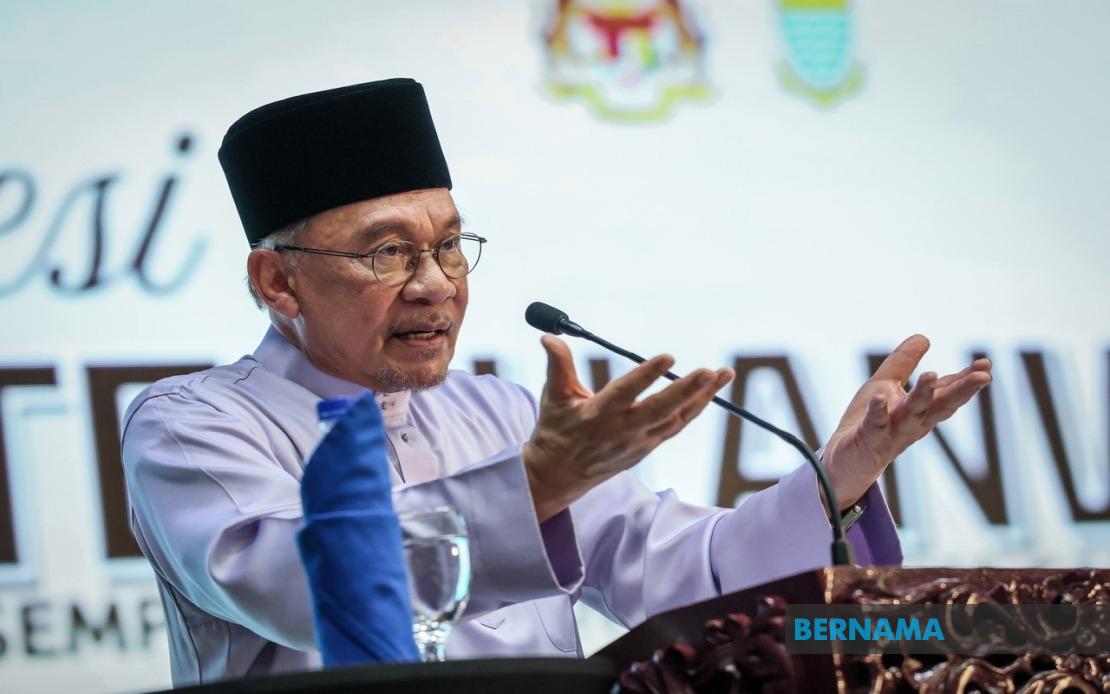
Prime Minister Datuk Seri Anwar Ibrahim has committed to establishing a new financial assistance scheme for Form Six students through the 2027 Budget, which Parliament will receive in October. The announcement addresses a significant oversight in the government's existing education support framework, where students progressing through primary school to Form Five, as well as university undergraduates, currently benefit from allowances whilst those at the pre-university level receive no such assistance.
Anwar, who holds the dual portfolios of Prime Minister and Finance Minister, made the declaration during an engagement with pre-university learners at the Tuanku Bainun Teacher Education Institute in Bukit Mertajam. His remarks came as part of the Temu Anwar programme, held in conjunction with the Ambang Merdeka Sahabat MADANI initiative. Education Minister Datuk Seri Fadhlina Sidek was present at the event, underscoring the collaborative nature of the commitment across both economic and educational portfolios.
The impetus for this policy intervention emerged from direct dialogue between the Prime Minister and pre-university student representatives. During these conversations, the disparity in financial support became evident—whilst learners from Year One through Form Five receive government assistance, and university attendees benefit from similar provisions, Form Six students occupy a neglected middle ground. This structural gap has persisted despite the government's broader strategy to support students across different educational phases.
Although the principle of providing allowances to Form Six students has been endorsed at the highest levels of government, Anwar indicated that the precise monetary allocation remains subject to refinement. He emphasised that the final quantum will be determined by the government's fiscal position at the time of the budget's formulation, suggesting that while the commitment is firm, the actual benefit amount will depend on broader economic and budgetary considerations in the coming months.
The student-led advocacy for this measure gained particular momentum through the MADANI Pre-University Congress, which convened in Klang earlier this week. The congress functioned as a platform for pre-university delegates to articulate their concerns and policy recommendations directly to government representatives. The Form Six allowance emerged as one of twelve substantive resolutions presented at this gathering, reflecting the priority placed on this issue by the student body.
Education Minister Fadhlina's response to the congress proceedings demonstrated official receptiveness to student-generated policy ideas. She confirmed that the Education Ministry has formally accepted all twelve resolutions tabled at the event and committed to a process of detailed examination aimed at identifying implementation pathways. This inclusive approach signals a shift towards greater student participation in educational policy formulation, a development that resonates with the government's MADANI framework, which emphasises collaborative governance.
For Malaysian students and families, this initiative carries practical implications beyond the immediate financial benefit. The allowance scheme represents recognition that pre-university education, whilst technically secondary-level, functions as a critical transition phase toward tertiary study. Form Six students often balance their academic demands with limited financial resources, and parental support becomes strained during these formative years. An allowance would alleviate household pressure and potentially enable greater focus on academic pursuits.
The timing of this announcement also reflects broader political considerations. Education has consistently ranked among the top concerns for Malaysian voters, particularly middle-income families navigating the costs of raising and educating children. By embedding student welfare measures within the fiscal framework, the government signals responsiveness to grassroots concerns whilst demonstrating that education policy development incorporates youth input. This participatory approach distinguishes the current administration's engagement with students from earlier periods.
From a regional perspective, Malaysia's commitment to supporting pre-university students positions the nation within a competitive educational landscape across Southeast Asia. Countries in the region have progressively expanded financial assistance for secondary and pre-tertiary students, recognising that removing economic barriers to education enhances social mobility and economic productivity. Malaysia's move aligns with this regional trend and underscores the country's investment in human capital development.
The path from announcement to implementation will require coordination across multiple government agencies. The Finance Ministry must allocate resources whilst the Education Ministry develops eligibility criteria, disbursement mechanisms, and administrative infrastructure. The timing, phasing, and scope of rollout remain to be determined, and these operational details will prove crucial to the scheme's effectiveness. Questions persist regarding whether the allowance will be universal or means-tested, and whether particular student categories—such as those in rural areas or indigenous communities—may receive enhanced support.
Student responses to the announcement have been predominantly positive, though some quarters have raised questions about the adequacy of proposed allocations and the timeline for implementation. Advocacy groups representing pre-university learners have urged the government to ensure that the allowance level matches the actual financial needs of students, particularly those from disadvantaged socioeconomic backgrounds who depend most heavily on government support to remain in school.
The commitment to include Form Six allowances in Budget 2027 represents incremental progress in Malaysia's education financing architecture. Whilst the specific amount remains undetermined, the policy direction has been clearly established. The success of this initiative will ultimately be measured not merely by the allocation announced, but by the tangible difference it makes to student retention, academic performance, and equitable access to pre-university education across Malaysia's diverse communities.

