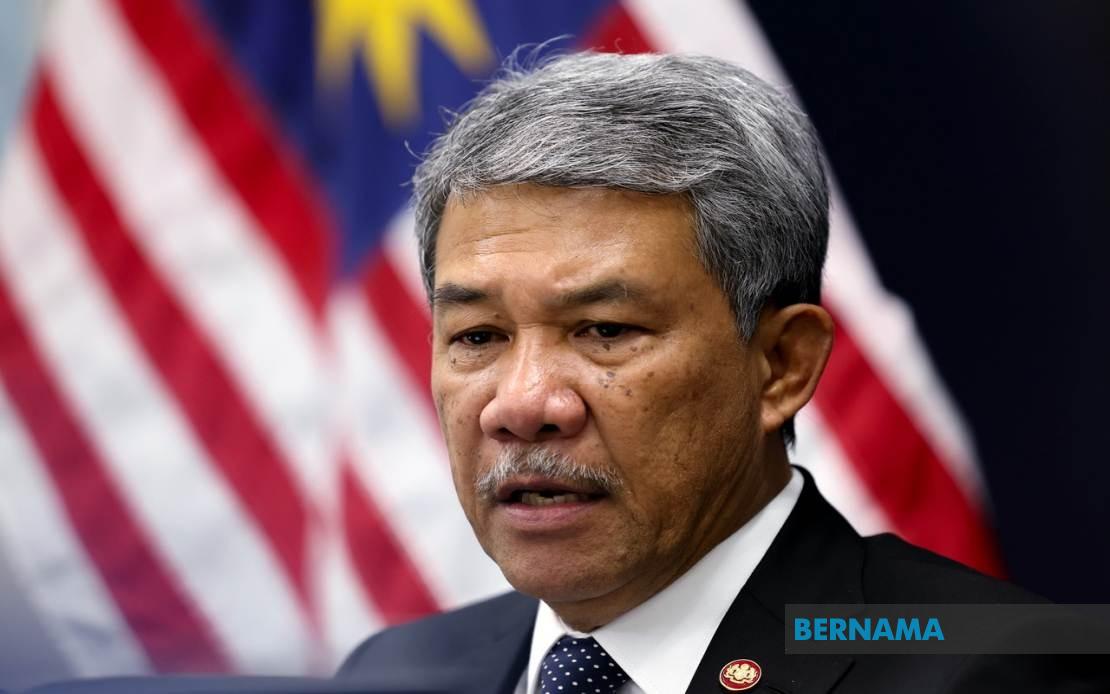
Foreign Minister Datuk Seri Mohamad Hasan touched down in Manila on Sunday to spearhead Malaysia's involvement in a critical week of ASEAN diplomacy. Arriving at Ninoy Aquino International Airport in the late afternoon, Mohamad was received by Philippines Department of Foreign Affairs Assistant Secretary and Chief of Protocol Ariel Rodelas Peñaranda, with Malaysian Ambassador to the Philippines Datuk Abdul Malik Melvin Castelino Anthony also present at the greeting. The visit underscores the continued momentum of high-level engagement between the two nations as the region navigates an increasingly complex geopolitical landscape.
The 59th ASEAN Foreign Ministers' Meeting and its constellation of related forums will occupy Mohamad's attention through to Thursday. These gatherings, held under the Philippines' ASEAN Chairmanship for 2024 with the overarching theme "Navigating Our Future, Together," represent a defining moment for Southeast Asian consensus-building on pressing transnational issues. The scale of the diplomatic calendar reflects the depth of challenges confronting the 10-member bloc and its dialogue partners, ranging from traditional security concerns to humanitarian crises.
The crisis unfolding in West Asia looms large over these discussions. While details remain sparse, regional capitals recognise that instability in the Middle East carries profound implications for Southeast Asian trade routes, energy security, and investment flows. Malaysia, as a maritime-dependent economy with significant regional trade exposure, has particular reason to monitor developments in this volatile region. The forum provides an opportunity for ASEAN to articulate a unified voice on de-escalation and peaceful resolution mechanisms, reinforcing the bloc's commitment to international law and multilateral diplomacy.
Myanmar's persistent humanitarian and political crisis will occupy considerable diplomatic energy. Mohamad is scheduled to participate in an extended informal consultation focused on implementing the Five-Point Consensus, the ASEAN framework agreed upon following the military coup. This consultation will build on recommendations from the last ASEAN Leaders' Review and Decision on the 5PC, as the bloc seeks to maintain diplomatic pressure while navigating the complexities of consensus decision-making among member states with divergent national interests. The challenge of balancing principle with pragmatism in addressing Myanmar's internal trajectory remains a defining test of ASEAN's cohesion and efficacy.
Beyond Myanmar, Mohamad's agenda encompasses Malaysia's contributions to fundamental regional architecture. He will participate in the interface meeting between ASEAN foreign ministers and the ASEAN Intergovernmental Commission on Human Rights, reflecting growing efforts to embed human rights considerations into the bloc's institutional framework. Additionally, discussions on the Southeast Asia Nuclear Weapon-Free Zone Commission will continue efforts to maintain Southeast Asia's status as a denuclearised region, a distinctive achievement that requires continuous institutional attention and diplomatic reinforcement.
The breadth of multilateral engagements highlights Malaysia's embedded position within overlapping regional architecture. The 27th ASEAN Plus Three Foreign Ministers' Meeting brings together Southeast Asia with China, Japan, and South Korea—a forum addressing broader economic and political coordination among major Asian powers. The 33rd ASEAN Regional Forum, extending participation to major dialogue partners including the United States, Russia, and India, provides a more expansive platform for managing strategic competition and identifying shared interests. The 16th East Asia Summit Foreign Ministers' Meeting, encompassing both ASEAN Plus Three and additional partners, represents the most inclusive dialogue mechanism in the region.
Malaysia's institutional role has expanded meaningfully. Mohamad will co-chair Wednesday's ASEAN Post Ministerial Conference with China alongside Chinese Foreign Minister Wang Yi, a responsibility flowing from Malaysia's designation as country coordinator for ASEAN-China Dialogue Relations for 2024-2027. This role positions Malaysia as a key manager of Southeast Asia's relationship with its largest trading partner, a responsibility carrying significant diplomatic weight. The bilateral ASEAN PMCs with dialogue partners—Australia, Canada, the European Union, India, Japan, New Zealand, the Republic of Korea, the Russian Federation, the United Kingdom, and the United States—will provide structured opportunities for Malaysia and other ASEAN members to engage major powers on bilateral and multilateral priorities.
Beyond the formal agenda, the margins of such major gatherings often generate the most consequential diplomacy. Mohamad is expected to conduct bilateral meetings with numerous counterparts, enabling Malaysia to advance specific national interests while maintaining relationships crucial for everything from trade negotiations to maritime security cooperation. These conversations, conducted away from the glare of official forums, frequently generate the political foundation upon which formal multilateral agreements rest.
The conference also includes the fifth Conference on Cooperation among East Asian Countries for Palestinian Development, signalling the region's continued concern with Middle Eastern affairs beyond security considerations. This platform demonstrates that Southeast Asian engagement with West Asia encompasses humanitarian and development dimensions, reflecting the region's commitment to comprehensive approaches to global challenges.
For Malaysian observers and policymakers, these meetings represent far more than ceremonial diplomacy. The outcomes, whether explicit or implicit, will shape how Malaysia navigates regional competition between major powers, manages transnational security challenges, and positions itself as a voice for smaller and medium-sized powers within multilateral institutions. The decisions reached—or deferred—will influence everything from maritime boundaries to investment frameworks to pandemic preparedness over the coming months. In an era of geopolitical fragmentation, ASEAN's capacity to maintain consensus while accommodating divergent member interests remains perhaps Southeast Asia's most valuable strategic asset.

