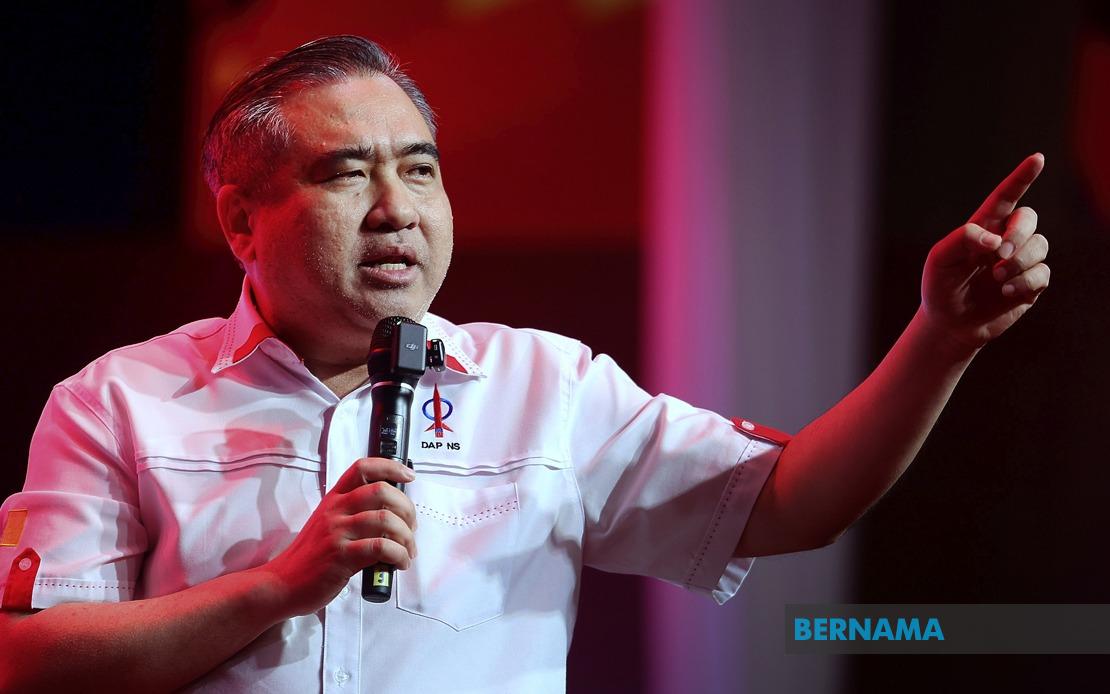
Anthony Loke, the DAP secretary-general and Transport Minister, has made a deliberate choice to steer clear of personal attacks during the Negeri Sembilan state election campaign, emphasising that electoral contests should centre on substantive policy positions and tangible benefits for voters rather than character assaults. Speaking in Seremban after a Pakatan Harapan dinner on July 19, Loke articulated a principled approach that reflects broader guidance from Prime Minister Datuk Seri Anwar Ibrahim regarding how government officials should conduct themselves during campaign periods.
Loke's stance represents an acknowledgment of the delicate political equilibrium underpinning the Unity Government framework in Malaysia. By maintaining what he describes as a disciplined approach—particularly avoiding commentary on Cabinet colleagues—the Transport Minister signals respect for the collective governance arrangements that bind Pakatan Harapan and Barisan Nasional together at the federal level. This restraint carries particular weight given the cross-factional nature of Malaysia's current ruling arrangement, where parties from historically opposing camps now share ministerial portfolios and Cabinet responsibility.
The Transport Minister explained that his weekly attendance at Cabinet meetings and shared governmental obligations with his colleagues necessitates a collaborative rather than confrontational campaign demeanour. This reasoning extends beyond mere political etiquette; it reflects the practical reality that federal ministers and state-level politicians must navigate between competing electoral interests and their responsibilities within a coalition government. Loke's articulation of this tension provides insight into how contemporary Malaysian politicians attempt to balance electoral competitiveness with institutional stability.
Another significant aspect of Loke's campaign strategy involves his deliberate abstention from campaigning in the Rantau constituency, where Foreign Minister Datuk Seri Mohamad Hasan—a Barisan Nasional deputy chairman—is contesting. This geographical self-restraint demonstrates how Loke is operationalising his commitment to Unity Government harmony at the constituency level. Rather than deploying his ministerial profile and DAP machinery against a senior Barisan Nasional figure, he has chosen to concentrate his energies on his own Chennah seat and supporting other DAP candidates across the state.
Loke's decision to focus additionally on the Linggi seat, assisting Menteri Besar Datuk Seri Aminuddin Harun, indicates how campaign resources and political capital are being allocated within Pakatan Harapan's electoral strategy in Negeri Sembilan. This distribution of effort suggests a calculation that certain seats are winnable through concentrated support, whilst others—including Rantau—are best approached through restraint rather than direct confrontation. Such tactical considerations underscore how Malaysian electoral politics now operates within layered constraints imposed by both coalition commitments and intra-party dynamics.
The Transport Minister has sought to rebut suggestions that his ministerial responsibilities have compromised his attention to his Chennah constituency. Rather than accepting that a Cabinet position necessarily creates distance from grassroots representation, Loke frames his ministerial status as an advantage. He points to his capacity to channel federal allocations toward Kampung MADANI projects and other developmental initiatives benefiting Chennah residents, suggesting that ministerial proximity to resource distribution mechanisms actually enhances his ability to deliver tangible benefits.
This argument reflects a broader tension in Malaysian politics between national-level governance and state-level electoral competition. Ministers frequently contend that their Cabinet positions afford them opportunities to secure federal funding and implement programmes that benefit their constituencies. Whether voters accept this logic—that legislative work and ministerial duties can be reconciled with effective local representation—remains an open question that the Negeri Sembilan election will help illuminate. Loke's claim that he maintains a dedicated full-time constituency team addresses potential concerns about negligence, suggesting a division of labour between national and local political labour.
Prime Minister Anwar Ibrahim's directive that government officials should maintain discipline and avoid attacking the Federal Government during state election campaigns appears to have substantially shaped Loke's approach. This guidance reflects an awareness that unfettered inter-coalition criticism during electoral contests could undermine the careful agreements and working relationships that sustain the Unity Government framework. By channelling ministerial messaging through constructive policy articulation rather than partisan attack, Loke demonstrates how individual politicians can operationalise these broader institutional concerns.
The timing of Loke's statements—with advance polling scheduled for July 28 and election day set for August 1—reflects the compressed timeframe within which candidates must establish their campaign narratives and crystallise voter perceptions. Loke's emphasis on policy substance and his explicit rejection of personal attacks position his campaign as principled and forward-looking, potentially resonating with voters fatigued by acrimonious political discourse. This framing also allows him to occupy the moral high ground whilst simultaneously maintaining the material advantages of ministerial incumbency.
For Malaysian and Southeast Asian observers, Loke's campaign approach exemplifies how coalition governments manage the inherent tensions between electoral competition and institutional cooperation. The Negeri Sembilan contest will serve as a testing ground for whether policies-focused campaigns and restrained inter-coalition rhetoric can successfully mobilise voters while preserving the structural arrangements necessary for Unity Government stability. The election results will indicate whether Malaysian voters reward politicians who prioritise governmental harmony over aggressive partisan messaging, or whether they demand more confrontational electoral engagement regardless of coalition considerations.

