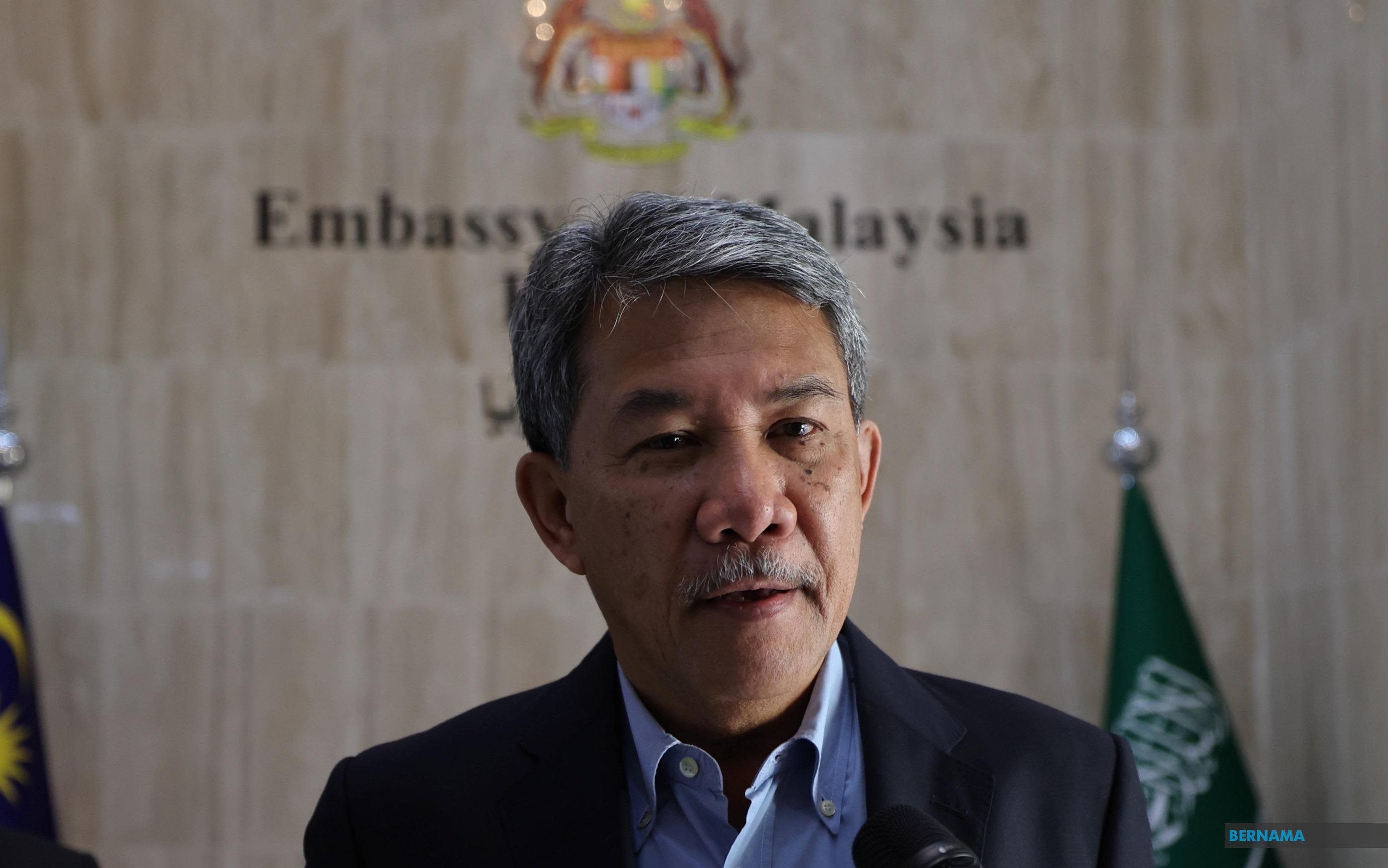
Foreign Minister Datuk Seri Mohamad Hasan has touched down in Jeddah to represent Malaysia at a critical gathering of the Organisation of Islamic Cooperation (OIC) Council of Foreign Ministers. His arrival at King Abdulaziz International Airport on the evening of August 26 marks the beginning of intensive diplomatic engagement on one of the most pressing geopolitical issues facing the Muslim world. Malaysian Ambassador to Saudi Arabia Datuk Syed Bakri Syed Abdul Rahman received the minister, underscoring the significance of the delegation's participation in the extraordinary meeting scheduled for the following day.
The single-day summit convenes at a moment of heightened regional tension, with the agenda centred on recent developments affecting Palestinian territories. Discussions will encompass the ongoing situation in Gaza and the West Bank, with particular attention to what the OIC characterises as illegal expansion of Israeli settlements. For Malaysia, this gathering represents an opportunity to amplify its consistent diplomatic voice on the question of Palestine, an issue that resonates deeply across Southeast Asian Muslim-majority nations and reflects long-standing foreign policy commitments.
According to Ambassador Syed Bakri, Malaysia's presence at the meeting carries symbolic and substantive weight. The participation allows the country to articulate its principled stance against what it views as Israeli aggression and territorial encroachment affecting Palestinian communities. This diplomatic posturing aligns with Malaysia's broader regional positioning, where support for Palestinian self-determination has remained a cornerstone of its foreign relations strategy, particularly within the Muslim world and among developing nations.
During the summit, Foreign Minister Mohamad will present Malaysia's formal National Statement, reiterating the government's unwavering commitment to the Palestinian cause. The statement is expected to emphasise Malaysia's support for the legitimate aspirations of the Palestinian people to establish an independent and sovereign state. Critically, this position is anchored to the pre-1967 borders framework, reflecting the international consensus on what constitutes a viable Palestinian state, though implementation remains contentious and politically fraught across multiple diplomatic channels.
The timing of this OIC meeting reflects escalating international concern regarding developments in the Middle East. Malaysia's active participation demonstrates that Southeast Asian Islamic nations consider themselves stakeholders in regional security and political settlements affecting the broader Muslim world. The country's voice in such forums carries particular significance given its position as a moderate Muslim-majority nation with diplomatic credibility across different geopolitical blocs, allowing it to bridge perspectives among OIC member states that sometimes hold divergent strategic interests.
Beyond the primary agenda on Palestine, Foreign Minister Mohamad will utilise the Jeddah visit for bilateral engagement with counterparts from various nations. These side meetings are designed to explore mechanisms for strengthening Malaysia's international partnerships across multiple dimensions. The focus will extend beyond security and political matters to encompass economic cooperation, including potential business opportunities, trade initiatives, and investment channels. Such multilateral diplomacy serves Malaysian economic interests while reinforcing political relationships within the OIC framework.
These bilateral discussions hold particular relevance for Malaysia's economic diversification strategy. Engaging with fellow OIC members on trade and investment opens pathways for Malaysian enterprises to penetrate new markets, particularly in the Gulf region and beyond. For a nation seeking to strengthen its position within Islamic financial networks and halal economy sectors, these conversations translate directly into commercial advantage. The foreign minister's presence at such gatherings functions as a dual-purpose mechanism: advancing Malaysia's political commitments while simultaneously creating space for economic partnership exploration.
The OIC itself, comprising 57 member states spanning Africa, the Middle East, and Asia, represents a significant bloc of developing and emerging economies. Malaysia's active engagement within this framework reflects recognition that cooperation among Islamic nations can yield tangible benefits in addressing shared challenges, from security concerns to economic development. The extraordinary nature of this particular meeting underscores the urgency with which member states view current Palestinian developments, suggesting that routine diplomatic channels have proven insufficient for addressing escalating tensions and territorial disputes.
From a Southeast Asian perspective, Malaysia's leadership role in the delegation signals the region's concern about developments in the Middle East. While geographically distant, Middle Eastern political instability carries implications for Southeast Asian security, given the region's maritime trade routes, energy security dependencies, and transnational terrorism concerns. Malaysia's diplomatic engagement in forums addressing Palestinian issues contributes to broader stability-building efforts that have indirect consequences for regional security architecture across Southeast Asia.
The ministry's emphasis on bilateral meetings alongside the formal summit agenda reflects sophisticated diplomatic practice. These conversations allow foreign ministers to build consensus on contentious issues, explore compromise positions, and strengthen personal relationships that facilitate cooperation on future initiatives. For Malaysia, such engagements within the OIC framework represent opportunities to position itself as a thoughtful, principled participant in Muslim world affairs while simultaneously advancing pragmatic national interests in trade, investment, and security cooperation.
Looking ahead, Malaysia's contribution to this extraordinary OIC meeting will likely generate diplomatic statements and joint declarations reflecting member state consensus on Palestinian matters. The degree to which Malaysia's position shapes these outcomes will depend on its diplomatic effectiveness and the receptiveness of other member states to its proposals. The visit to Jeddah thus represents both a reaffirmation of Malaysia's ideological commitments to Palestinian self-determination and a practical exercise in advancing the country's broader strategic and economic objectives within the Islamic world.

