Southern Thailand's Narathiwat province witnessed a deadly assault on Wednesday night when unidentified gunmen targeted a ranger security checkpoint, leaving five uniformed personnel dead and six civilians wounded. The attack underscores the persistent security challenges afflicting this volatile border region, which has long been caught in cycles of violence linked to ethnic and separatist tensions.
The incident unfolded at approximately 6.45 pm local time at the 4509 Ranger Company checkpoint positioned on Sami Hill in Rangae District. According to Lieutenant General Norathip Phoyanok, Commander of the Fourth Army Region and director of the Internal Security Operations Command Region 4, the assault was swift and deliberate. More than six assailants, their faces concealed and dressed entirely in dark attire, launched a combined firearms and explosive assault on the facility, hurling pipe bombs alongside sustained gunfire at the stationed rangers.
The casualty toll reflects the intensity of the confrontation. Beyond the five rangers killed in the immediate aftermath, six civilians sustained injuries during the attack. Among the wounded were a three-year-old girl and an elderly resident, illustrating how civilian populations remain vulnerable to spillover violence in this contested area. The presence of child casualties carries particular significance for both humanitarian and political dimensions, as it demonstrates how security incidents in Narathiwat routinely impact the most vulnerable members of society.
Investigators believe the attack team escaped in a black four-wheel-drive vehicle, though initial details about their direction of flight or intended destination remain unclear. The vehicle escape suggests a degree of operational planning, with the attackers apparently preparing an exit route before launching their assault. This methodical approach hints at coordination beyond opportunistic violence, pointing toward organised activity potentially linked to militant or separatist groups operating throughout the region.
Narathiwat's position as Thailand's southernmost mainland province, bordering Malaysia's Kelantan state, renders it exceptionally sensitive from a geopolitical perspective. The province has historically served as a flashpoint for separatist movements and cross-border security concerns. For Malaysian policymakers and security establishments, incidents such as this carry direct implications, as they often involve transnational dimensions or trigger responses that affect border communities and cross-border trade routes. The psychological and operational impact of such attacks inevitably influences dynamics along the porous Malaysia-Thailand frontier.
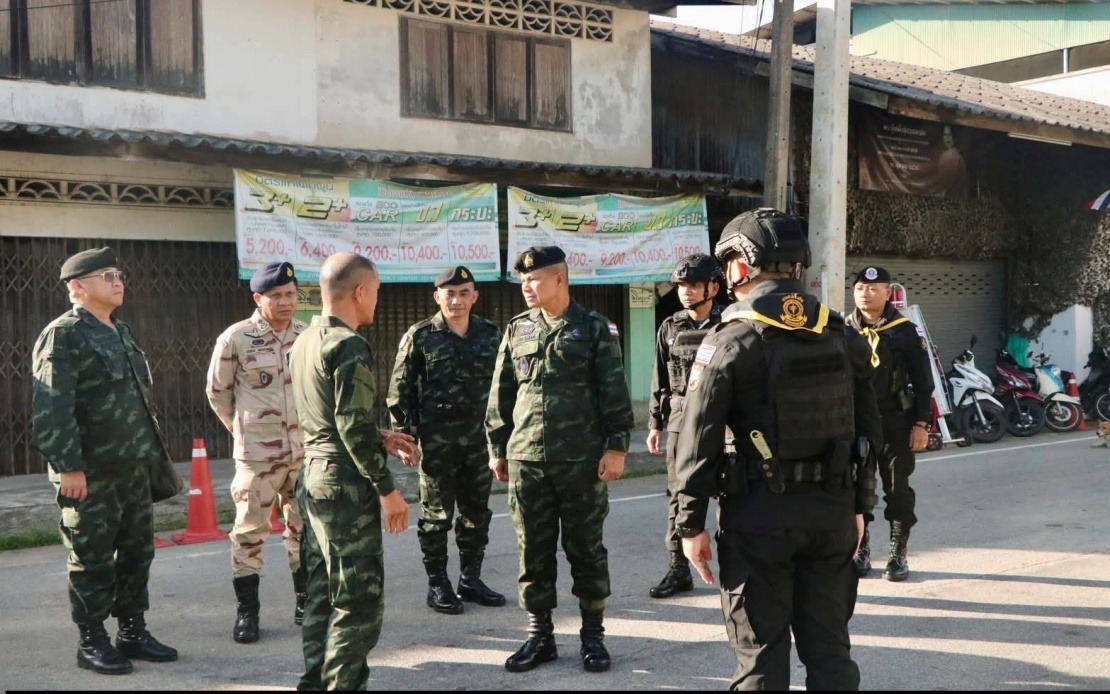
Governor Boonchuai Hormyamyen responded to the attack by issuing comprehensive security directives to consolidated forces comprising military, police, and civilian administration officials. His orders specifically mandated heightened security measures along the Malaysia-Thailand boundary as well as throughout twelve districts spanning Narathiwat province. This expansion of security protocols reflects official concern that the attack may signal escalating militant activity or the mobilisation of previously dormant cells, necessitating proactive enforcement to prevent follow-up incidents.
The Governor's multi-agency approach represents standard Thai procedure for managing security crises in sensitive provinces. By coordinating military forces, police units, and local administrative personnel under unified command, authorities attempt to create redundancy and comprehensive coverage across vulnerable zones. However, the effectiveness of such measures depends heavily on intelligence gathering capacity, operational coordination in the field, and the willingness of communities to report suspicious activities—factors that have historically proven inconsistent in Narathiwat.
Forensic teams initiated detailed investigations at the checkpoint site following the assault. The collection and analysis of physical evidence—ballistic residue, explosive fragments, vehicle tracks, and tactical patterns—will inform understanding of the attackers' capabilities and potential affiliations. Such forensic work typically requires several days or weeks to yield conclusive results, during which investigators simultaneously pursue leads regarding the identity and motivation of the perpetrators.
The underlying security environment in Narathiwat reflects decades of unresolved tensions. Though major separatist insurgencies have waned compared to their intensity in previous decades, persistent low-level violence continues to plague the province. Attacks on security forces remain uncommon enough to merit significant media coverage yet frequent enough to constitute an ongoing operational challenge. The psychological impact on security personnel and civilian populations proves substantial, creating cycles of fear that potentially exacerbate communal tensions.
For regional observers, particularly Malaysian analysts concerned with border security, the Narathiwat incident reinforces several persistent concerns. First, it demonstrates the continued operational capacity of militant elements despite Thai military presence. Second, it highlights the vulnerability of fixed security installations to coordinated assault. Third, it reminds observers that despite development and modernisation efforts, Narathiwat remains a province where state control over territory and populations remains contested in certain areas.
Thailand's national security apparatus will likely intensify surveillance and intelligence operations throughout southern Thailand in the incident's aftermath. The Internal Security Operations Command, which maintains substantial resources and coordination authority in southern regions, will presumably assign significant investigative capacity to identifying and apprehending those responsible. Success or failure in prosecuting such investigations shapes public confidence in security forces' competence and determination.
The attack also carries implications for Thailand's international relationships and reputation. Foreign investors and international observers monitor security trends in southern Thailand closely, viewing them as indicators of governmental control and investment climate stability. Incidents resulting in multiple security force fatalities can influence both Thai domestic politics and international perceptions of the kingdom's ability to maintain order across all provinces.
As investigations proceed, authorities will focus on establishing whether the attack represents isolated opportunistic violence or part of a broader campaign signalling escalated militant activity. The answer to this question will substantially influence policy responses and resource allocation throughout Thailand's southern security apparatus in coming months.

