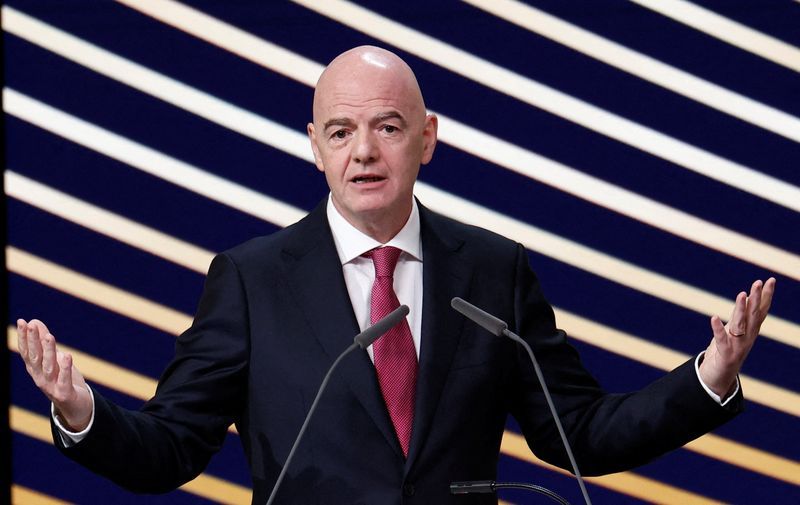
FIFA President Gianni Infantino's grip on world football's top job has weakened considerably following his failed attempt to attract private investors into World Cup ownership, prompting national football associations and regional confederations to publicly distance themselves from his leadership. With the next presidential election scheduled for March 18 in Morocco, the contest for the 2027–2031 term is shaping up as a genuine competition rather than a coronation, marking a significant shift in the politics of international football governance. The defections by Serbia, Sweden and Wales signal growing frustration with Infantino's management style and decision-making processes, particularly his tendency to pursue ambitious financial restructuring without adequate consultation with the broader football family.
The implosion of Infantino's private equity scheme has created space for alternative candidates to present themselves as champions of more inclusive and transparent leadership. Whereas previous FIFA elections have largely been decided by incumbent advantage and regional consensus, the emerging field of potential challengers suggests that the confederation leaders are hungry for a change in direction. For Malaysia and Southeast Asian football stakeholders, the outcome carries weight, as FIFA's strategic decisions on tournament formats, development funding, and competition structures directly affect smaller confederations' participation and influence in the global game.
Victor Montagliani, the Canadian businessman who chairs CONCACAF and oversees North American and Caribbean football, represents the North American perspective in this potential leadership race. While CONCACAF formally rejected Infantino's private equity proposal, the confederation stopped short of the complete boycott adopted by UEFA, indicating Montagliani's willingness to maintain pragmatic engagement rather than launch an outright revolt. This positioning gives Montagliani credibility as someone who can bridge divides, even as the 2026 World Cup—scheduled to be hosted across Canada, Mexico, and the United States—positions CONCACAF as a key stakeholder in football's immediate future. His candidacy would likely emphasise stability and consensus-building in marked contrast to Infantino's more aggressive approach to modernising FIFA's commercial operations.
European football has crystallised its opposition around UEFA President Aleksander Ceferin, the Slovenian administrator who symbolically boycotted the recent World Cup final to demonstrate the continent's displeasure with Infantino's leadership. UEFA emerged as the loudest voice against both the private equity proposal and what European federations view as unilateral decision-making that ignores their concerns. Should Ceferin seek the presidency, he would mobilise Europe's substantial voting bloc and the cultural and financial weight of the world's most developed football market. However, Ceferin's combative stance and the depth of his conflict with Infantino raise questions about whether he can build the consensus necessary to secure victory and govern effectively afterward.
From the Asian confederation comes Sheikh Salman bin Ibrahim Al Khalifa of Bahrain, who serves as a senior vice president on the FIFA Council and brings the perspective of a region that has increasingly invested in football infrastructure and hosting major competitions. The AFC's formal critique of FIFA's consultation processes, issued when opposing the private equity plan, suggests that Asian federations share European and North American concerns about the direction of global football governance. Sheikh Salman's candidacy would represent an effort to restore due process and stakeholder engagement to FIFA's decision-making machinery, appealing to confederations tired of top-down edicts from Zurich. His opposition to Infantino's earlier proposal to expand the World Cup to 64 teams demonstrates that he is willing to challenge the incumbent on substantive football matters, not merely procedural grievances.
Nasser Al-Khelaifi, the Qatari executive and Paris Saint-Germain president, has attracted growing interest from European football officials seeking a candidate who combines credibility in both the traditional heartland of the sport and the emerging financial centres of the Middle East. European confederation leaders, according to recent reporting, view Al-Khelaifi as a figure who could reconcile the continent's demands for better governance with the commercial realities and regional relationships that define modern football's political economy. However, Al-Khelaifi's position as a club executive rather than a confederation official represents an unconventional pathway to the FIFA presidency, and his ties to Qatari interests may complicate his ability to represent the full breadth of global football.
Lise Klaveness of the Norwegian Football Federation occupies a distinctive position as one of the few women among the leading contenders and among the most vocal critics of Infantino's failed reform agenda. Norway's vigorous opposition to the private equity scheme and its willingness to pursue ethics complaints against FIFA—notably over the Folarin Balogun sanctions controversy and its apparent connection to Donald Trump's intervention—demonstrate that smaller European confederations expect accountability and consistency in FIFA's operations. Klaveness's prominence signals that the next presidency may need to address persistent concerns about FIFA's relationship with external political pressure and the perceived inconsistency of its disciplinary processes. Her candidacy appeals to those advocating for more ethical governance and the protection of football from undue interference by political leaders.
The Balogun incident, which Klaveness highlighted in her ethics complaints, underscores a broader anxiety about how FIFA operates in the age of superpower influence. The suspension of the American forward's ban following reported intervention by the U.S. president raised alarm across football's governance structures and symbolises the kind of decision-making that has eroded confidence in Infantino's stewardship. This controversy has become shorthand for concerns that FIFA lacks transparent rules and consistent application of discipline, a vulnerability that any successor will need to address immediately upon taking office. For regional confederations like the AFC and smaller federations in Southeast Asia, the prospect of a more rule-bound and transparent FIFA carries real significance.
The March 18 vote in Morocco will pivot on how effectively each candidate communicates a vision for restoring FIFA to what confederation leaders regard as its proper sphere—stewarding the sport itself rather than pursuing aggressive commercial innovation without consensus. Infantino's relative weakness in this election cycle reflects not a single catastrophic failure but an accumulation of decisions and communications that have convinced key stakeholders that his leadership style is unsustainable. The field of challengers remains fluid, with some contenders still assessing their chances, but the trajectory is unmistakably away from Infantino's re-election. For Asian and Southeast Asian football, this transition offers an opportunity to recalibrate FIFA's relationship with developing confederations and to ensure that future World Cup expansion and competition structures reflect genuinely collaborative rather than unilateral decision-making processes.

