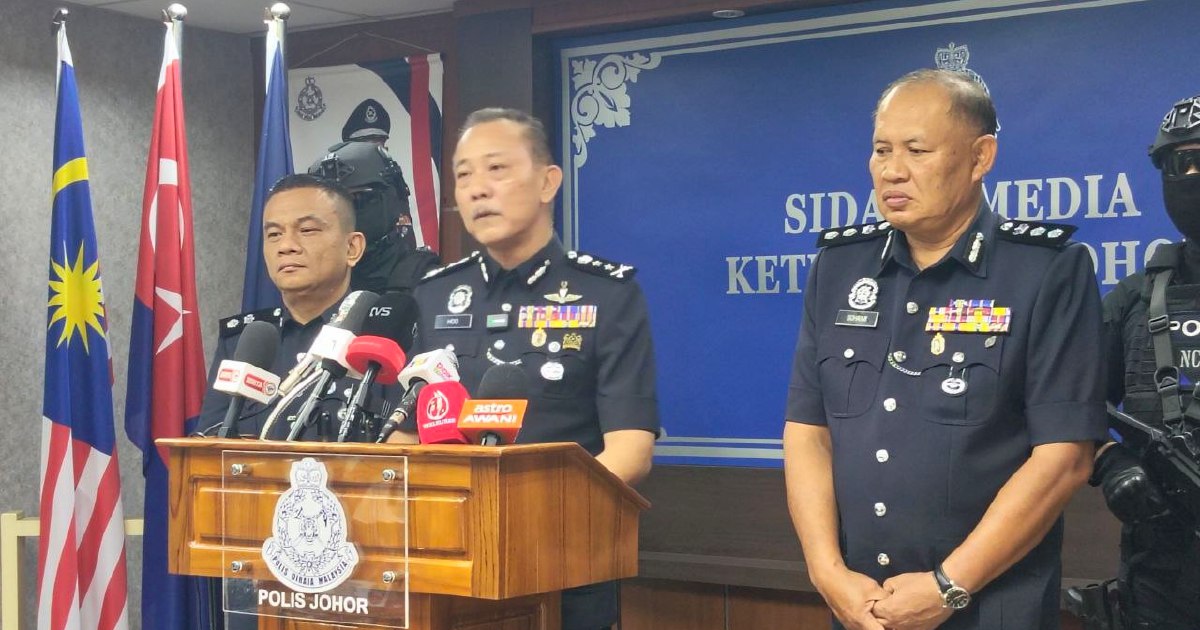
Police in Johor Baru have apprehended five individuals as part of an ongoing investigation into multiple instances of the Jalur Gemilang and Johor state flags being flown upside down throughout the state. The arrests stem from three separate incidents discovered across Johor, each involving improper handling and display of the national and state symbols that carry deep ceremonial and legal significance in Malaysia.
The discovery of inverted flags in public spaces triggers immediate police response given the symbolic importance placed on these banners within Malaysia's constitutional framework. The Jalur Gemilang, featuring its distinctive yellow and blue quarters with the crescent and star emblem, serves as a fundamental national icon protected under various laws governing respect for state emblems. Similarly, the Johor state flag holds particular significance as the symbol of one of Malaysia's oldest and most prominent states, with historical ties to the federation's formation.
Malaysia maintains strict standards regarding flag display, with guidelines established through the national flag code that all government agencies and private citizens are expected to follow. Improper handling, including inverting flags during display, constitutes a violation that authorities take seriously as it reflects disrespect toward national sovereignty. The incidents in Johor represent a breach of these expectations that warrants investigation to determine whether deliberate intent or negligence led to the violations.
The three separate cases indicate a pattern worth examining from both a public safety and civic education perspective. Whether these incidents occurred simultaneously or over an extended period remains unclear from available information, though the clustering of arrests suggests coordinated police operations. Each case requires individual assessment to understand local circumstances, public reaction, and the backgrounds of those involved in the flag reversals.
For Malaysian citizens and observers across Southeast Asia, such incidents underscore the continued importance placed on national symbols and respect for state institutions. Unlike many other nations where flag protocols operate with greater flexibility, Malaysia maintains relatively formal expectations regarding public display and handling of national insignia. This reflects the country's particular historical context and the constitutional role these symbols play in representing federal unity among the various states and communities.
The arrests also highlight the enforcement mechanisms available to Malaysian authorities when such violations occur. Police investigations into flag-related incidents typically proceed under relevant sections of criminal law that protect state emblems. The detention of five individuals suggests law enforcement views these cases with sufficient seriousness to warrant formal charges rather than warnings or administrative action.
From a regional perspective, Malaysia's approach to safeguarding national symbols reflects broader Southeast Asian traditions regarding respect for state institutions and patriotic observance. Nations throughout the region maintain comparable standards, viewing such protocols as fundamental to maintaining social cohesion and national pride. The Johor incidents thus align with established regional norms rather than representing an isolated Malaysian phenomenon.
The implications for public awareness extend beyond the immediate legal proceedings. These arrests may prompt broader community discussion about flag etiquette and the expectations placed on individuals displaying national symbols in public contexts. Educational institutions and civic organisations often use such incidents as teaching moments to reinforce proper handling protocols and the historical significance embedded within Malaysia's national imagery.
Local authorities in Johor, the country's southernmost state, appear committed to maintaining standards for respectful display of state and national symbols within their jurisdiction. The state, known for its strong administrative traditions and enforcement mechanisms, has demonstrated through these arrests that violations attract swift response. This approach aligns with Johor's historical reputation for maintaining orderly civic conduct and institutional respect.
The investigation process will determine whether these incidents involved intentional disrespect, carelessness among individuals unfamiliar with proper protocols, or other underlying circumstances. Legal proceedings will clarify the specifics of each case and may result in charges or other dispositions depending on evidence gathered. Such outcomes typically establish precedent for how similar incidents are handled in subsequent cases.
Beyond the immediate legal dimensions, these incidents serve to reinforce the importance of civic education regarding national symbols. Public understanding of why such protocols exist and what they represent strengthens voluntary compliance with established standards. In Malaysia's diverse society, maintaining shared respect for common symbols takes on particular importance as a unifying principle across different communities and backgrounds.
The Johor cases demonstrate that enforcement of flag display standards continues actively within Malaysian jurisdictions. While most citizens and organisations comply with established protocols routinely, these arrests illustrate that authorities maintain vigilance and respond when violations occur. Moving forward, the outcomes of these investigations may influence how similar cases are addressed and reinforce community awareness of expectations surrounding national and state symbol display.

