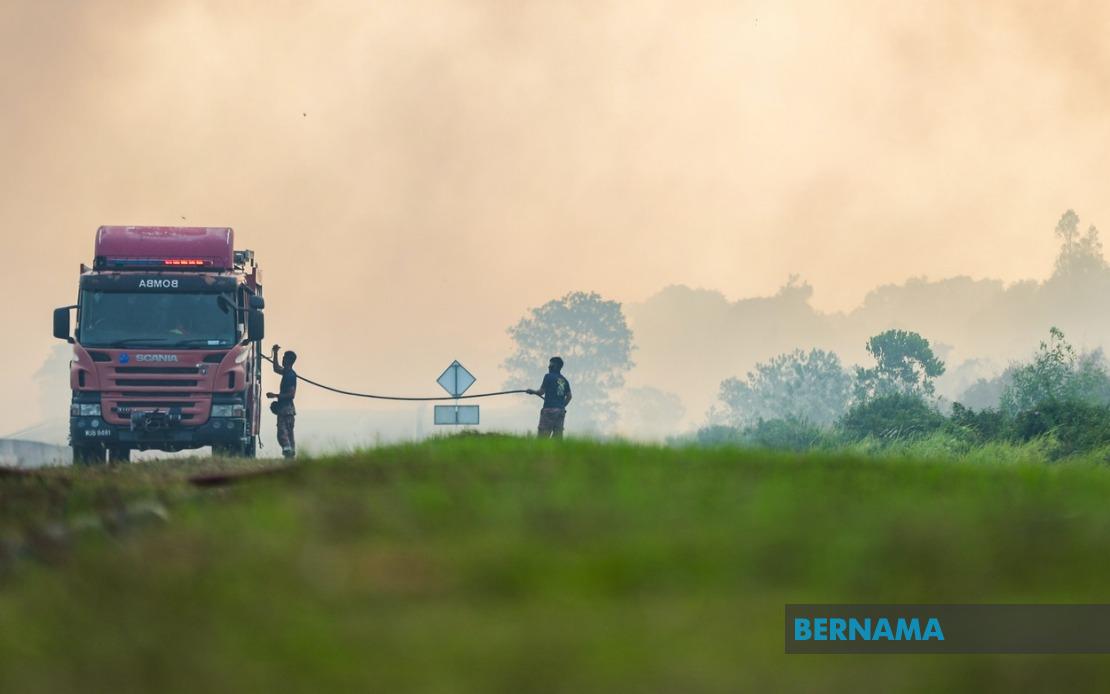
Firefighting operations at a peatland fire site in Pengerang, Johor have achieved significant headway, with teams extinguishing over 29 hectares of the 51.4-hectare affected area along Jalan Bypass Punggai-Sebana Cove near Kota Tinggi as of 4 pm on Monday. The blaze, which ignited earlier in the week, has prompted a coordinated response involving multiple government agencies and private sector personnel working across two distinct operational sectors.
Fire Superintendent II Baharuddin Idris, operations commander at Sungai Rengit Fire and Rescue Station, outlined the scale of the ongoing containment effort in a statement. Emphasizing the intensity of the response, he detailed that firefighting and monitoring operations have been sustained continuously since the fire's initial outbreak, with teams committed to a round-the-clock schedule designed to suppress active flames, establish containment perimeters, and halt any further spread of the blaze across the peatland.
The operational approach divides the affected area into two sectors, each presenting distinct challenges and requiring tailored suppression tactics. Sector A remains the primary focus for active firefighting efforts, with more than 21 hectares still requiring intensive work to bring the fire fully under control. In contrast, Sector B has reached an advanced stage of suppression, with nearly all active fires within that zone successfully contained, allowing resources to concentrate efforts where they are most critically needed.
Recognizing the limitations of ground-based firefighting in tackling peatland fires—which can burn deep beneath the surface and prove extremely difficult to access—authorities deployed aerial support to accelerate the extinction process. An aircraft approved by the Air Operations Control Centre took to the air at 2:30 pm on the day of the report, adding a critical dimension to the firefighting strategy that ground crews alone could not provide. This escalation reflects the serious nature of the incident and the determination to resolve it swiftly.
The response mobilized a substantial workforce drawn from across multiple organizations and sectors. The Sungai Rengit Fire and Rescue Station deployed 36 firefighters to the front lines, supported by nine personnel from the Malaysian Civil Defence Force, contributing specialized training and logistical capabilities to the operation. Ranhill SAJ, a private water supply company operating in the region, contributed 14 personnel, demonstrating how commercial entities can be mobilized for emergency response. Additionally, two specialists from the Department of Environment and three representatives from the Pengerang Municipal Council were integrated into the operational structure, bringing environmental expertise and local logistical knowledge respectively.
Peatland fires present particular challenges to firefighting teams that distinguish them from conventional forest fires. Unlike surface blazes that consume visible vegetation, peatland fires can smoulder within the soil itself for extended periods, making complete extinguishment difficult to assess and more time-intensive to achieve. The decomposed organic material comprising peat can remain combustible long after surface flames have been suppressed, necessitating sustained monitoring and targeted intervention to prevent reignition. This explains the emphasis by authorities on maintaining 24-hour operations even after visible fire suppression appears successful.
The geographic location of the fire near Kota Tinggi in Pengerang adds another layer of concern, as the area sits within an environmentally sensitive region adjacent to industrial zones. Peat soils store vast quantities of carbon, and their combustion releases significant greenhouse gas emissions, contributing to broader environmental and climate considerations beyond the immediate threat to local communities. The prompt response and multi-agency coordination reflect awareness of these wider implications and the urgency of containing such incidents before they escalate into major environmental events.
The involvement of the Department of Environment in the firefighting effort underscores the recognition that peatland fires demand not merely suppression but also environmental assessment and mitigation. Officials must evaluate potential impacts on air quality, water resources, and biodiversity in the surrounding region. The inclusion of environmental specialists within the operational framework indicates that authorities are adopting a holistic approach rather than treating the incident as a purely tactical firefighting challenge.
The coordination between the Air Operations Control Centre and frontline teams demonstrates the integrated nature of modern disaster response in Malaysia. The decision to authorize and deploy aircraft support required assessment of operational necessity, risk factors, and resource availability—a process that reflects bureaucratic structures designed to ensure efficient allocation of scarce assets during emergencies. The timing of aircraft deployment at 2:30 pm suggests that ground teams had reached a point where acceleration of efforts became both possible and justified.
For Johor residents, particularly those in Pengerang and surrounding municipalities, such incidents highlight the ongoing environmental pressures that persist despite development and urbanization. Peatland areas, while crucial carbon sinks and ecological habitats, remain vulnerable to fire, especially during dry seasons when moisture content drops and combustibility increases. The rapid mobilization of resources and multi-sector coordination visible in this response represents institutional learning from previous incidents and reflects Malaysia's growing sophistication in managing environmental emergencies at the regional level.

