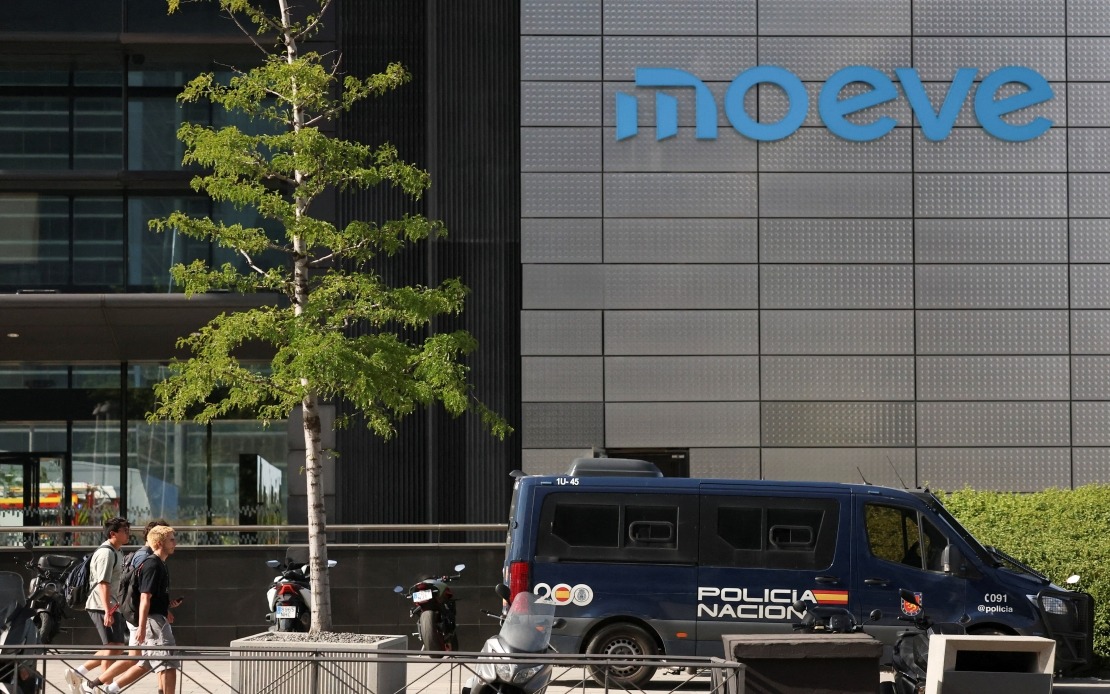
Thick plumes of smoke billowed from Torre Moeve in central Madrid on Tuesday afternoon, creating a dramatic scene visible across the Spanish capital. The incident occurred at one of Europe's most iconic high-rises—Spain's second-tallest building—when an explosion ignited a fire that forced immediate evacuation protocols. Swift emergency response prevented what could have been a catastrophic incident in the heart of the city, though the dramatic sight prompted widespread concern among residents and onlookers.
The explosion detonated inside the tower at approximately 5.00 pm local time, according to Spain's National Police as reported by the national broadcaster RTVE. This initial blast triggered the fire that subsequently engulfed portions of the structure. The precise cause of the explosion has not yet been confirmed by authorities, though investigations are ongoing. The timing during late afternoon business hours meant the building contained occupants at the moment of the incident, heightening the potential for casualties.
According to the Spanish government delegation in Madrid, the fire originated on the 25th floor, where technical installations and equipment rooms are located. This particular floor contains crucial mechanical and electrical systems that serve the entire high-rise complex. The localisation of the fire to this technical area rather than occupied office space likely contributed to the absence of serious injuries. Such facilities typically house generators, electrical panels, and climate control machinery that are essential for building operations but are generally unmanned during normal working hours.
Authorities moved rapidly to clear the building as a precautionary measure once the fire was detected. The evacuation procedure, likely well-established for a building of Torre Moeve's prominence, appears to have executed smoothly without panic or crush incidents. The prompt removal of occupants from the structure demonstrates the importance of regular fire safety drills and emergency preparedness training in high-rise office buildings. Given the tower's status as a major commercial landmark, such protocols would be regularly rehearsed and refined.
Madrid's firefighting teams responded swiftly to the emergency call and worked to control and extinguish the blaze. Officials from the Madrid City Council declared the fire completely extinguished following coordinated firefighting efforts. Following suppression, emergency teams conducted thorough inspections of the building's interior to assess structural integrity and ensure no secondary hazards remained. These post-fire investigations are critical for determining whether the building can be safely reopened and identifying any damage to core systems or infrastructure.
Despite the scale of the incident and the size of the building, injuries remained minimal. Two workers sustained mild smoke inhalation from exposure to fumes during or after the explosion, while a passing member of the public experienced an anxiety attack triggered by the dramatic events unfolding outside. All three individuals received medical assessment and treatment at the scene but did not require hospitalisation, suggesting their conditions were not severe. The low injury count stands in stark contrast to what could have transpired given the circumstances.
The incident highlights both the vulnerabilities and resilience of modern urban infrastructure. Torre Moeve, as a major commercial property, represents significant investment and serves as workplace for hundreds of employees. The fire disrupted operations and created considerable uncertainty about the building's immediate future and potential damage to equipment and facilities. However, the absence of fatalities or serious injuries underscores how effective safety systems, swift emergency response, and well-coordinated evacuation procedures can mitigate disaster when crisis strikes.
For Malaysian observers, the incident offers lessons relevant to our own urban development and workplace safety standards. As Southeast Asian cities continue constructing increasingly ambitious skyscrapers, ensuring robust fire prevention systems, regular maintenance of technical facilities, and comprehensive emergency preparedness becomes ever more critical. The Spanish response provides a model of coordinated emergency management that regional authorities might study and adapt to local contexts.
The incident also raises broader questions about the aging infrastructure within established European commercial buildings and the ongoing maintenance requirements for complex high-rise systems. Regular inspection and certification of technical rooms, electrical systems, and mechanical equipment can prevent similar incidents. For building owners and facility managers across the region, the Torre Moeve incident serves as a reminder that investment in preventative maintenance and safety infrastructure yields tangible benefits when emergencies occur.
As investigations continue into the root cause of the explosion and subsequent fire, authorities will likely issue findings and recommendations for the building and broader industry practices. Whether the incident stemmed from equipment malfunction, maintenance deficiency, or other factors will become clearer as technical teams complete their analysis. Such investigations often result in updated safety standards that benefit the entire sector, improving protection across comparable buildings worldwide.