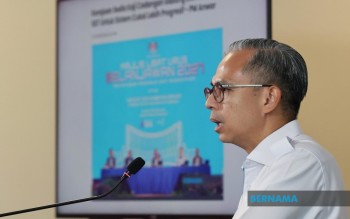
The Malaysian government has opted to give Finance Minister II Datuk Seri Amir Hamzah Azizan a flexible timeline to complete a detailed examination of a potential hybrid taxation system that would blend elements from the Goods and Services Tax with the existing Sales and Services Tax regime. Government spokesperson and Communications Minister Datuk Seri Fahmi Fadzil disclosed this decision during a post-Cabinet press conference in Putrajaya, indicating that hurrying through such a consequential fiscal proposal would be counterproductive to sound policymaking.
The proposed framework represents a notably nuanced approach to Malaysia's tax architecture, neither abandoning the current SST system entirely nor re-implementing the controversial GST that was rescinded following strong public opposition. Instead, the concept involves examining which specific mechanisms from the GST model might enhance the effectiveness of the existing SST structure, potentially creating what Fahmi termed a more equitable national taxation apparatus. This middle-ground strategy reflects the government's attempt to balance revenue needs with political sensitivities around taxation.
Fahmi emphasised that the initiative remains at a preliminary phase, with the Finance Ministry tasked with conducting an exhaustive review before recommendations reach the Cabinet. The spokesman stressed that such intricate fiscal matters require meticulous analysis rather than expedited decision-making, particularly given the complex legacy of Malaysia's previous GST experience and the identified shortcomings within the current SST framework. The ministry's approach signals recognition that tax policy mistakes carry substantial economic and political consequences for a developing nation like Malaysia.
Prime Minister Datuk Seri Anwar Ibrahim has instructed the Finance Ministry, specifically Finance Minister II, to undertake this comprehensive investigation into what a progressive hybrid system might achieve. The PM's directive suggests high-level commitment to examining tax reform possibilities, though Fahmi confirmed that no specific completion deadline or budget announcement timeline was discussed during the Cabinet meeting. This absence of firm deadlines indicates the government is prioritising thorough analysis over political expediency.
The examination will necessarily encompass lessons learned from Malaysia's previous GST implementation, which ran from 2015 to 2018 before being repealed due to widespread public discontent over cost-of-living impacts. Simultaneously, the study must address documented challenges within the current SST system, which has operated since the GST's removal. Understanding what aspects of the GST framework proved problematic while identifying deficiencies in SST administration is essential groundwork for any hybrid proposal.
For Malaysian businesses and consumers, the implications of this deliberative process are significant. The taxation system directly affects corporate investment decisions, pricing structures, and household expenditure patterns. A well-designed hybrid approach could theoretically improve revenue collection efficiency—critical for government financing—while avoiding the consumer backlash that torpedoed the previous GST regime. Conversely, poor implementation could replicate past mistakes or create confusion through an overly complicated dual-system approach.
Anwar has positioned Malaysia's commitment to retaining SST as the foundational system, with GST features integrated only if rigorous analysis demonstrates their acceptability and benefit. This declarative stance addresses lingering public concerns about tax increases, positioning any modifications as refinements rather than reversals to the GST model. The rhetorical framing matters considerably in a political environment where taxation remains emotionally charged following the earlier GST experience.
The Finance Ministry's investigation will need to consider comparative tax systems across Southeast Asia and globally, examining how nations have successfully implemented progressive taxation without triggering consumer revolt. Singapore's GST, Brunei's absence of major consumption taxes, and Thailand's VAT system offer regional examples worth analysis. International best practices could inform whether a Malaysian hybrid approach might achieve efficiency gains while remaining politically viable.
The timing of any announcement remains uncertain, with Fahmi confirming that no decision has been made regarding whether recommendations will feature in the upcoming budget presentation. This flexibility suggests the government will release findings only when they are sufficiently developed to withstand public and parliamentary scrutiny. Premature announcement of incomplete proposals could invite criticism or inflame taxation debates unnecessarily.
For Malaysian voters and businesses watching fiscal policy developments, this extended study period offers both opportunity and uncertainty. Extended timelines allow for more rigorous analysis but may also delay necessary tax reforms needed for government revenue stability. The Cabinet's willingness to allocate adequate time to the Finance Ministry suggests serious consideration of hybrid taxation, yet the absence of firm deadlines raises questions about ultimate governmental commitment to implementing whatever recommendations emerge.
The Finance Ministry's work will carry implications extending beyond immediate taxation mechanics. Business confidence, consumer sentiment, and political stability all hinge partly on tax policy predictability and perceived fairness. A hybrid system perceived as well-designed and equitably structured could strengthen fiscal sustainability; conversely, one viewed as confused or unfair could damage trust in government economic management. The stakes involved in this comprehensive review are therefore considerable for Malaysia's medium-term economic trajectory and the MADANI government's fiscal credibility.
As Finance Minister II prepares to lead this analytical process, stakeholder engagement will likely prove essential. Business associations, consumer groups, and economic experts have substantive contributions to make regarding practical implementation challenges and economic impacts. The transparent incorporation of diverse perspectives into the study could strengthen eventual recommendations and build broader acceptance for whatever hybrid framework ultimately emerges from this period of intensive review.

