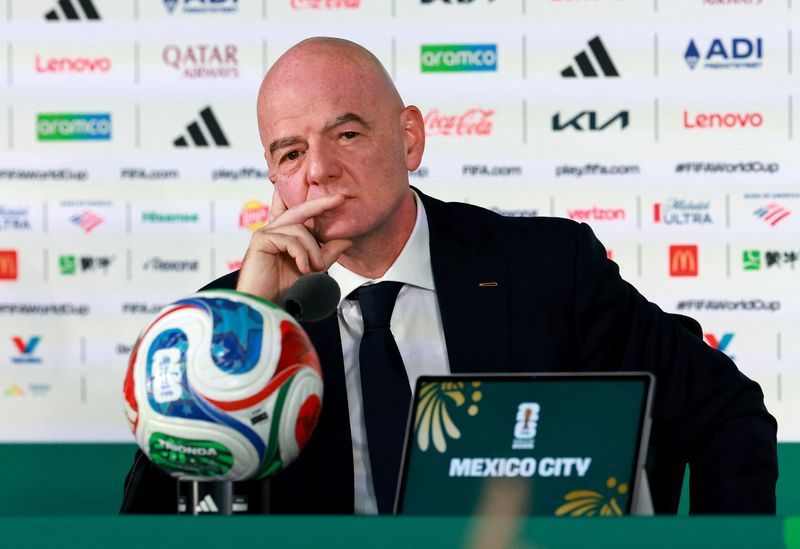
FIFA attempted to draw a line under its most turbulent period in recent memory when senior officials gathered in Rabat to publicly support Gianni Infantino, yet the governance crisis that nearly destabilised the world governing body shows no signs of disappearing before the 2027 presidential election. The international soccer federation apologised to its 211 member associations for the handling of a controversial proposal to monetise future World Cup commercial rights, acknowledging that the process lacked the transparency and consultation expected by national federations that felt excluded from decision-making at the highest levels.
The retreat from the commercial rights initiative represents a significant political defeat for Infantino's administration, which failed to anticipate the backlash from powerful confederations and domestic leagues that viewed the proposal as a top-down imposition rather than a collaborative strategy. FIFA's statement acknowledged that the proposal "should have been handled differently" and committed to reviewing the processes that produced such a misstep, though the governing body's initial insistence that all actions complied with existing regulations left some sceptics unconvinced about the depth of promised reforms.
What distinguishes this crisis from previous internal disputes is the breadth of the coalition questioning FIFA's governance architecture. European Leagues, representing over 1,300 clubs across the continent, has criticised not only the failed commercial initiative but also FIFA's approach to a separate proposal to expand the 2030 World Cup tournament from 48 to 64 teams, which was presented with an unrealistically compressed four-week assessment window. These complaints reflect a deeper frustration with FIFA's tendency to present stakeholders with finished decisions rather than engaging them in genuine consultation during the formulation stage.
For Malaysian and Southeast Asian football administrators, the governance debate carries particular significance. The Asian Football Confederation, which includes Malaysia's Football Association, has been among the critical voices questioning Infantino's leadership style. Smaller associations across Asia and Africa, however, maintain strong backing for the FIFA president, recognising that development funding flowing from his administration supports grassroots programmes that would otherwise lack resources. This creates a delicate political dynamic where confederation leaders must balance institutional loyalty with member interests.
Infantino's immediate tactical objective in Rabat was securing visible endorsements ahead of March's presidential election in Morocco, where he intends to pursue a fourth term extending through 2031. The meeting achieved this goal, with FIFA's management board and Secretary General Mattias Grafstrom publicly affirming their confidence in the president's leadership. An internal staff memo from Grafstrom characterising the episode as "a sad and reproachable series of events" whilst invoking the transience of "individuals, unstable moments and unfortunate episodes" attempted to compartmentalise the controversy rather than address systemic deficiencies. Infantino reciprocated the show of unity by praising the administration's work and releasing photographs of himself and Grafstrom smiling together at a women's Africa Cup of Nations match, a carefully choreographed image designed to project normalcy and mutual confidence.
Yet beneath the surface unity lies a more complex political reality. Influential confederations including UEFA, CONCACAF and the AFC have demonstrated willingness to challenge Infantino's decision-making methodology, signalling that future proposals will encounter significantly heightened scrutiny. UEFA, representing Europe's most financially powerful leagues and clubs, possesses sufficient leverage to demand substantive governance reforms rather than cosmetic adjustments. The same pressure for accountability is emerging from confederations that oversee football in North and Central America, the Caribbean, and Asia, suggesting a genuine shift in how FIFA's major stakeholders intend to engage with institutional decision-making.
Infantino's political position, while currently secure, has fundamentally shifted. No viable challenger has emerged ahead of the presidential election, partly because many smaller associations across Africa and Asia continue viewing him as a champion of their interests and development aspirations. Yet the controversy has redirected attention to FIFA's internal architecture and processes, raising questions about whether the current framework adequately protects member interests when senior officials pursue strategic initiatives. The president faces a narrower margin for error in his second term, and any future proposals involving commercial arrangements, tournament expansion, or governance restructuring will be subjected to demands for transparency and consultation that were largely absent from his earlier tenure.
FIFA's statement warning that it would "no longer tolerate any attacks on its integrity, good governance and due process" rings somewhat hollow given that the integrity and due process of its own internal procedures precipitated the crisis. The governing body's assertion that errors related to process and communication rather than regulatory breaches represents a defensive posture that many stakeholders will view as insufficient. The distinction between process failures and governance violations matters less to national associations that felt marginalised from decision-making than to the fact that FIFA's hierarchical approach to strategic planning excludes them from meaningful participation.
The promised review of decision-making processes will present an important test of whether FIFA's leadership intends genuine institutional reform or merely restores procedural appearances whilst preserving centralised authority. A meaningful overhaul would require expanding consultation timelines, establishing clear protocols for stakeholder engagement before proposals reach final development stages, and creating mechanisms through which confederations and major leagues exercise genuine influence over strategic decisions. Anything less substantial will likely disappoint stakeholders and fuel persistent questions about whether FIFA remains committed to collaborative governance or merely demonstrates greater sophistication in managing public relations around top-down decision-making.
For Malaysian football administrators and other Southeast Asian officials navigating FIFA's complex political landscape, the governance debate reflects broader tensions within international sports administration between centralised efficiency and distributed legitimacy. Smaller federations must determine whether maintaining unity with FIFA's institutional hierarchy serves their long-term interests or whether joining larger confederations in demanding governance reform better protects their voice and interests. The March presidential election will provide an opportunity for member associations to signal their expectations regarding institutional accountability, though the absence of alternative candidates suggests that the real pressure for change will emerge through confederations and leagues rather than electoral competition.

