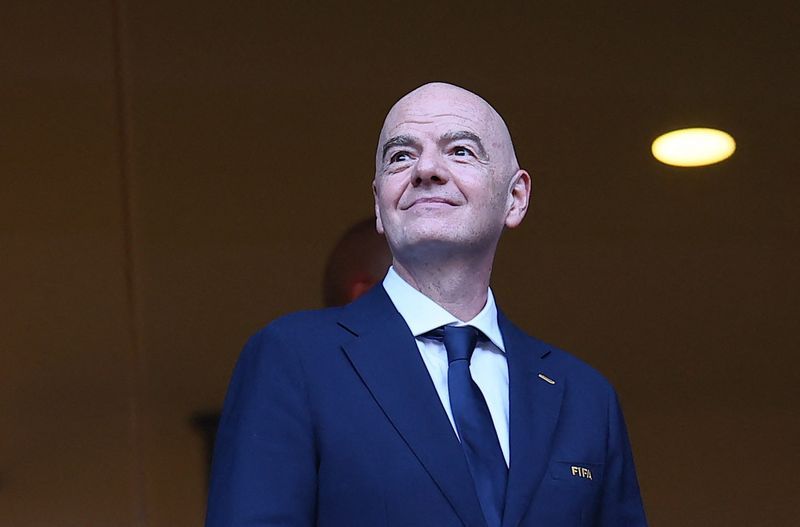
FIFA President Gianni Infantino's once-dominant grip on the world's most powerful sports organisation has come under severe strain following the collapse of his ambitious but divisive plan to commercialise World Cup rights through private investment. The fallout from the abandoned $4.2 billion scheme, which he hastily withdrew on Friday night after three days of unprecedented institutional turmoil, continues to reverberate through global football governance. According to reporting from the Times of London, three major regional confederations—UEFA, CONCACAF, and the AFC—have begun coordinating efforts to force the 56-year-old Swiss-Italian administrator from office, potentially by paralysing FIFA operations or launching rival competitions if he refuses to step down.
Infantino's proposal represented an unprecedented attempt to introduce private equity into World Cup financing, a move that would have fundamentally altered the tournament's governance structure. Though he issued an apology acknowledging how the plan had fractured the football community, his words came too late to salvage crucial institutional relationships. The damage inflicted by his failure to consult major stakeholders before unveiling such a transformative scheme has proven far more corrosive than initial public statements suggested, exposing deep cracks in the coalition that had previously sustained his leadership.
The numerical picture of Infantino's political position remains fluid but concerning. While only five European national associations—including the England FA—have formally rescinded their public endorsement of his reelection at the FIFA Congress scheduled for Morocco in March, Denmark has explicitly declared its opposition. Meanwhile, federations from Morocco, Qatar, Kuwait, Lebanon, and Sri Lanka have maintained their support. Yet with 211 national associations holding votes at Congress, the real calculation involves understanding how many federations remain uncommitted or privately dissatisfied but publicly silent.
The response from continental confederations has been particularly revealing about the depth of the institutional crisis. UEFA and CONCACAF issued sharply critical statements on Saturday expressing a fundamental loss of confidence in Infantino's leadership, language rarely deployed in FIFA's typically diplomatic corridors. The AFC, historically more deferential to FIFA leadership and home to numerous developing nations dependent on FIFA funding, notably refrained from matching this severity but nonetheless branded the lack of consultation "totally unacceptable" and called for systemic reforms at world football's governing body.
Infantino's vulnerability stems partly from his deliberate targeting of developing nations with the proposal's promised benefits. He had specifically pitched the scheme to less wealthy associations outside Europe, dangling potential annual dividends of $20 million to $40 million beginning in the new year to secure their backing. This strategy, which mirrored how his predecessors Joao Havelange and Sepp Blatter had constructed their power bases outside Europe, proved fatally miscalculated when he failed to maintain the secrecy and control necessary for such a delicate political manoeuvre.
The immediate threat facing Infantino is the possibility of an Extraordinary Congress, which would require written formal requests from 43 or more FIFA member associations. Preventing this threshold from being reached represents his most urgent priority over the coming weeks, as such a special session could fundamentally alter his reelection timeline and create opportunities for organised opposition to coalesce. The issuing of a "document preservation letter" by UEFA, indicating potential future legal proceedings, adds another layer of institutional pressure he must navigate.
UEFA's signal that it is considering formal legal action over the World Cup commercialisation plan raises the possibility of protracted disputes extending well beyond the March election. The preservation letter suggests that European football's governing body is methodically building a case, potentially around governance failures, lack of transparency, or breach of fiduciary duties. Should litigation proceed, it would create a backdrop of institutional controversy precisely as Infantino campaigns for reelection, complicating efforts to portray himself as a stabilising figure capable of restoring institutional unity.
Infantino's strategy for recovery must balance two competing imperatives over the next seven months. He needs to rebuild fractured relationships with regional confederations while simultaneously maintaining support among developing nations that benefited from FIFA's expanded financial distribution under his administration. His opponents will need to identify and nominate a credible alternative candidate by November 18—someone capable of addressing the interests of both wealthy European associations and less prosperous federations that depend on FIFA revenues for operational sustainability.
For Malaysian readers and Southeast Asian stakeholders, this institutional struggle carries significant implications. The AFC, which encompasses Malaysia, has signalled deep institutional concerns about FIFA's governance practices without yet joining an outright campaign against Infantino. A prolonged power struggle could distract from FIFA's ability to manage Asian football development, tournament scheduling, and the distribution of commercial revenues that support regional confederation operations. Furthermore, the precedent being established regarding FIFA's willingness to attempt major structural changes without meaningful consultation affects how Asian associations navigate future governance decisions.
The unfolding crisis also reveals fundamental tensions within FIFA's democratic structures. Infantino's attempt to introduce private capital into World Cup financing without securing consensus from regional confederations demonstrated his willingness to operate unilaterally on transformative matters. Whether the FIFA Congress ultimately reelects him in March or forces his removal will establish important precedents about the limits of executive power and the actual influence wielded by member associations in global football governance.
As Infantino faces this unprecedented challenge to his authority, his reelection is no longer assured despite his previous dominance. The seven-month timeline before the FIFA Congress provides sufficient opportunity for organised opposition to crystallise around an alternative candidate, but it also offers Infantino a realistic window to stabilise his position through strategic political engagement. The outcome of this struggle will reshape FIFA's institutional culture and determine whether the organisation moves toward greater transparency and consultation or reverts to more opaque decision-making structures.

