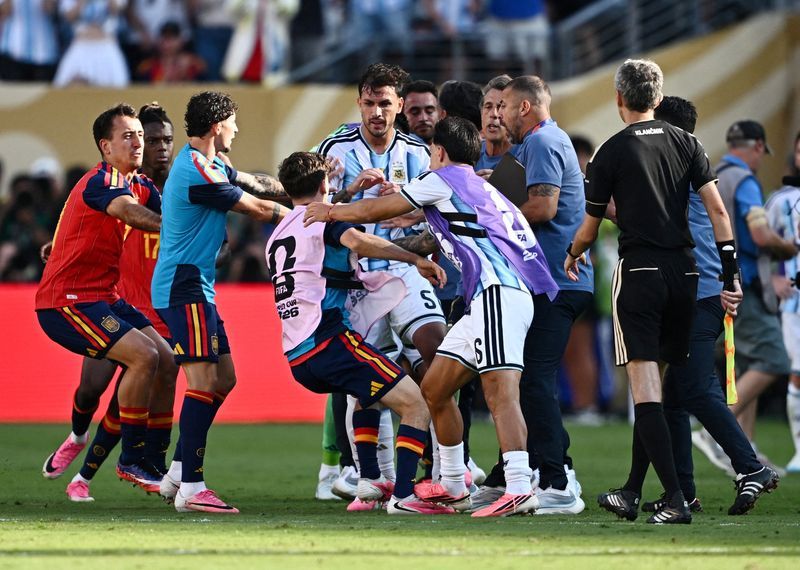
FIFA, football's worldwide regulatory authority, has formally initiated an investigation into the violent altercation that occurred immediately after Spain's victory over Argentina in the World Cup final, marking an unprecedented level of scrutiny into an incident that marred what should have been a celebration of sporting excellence. The governing body has assigned a disciplinary and ethics prosecutor to examine the circumstances surrounding the clash, signalling the seriousness with which international football's apex organization views the breakdown in conduct that unfolded on the pitch.
Spain's triumph came through an extra-time goal delivered by winger Ferran Torres, securing the nation's second World Cup championship in the tournament's history. The match itself had been contentious from early stages, with Argentina suffering a significant numerical disadvantage when midfielder Enzo Fernandez received a second yellow card in the 93rd minute of regular play, forcing the team to compete with ten men during the additional thirty minutes. This disciplinary setback fundamentally altered the tactical landscape and may have contributed to the heightened emotions that followed.
What began as an isolated confrontation between Argentina midfielder Leandro Paredes and several Spanish players, notably defender Eric García and midfielder Gavi, rapidly escalated into a generalized melee involving numerous players from both squads. The initial spark ignited by Paredes' clash with the Spanish contingent spread like wildfire across the pitch, with both teams engaging in pushing, shoving, and physical jostling that required immediate intervention. The scenes presented a stark contrast to the traditional image of professional athletes accepting defeat with grace and composure.
The situation demanded direct involvement from coaching staff and officials to restore order. Argentina's head coach Lionel Scaloni found himself in the difficult position of attempting to de-escalate tensions among his own players while the two teams were being forcibly separated by match officials and support staff. The physical separation of the combatants proved necessary, underscoring the intensity and spontaneity of the outbreak. Such scenes rarely occur at the sport's highest levels and typically result in comprehensive disciplinary consequences.
For Malaysian and Southeast Asian football enthusiasts, this incident carries particular significance within the broader context of how major tournaments are managed and how players conduct themselves under extreme pressure. The incident demonstrates that even at the pinnacle of professional football, emotions can overwhelm training and discipline, creating situations that undermine the sport's reputation for sportsmanship. It also raises questions about player conduct standards and the consistency with which disciplinary measures are applied across different footballing nations and competitions.
The investigation's scope remains purposefully undefined at this stage, with FIFA declining to provide any timeline for its completion or indicate which specific players might face sanctions. This approach allows investigators maximum flexibility to examine all footage, gather testimonies, and determine appropriate consequences without external pressure or predetermined conclusions. The open-ended nature of the inquiry suggests that FIFA intends to conduct a thorough examination rather than rushing to hasty judgments.
Historically, post-match incidents following major tournament matches have resulted in significant fines, match bans, and disciplinary points against national teams. The precedent established by FIFA in similar circumstances suggests that players involved could face consequences ranging from financial penalties to suspension from future international matches. Given that the altercation involved multiple players and occurred during football's most prestigious competition, the penalties imposed are likely to be substantial enough to deter similar conduct in future tournaments.
The incident also reflects broader tensions that had been simmering throughout the match itself. Beyond Fernandez's dismissal, the encounter featured the kind of physical intensity and gamesmanship that characterizes major tournament football, where the stakes are highest and emotions run deepest. The reduction to ten men placed Argentina in a desperate position, potentially intensifying frustration levels among the squad and contributing to the explosive nature of the final-whistle confrontation.
For football governance globally, this situation underscores the ongoing challenge of maintaining standards of player conduct at tournaments where national pride, decades of sporting history, and the legacies of entire generations hang in the balance. FIFA's decision to launch a formal investigation demonstrates that the organization recognizes the need to address such conduct systematically rather than allowing it to become normalized or overlooked. The investigation's findings and resulting sanctions will likely influence how such incidents are handled in future major tournaments.
The broader implications extend to questions of how tournaments can be designed and managed to minimize such incidents while respecting the intensity and passion that makes international football compelling. Balance between passionate competition and acceptable conduct remains a perennial challenge for football administrators worldwide. This particular incident provides FIFA with an opportunity to establish clearer precedents and potentially implement additional measures to prevent similar occurrences at future World Cup tournaments and continental championships.

