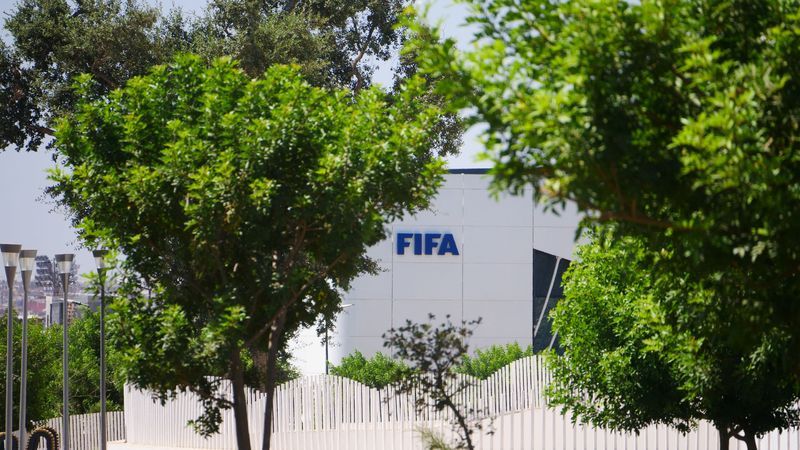
The crisis engulfing world football's governing body has transcended questions of individual leadership, according to FIFPRO Europe president David Terrier, who contends that FIFA requires comprehensive institutional overhaul to survive its current legitimacy crisis. Speaking in Paris, Terrier characterised the organisation as trapped in internal conflict, with trust fragmenting among confederations and national associations following FIFA president Gianni Infantino's failed attempt to commercialise World Cup broadcasting rights. His remarks reframe the deepening turmoil as symptomatic of systemic dysfunction rather than merely a matter of one executive's fitness for office.
The bungled proposal has triggered unprecedented pushback from major continental bodies. UEFA, the AFC, and CONCACAF have openly questioned Infantino's leadership and called for his removal, creating a visible rift that exposes the federation's internal divisions. Yet Terrier's intervention suggests that replacing Infantino alone would leave FIFA's fundamental vulnerabilities unaddressed. The players' union chief argues that the real problem lies in an institutional architecture that concentrates excessive authority in the presidency, creating conditions ripe for misjudgement and eroded accountability.
Terrier deliberately sidestepped the immediate question of whether Infantino should resign, instead emphasising that the leadership debate obscures a larger institutional imperative. "The question almost doesn't even arise anymore," he said, redirecting focus toward the systemic reforms FIFA desperately needs. This rhetorical move proves significant: it signals that for major stakeholders like FIFPRO Europe, personality-driven solutions have become irrelevant compared to structural governance fixes. The implications extend beyond the next leadership election scheduled for March, touching on FIFA's ability to function credibly as sport's global regulatory authority.
The concentration of power within FIFA's presidency represents perhaps the most alarming feature of the current system, in Terrier's assessment. A president who operates without meaningful institutional checks can unilaterally pursue ambitious agendas that bypass proper consultation with member associations and confederations. This dynamic mirrors the conditions that enabled Sepp Blatter's prolonged tenure and the subsequent corruption scandals that nearly destroyed FIFA's international standing before 2015. Terrier explicitly warned that permitting the current governance model to persist would invite repetition of those darkest chapters in the organisation's history.
Following an emergency gathering in Morocco, FIFA leadership offered apologies for mishandling the commercial rights proposal while simultaneously reaffirming support for Infantino. The organisation stressed that all its actions complied with existing regulations and that the problems involved process and communication rather than outright governance violations. However, this defensive posture only reinforces Terrier's central argument: FIFA's rulebook itself permits the very concentrations of power that enabled the controversy. Compliance with flawed regulations offers no meaningful path toward institutional legitimacy or restored confidence among members.
Terrier articulated a demanding condition for any incumbent or successor president genuinely committed to reform. A leader willing to restructure governance would necessarily place his mandate on the line, prioritising institutional integrity over personal political survival. Without such demonstrated commitment, Terrier suggests that whatever outcomes emerge from the current crisis will amount to a defeat for football itself. This formulation transforms the leadership question into a moral test of whether FIFA's executive can subordinate ego to institutional necessity—a threshold that Terrier implies the current president has not clearly met.
The players' union chief framed the present moment as potentially the final opportunity to fundamentally recalibrate FIFA's power distribution. He advocated for a model in which presidential authority becomes circumscribed and distributed among multiple institutional actors, with the president functioning as guarantor of proper governance rather than as an unchecked executive. Such a framework would establish genuine checks and balances, creating internal countervailing power centres capable of constraining presidential overreach and protecting the regulatory framework from politicisation.
Terrier identified a critical institutional gap at the heart of FIFA's current dysfunction. The organisation's administration lacks capacity to function as an independent counterweight or guardian of its own statutes and regulations, particularly when those rules ought to constrain the president himself. This absence of internal institutional resistance mechanisms means that FIFA depends entirely on external pressure—from confederations, unions, or media scrutiny—to police presidential conduct. Such external accountability proves episodic and insufficient, emerging only after damage has already occurred.
For Malaysian and Southeast Asian football, the implications of FIFA's governance crisis resonate directly. AFC confederations operate within a system where individual presidents wield disproportionate influence over major commercial and competitive decisions. The World Cup rights controversy demonstrated how decisions made behind closed doors in European headquarters can destabilise the entire governance architecture upon which Asian football depends. Structural reforms strengthening confederation autonomy and creating genuine checks on FIFA authority would strengthen AFC's institutional position and protect Asian football's interests from arbitrary executive actions.
Terrier's diagnosis suggests that FIFA's current leadership must decide whether to champion genuine governance transformation or defend the status quo. Doing so while remaining in office would require unprecedented humility and self-restraint from any president. The players' union position carries considerable weight because FIFPRO Europe represents athletes whose interests depend on transparent, accountable governance of international football. Their intervention elevates the reform debate beyond factional competition for FIFA's presidency, reframing institutional restructuring as essential to football's credibility globally.
The window for implementing comprehensive reform appears narrowing. Should FIFA's leadership fail to embrace fundamental governance changes before the March election, member associations will face a choice between perpetuating a system that has repeatedly generated crises or pursuing more radical institutional alternatives outside FIFA's traditional structures. For stakeholders across Asia-Pacific, European confederations, and player organisations alike, the coming months will determine whether FIFA genuinely transforms or merely rotates personnel while preserving the flawed architecture that enabled the current impasse.

