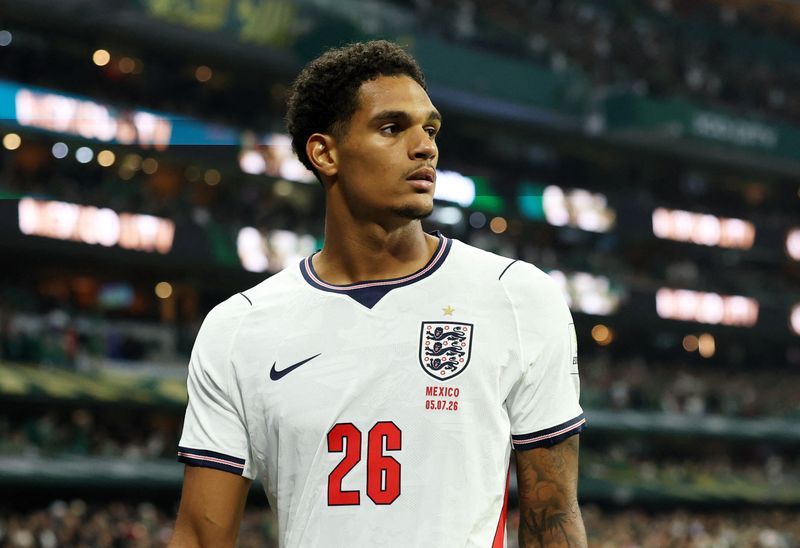
The controversy surrounding FIFA's handling of disciplinary suspensions has erupted into the political realm, with British lawmakers directly challenging world soccer's governing body to justify its unequal treatment of players facing identical circumstances. The focal point of this escalating dispute centres on whether FIFA will extend to English defender Jarell Quansah the same suspension reprieve that American striker Folarin Balogun received following separate red card incidents during the World Cup campaign. The intervention by UK politicians represents a watershed moment in the tournament, transforming what was initially perceived as an isolated administrative decision into a fundamental question about the consistency and integrity of FIFA's disciplinary framework.
The affair gained explosive momentum when U.S. President Donald Trump publicly revealed that he had personally contacted FIFA President Gianni Infantino regarding Balogun's case. Although Infantino subsequently maintained that FIFA's independent judicial bodies would determine the outcome without external pressure, the mere existence of presidential intervention has cast a long shadow over the decision-making process. The timing and nature of Trump's involvement inevitably raised eyebrows across the football world, prompting European football authorities and political figures to question whether procedural independence had genuinely been maintained or whether such a high-level intervention might have subtly influenced the eventual outcome.
Quansah's situation mirrors Balogun's in almost every material respect. Both players received red cards during crucial World Cup matches, triggering automatic one-match suspensions under standard FIFA regulations. Both infractions occurred in competitive fixtures where their teams secured victory, raising the stakes for their respective nations as the tournament progressed. England achieved a thrilling 3-2 victory against Mexico at the Azteca Stadium, with Quansah's dismissal occurring during this encounter. The parallel circumstances have created a compelling logical framework upon which British MPs are now constructing their appeal for consistency, arguing that FIFA cannot credibly apply different standards to functionally identical disciplinary situations.
Labour MPs Noah Law and Melanie Onn have taken the lead in this parliamentary offensive, dispatching formal correspondence to Infantino requesting that Quansah's suspension be deferred until after the World Cup concludes, citing the Balogun precedent as justification. Law acknowledged the legitimacy of the original red card decision but contended that the subsequent suspension should be postponed, mirroring the approach FIFA adopted for Balogun. This carefully calibrated argument accepts FIFA's on-field decision while challenging only the timing of the disciplinary consequence, making the request appear more moderate and reasonable than a demand for outright exoneration. Onn complemented this argument by emphasizing the practical impossibility of defending a system where one player benefits from a delayed sanction while another in materially identical circumstances cannot access the same relief.
The implicit threat underlying these parliamentary interventions is that FIFA's credibility as an impartial governing body will suffer irreparable damage if it demonstrates willingness to accommodate political pressure from American leadership while remaining unmoved by appeals from British officials representing their national team's interests. Both MPs framed their arguments around institutional integrity and equal treatment, rather than merely pleading special circumstances for their national player. They contended that FIFA risked fundamentally undermining public confidence in its disciplinary mechanisms unless it demonstrated consistent application of its rules across all teams and players, regardless of their nationality or the political profiles of their respective governments.
Caroline Dinenage, Chair of the House of Commons Culture, Media and Sport Committee, elevated the pressure by demanding urgent public explanation from FIFA regarding its decision to suspend Balogun's ban. Dinenage's intervention carries particular weight given her parliamentary committee's formal oversight role in sports governance matters. She characterized the FIFA ruling as casting a shadow over an otherwise inspiring World Cup tournament that ought to celebrate football globally rather than becoming ensnared in accusations of political favoritism. Her statement acknowledged that England's victory itself represented the tournament at its finest, suggesting that the subsequent FIFA decision threatens to corrupt the sporting narrative with questions about procedural fairness and external influence.
Dinenage explicitly called for FIFA to address suggestions of political interference, indicating that the parliamentary committee would not accept an explanation based solely on procedural technicalities. She demanded transparency regarding the basis upon which FIFA differentiated Balogun's case from the standard disciplinary framework. This represents a significant escalation from informal lobbying to formal parliamentary accountability, signalling that the issue has transcended sport and entered the realm of governance and democratic scrutiny. The committee's involvement suggests that British political institutions themselves are now invested in determining whether FIFA's decision-making processes can withstand external examination.
FIFA has consistently maintained that its judicial bodies acted with complete independence in the Balogun matter, yet the governing body has maintained public silence regarding the Quansah situation despite multiple media inquiries. This reticence itself communicates a message—whether intentional or not—that FIFA may be reluctant to commit to applying the same standards uniformly. The organization's failure to proactively address the comparison between the two cases, or to clarify whether Article 27 provisions that apparently governed the Balogun decision might similarly apply to Quansah's suspension, leaves space for cynical interpretations about inconsistent rule application.
The English Football Association is reportedly examining its options regarding a potential appeal on Quansah's behalf, though the organization has not publicly committed to this course of action. The FA's deliberative approach suggests institutional uncertainty about how aggressively to pursue the matter or whether doing so might invite unwelcome scrutiny of its own governance relationships with FIFA. The position places England's football authorities in a delicate position, balancing their obligation to support their player against concern about antagonizing football's world governing body during an active tournament.
Enland faces Norway in World Cup quarter-final action scheduled for Saturday in Miami, meaning that the disciplinary question will likely be resolved before that fixture takes place. The timing creates urgency for all parties involved—FIFA must decide whether to extend the Balogun treatment to Quansah before the match occurs, making the player's availability a live competitive issue rather than an academic question. This compressed timeline intensifies political pressure on FIFA to act visibly and quickly, though hasty decision-making might itself be perceived as capitulating to political pressure.
The broader implications extend far beyond this specific tournament or these individual players. This controversy has exposed fundamental questions about FIFA's capacity to maintain genuine independence from political influence, the transparency of its disciplinary processes, and the degree to which different national governments can expect differential treatment when their players face similar circumstances. For Malaysian and Southeast Asian observers, the case illustrates how political and administrative power operates within international sporting governance, demonstrating that national leaders can attempt to influence outcomes through high-level personal intervention. It also reveals the vulnerability of sporting institutions to political capture and the importance of transparent, consistently applied rules in maintaining legitimate authority.

