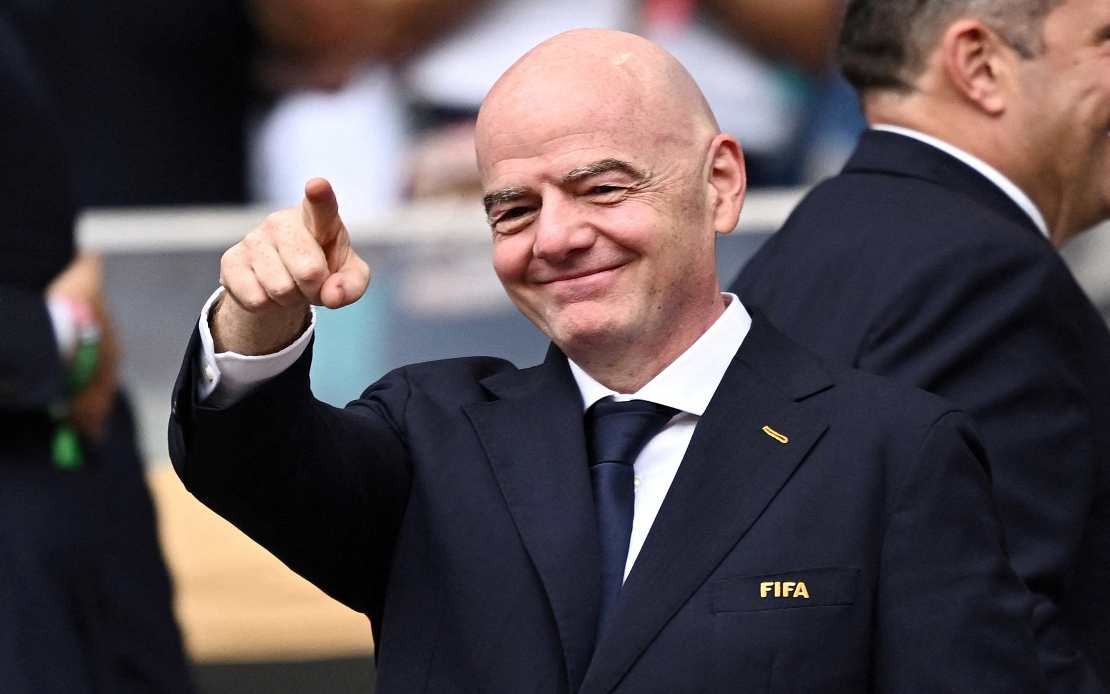
FIFA's administrative machinery has taken an unusual step by circulating standardised letters of support for President Gianni Infantino to national football associations worldwide, a practice that underscores the growing complexities surrounding his bid for another term. The pre-prepared correspondence, which arrived before the upcoming World Cup in the United States, Mexico and Canada, bore the names and signatures of individual association presidents despite being drafted centrally by FIFA's bureaucracy. This approach has drawn scrutiny from observers who question whether such coordinated messaging reflects genuine institutional backing or orchestrated consensus-building within world football's governing body.
The content of these letters centred on Infantino's record during his presidency, emphasising what FIFA characterised as meaningful contributions to expanding sports infrastructure across nations and accelerating the development of women's football programmes globally. These achievements form the cornerstone of his re-election platform, presenting him as a transformational leader who has modernised the sport beyond the traditional focus on men's professional competitions. However, the mechanism through which these endorsements were distributed—with pre-filled signatures and standardised text—has complicated the narrative, raising questions about whether individual associations genuinely authored these positions or simply participated in a choreographed display of unity orchestrated from FIFA headquarters in Zurich.
Not every football association received the pre-written letters, introducing another layer of complexity to what was ostensibly a universal campaign. This selective distribution pattern suggests either logistical constraints in reaching all 211 FIFA member associations simultaneously or a deliberate targeting strategy focusing on particular regions or associations deemed strategically important. The incomplete rollout undermines the appearance of overwhelming consensus while potentially indicating internal divisions within the global football hierarchy that FIFA's communications apparatus attempted to paper over through the letter campaign.
Simultaneously, FIFA has been advancing an ambitious financial restructuring plan that threatens to overshadow Infantino's re-election campaign. The organisation announced in July its intention to raise approximately US$4.2 billion through a partial asset sale, specifically by divesting roughly 20 per cent of a newly created entity that would control FIFA's media rights and commercial operations—including those connected to the World Cup franchise. This monetary injection represents a significant capital infusion that could fund expanded global development programmes, but it also concentrates enormous commercial power in private hands and fundamentally alters FIFA's financial independence.
Reports indicated that a investment fund managed by Joshua Kushner, brother of Jared Kushner who served as senior advisor to United States President Donald Trump, stood positioned to acquire the stake. This potential involvement drew considerable international attention, given the entanglement with high-profile American political figures and the implicit geopolitical dimensions of allowing a Trump-connected family member to gain influence over world football's commercial machinery. The prospect ignited immediate concerns among football associations about sovereignty, control, and whether FIFA was effectively privatising public assets belonging to the sport's global community.
European resistance to the financial scheme crystallised rapidly and decisively. UEFA, the continent's governing confederation representing 55 national associations, announced an unambiguous position: all its member associations would boycott FIFA tournaments until the proposed asset sale was completely abandoned. This represented an extraordinary rebuke from world football's most powerful regional confederation, effectively threatening to exclude European nations—including traditional powerhouses like Germany, France, Spain and Italy—from FIFA competitions. Such a boycott would cripple FIFA's commercial viability and tournament schedules, rendering the financial restructuring worthless even if completed.
The convergence of these developments created an unprecedented pressure situation for Infantino. Multiple international news organisations reported that he was encountering mounting resistance from football associations across disparate continents and regions, united by concerns about the commercial scheme's implications. Speculation emerged in media coverage that resignation might become inevitable if the political opposition continued accelerating. For a leader who had previously navigated complex institutional politics and international sports diplomacy, facing potential forced departure represented a dramatic reversal of fortune.
The parallel between these two initiatives—the coordinated letter campaign and the controversial asset sale—suggests a leadership attempting to simultaneously shore up internal political support while pursuing transformative but contentious financial reforms. Rather than strengthening Infantino's position, however, the pre-written endorsement letters may have inadvertently highlighted the gap between his administrative apparatus's confidence and genuine grassroots enthusiasm among football associations. Southeast Asian football bodies, as members of FIFA's broader institutional structure, would face pressure to position themselves on these contentious issues—balancing their relationships with continental confederations like AFC against their direct obligations to FIFA.
The situation reflects deeper tensions within international sports governance between modernisation efforts and democratic legitimacy, between commercial imperatives and institutional autonomy. Infantino's presidency has been characterised by aggressive expansion of football's commercial footprint and innovative tournament formats, yet these same ambitions have provoked resistance among traditionalists and those concerned about preserving football's cultural integrity. The pre-written letters episode, intended as a confidence-building exercise, instead exposed the fragility of consensus within FIFA's membership and the limits of administrative machinery in manufacturing genuine institutional solidarity.

