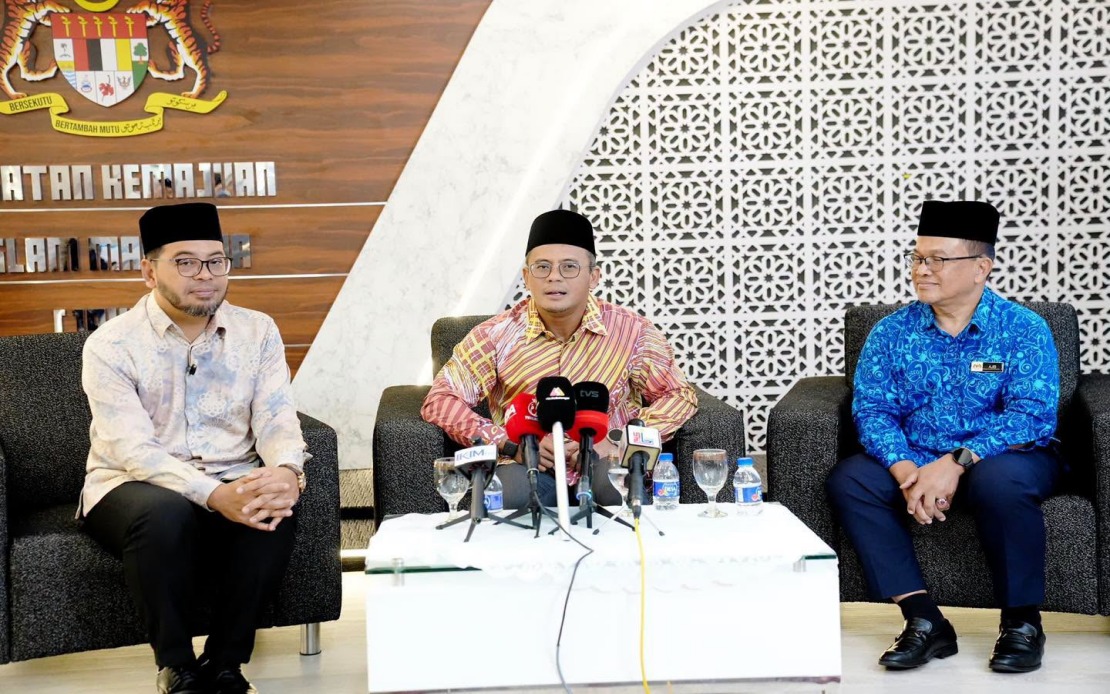
The Festival Turath Islami Selangor is undergoing a significant transformation this year, graduating from a regional initiative to become Festival Turath Islami Malaysia 2026 (FTIM 2026) and reflecting the growing importance of preserving Islamic intellectual traditions across the nation. Selangor Menteri Besar Datuk Seri Amirudin Shari announced the expansion at a media briefing in Putrajaya, positioning the festival's fourth edition as a watershed moment for how Malaysia engages with its Islamic heritage as a cornerstone for developing an informed and enlightened society.
The shift to the national stage carries both symbolic and practical weight. Rather than remaining anchored at the Selangor State Mosque where previous iterations were held, FTIM 2026 will unfold over eight days commencing September 13 primarily at the Putra Mosque in Putrajaya, a venue laden with federal significance and capable of accommodating larger audiences and more elaborate programming. This relocation signals official recognition that Islamic scholarly traditions merit a dedicated national platform comparable to other major cultural and intellectual events in Malaysia's calendar.
The Selangor State Government and the Federal Government, specifically through the Prime Minister's Department (Religious Affairs), are collaborating on the endeavour, with Minister in the Prime Minister's Department (Religious Affairs) Dr Zulkifli Hasan attending the briefing. Such partnership underscores how both tiers of government view the preservation and propagation of Islamic heritage as a shared responsibility and strategic priority within Malaysia's multicultural framework.
The 2026 festival operates under the banner "Hikmah Warisan Islam," concentrating this year's focus on Al-Hikam al-Ata'iyyah, a seminal work by the revered Islamic scholar and Sufi philosopher Ibn Ata-illah As-Sakandari. This classical text has profoundly shaped Islamic thought for centuries, offering timeless guidance on spiritual sincerity, reliance upon God, and the intricate dynamics of divine service. Its relevance endures particularly throughout the Malay World, where Sufi traditions have historically exercised considerable intellectual and spiritual influence, making it a fitting subject for contemporary engagement.
The festival's intellectual trajectory demonstrates an intentional curation of foundational Islamic scholarly works. Since its inception in 2023, previous editions have systematically examined Ihya' 'Ulumuddin by Imam Al-Ghazali, Al-Arba'in al-Nawawiyah by Imam al-Nawawi, and Tafsir al-Jalalain by Imam Jalaluddin al-Suyuti. By rotating through these canonical texts, the festival establishes itself as a genuine centre for Islamic intellectual revival rather than a purely ceremonial gathering, encouraging participants to engage substantively with classical scholarship.
The expanded 2026 programme will host 23 scholars spanning both domestic and international backgrounds, delivering more than 42 scholarly sessions across the eight-day period. The speaker roster includes Sheikh Dr Ali Jum'ah, a globally recognised Islamic authority, alongside leading figures within Malaysia's Islamic academic ecosystem such as Prof Dr Sayyid Idris al-Fasi al-Fihri, Ustaz Dr Adi Hidayat, Ustaz Wadi Annuar, and Selangor Mufti Datuk Setia Dr Haji Anhar Haji Opir. This breadth of expertise creates opportunities for cross-pollination of ideas and strengthens Malaysia's standing within international Islamic scholarly networks.
Beyond formal lectures, FTIM 2026 will encompass diverse programming designed to deepen engagement with Islamic heritage across multiple dimensions. Morning religious talks, recitations of Dalail al-Khairat, and five-day sessions on Al-Hikam readings will serve participants seeking spiritual and intellectual nourishment. Meanwhile, keynote addresses, Qasidah performances, and an Islamic book exhibition will broaden appeal and accessibility, ensuring the festival serves not merely specialists but educated laypeople keen to reconnect with their civilisational foundations.
Particularly noteworthy is the inaugural National Muzakarah Ulama Turath, a convening of Islamic scholars from across Malaysia to deliberate collectively on contemporary challenges facing Muslim communities. This component transforms the festival from a primarily educational forum into a deliberative body where accumulated scholarly wisdom directly addresses pressing practical questions. By institutionalising such gatherings, Malaysia positions itself as capable of hosting meaningful intellectual discourse rooted in Islamic tradition while remaining responsive to modern realities.
The expansion to national status carries implications for how Malaysia manages its religious soft power within Southeast Asia and the broader Islamic world. A well-curated festival emphasising intellectual rigour and inclusive scholarly dialogue demonstrates that Islamic engagement need not be insular, politicised, or defensive. Instead, it can be presented as a confident civilisational project celebrating knowledge, spirituality, and community. For Malaysian policymakers, this offers an attractive model for cultural diplomacy and internal social cohesion.
The timing and scale of FTIM 2026 also reflect Malaysia's desire to reinvigorate Islamic intellectual traditions amid rapid modernisation. As traditional centres of Islamic learning face disruption from technological change and competing educational paradigms, curated festivals that celebrate classical texts and bring together diverse scholars help preserve continuity with earlier generations' achievements. For younger Malaysians particularly, such initiatives offer accessible entry points into sophisticated Islamic thought without requiring extended formal theological training.
The success of FTIM 2026 will likely determine whether this becomes an established biennial or annual fixture within Malaysia's national calendar of events. Should it achieve its ambitions of fostering genuine scholarship while engaging broader publics, it could model a template for how other Asian Islamic communities might similarly honour and explore their intellectual heritage. Conversely, any shortcomings in execution or scholarly substance might be interpreted as missed opportunity to establish Malaysia as a regional nexus for Islamic learning.

