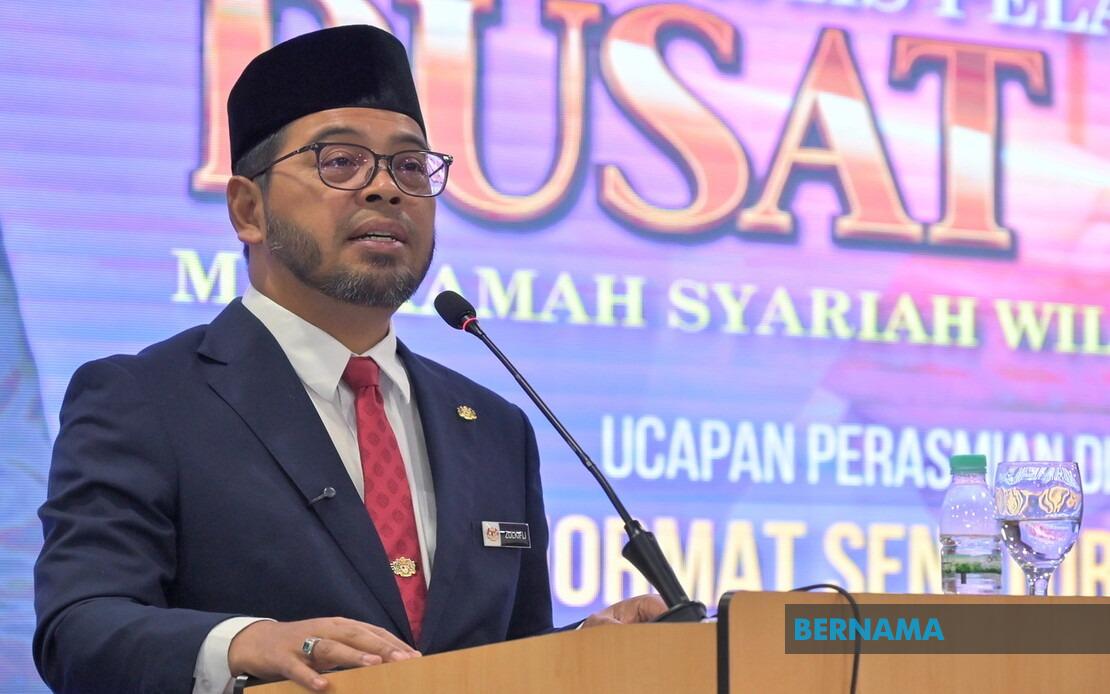
Malaysia's Federal Territories Syariah Court (MSWP) has formally opened its Sulh Centre and introduced a fast-track dispute resolution service designed to dramatically accelerate the resolution of selected civil cases. Religious Affairs Minister in the Prime Minister's Department Dr Zulkifli Hasan unveiled the initiative on July 27, highlighting its potential to settle certain matters in as little as one hour, with the majority of fast-tracked cases concluded within a single working day. The development represents a significant modernisation of Malaysia's Syariah court infrastructure, particularly relevant for the millions of Malaysians who depend on these institutions to resolve family law, financial, and personal matters according to Islamic principles.
The Sulh Centre operates as an expansion and rebranding of the Sulh Section, which first commenced operations in 2001. Where the original body focused narrowly on dispute reconciliation, the new centre encompasses five comprehensive service areas: sulh council functions, formal arbitration through hakam proceedings, islah-based reconciliation, advisory services combined with mediation, and analytics alongside strategic planning. This broader mandate allows the centre to address a significantly expanded spectrum of civil (mal) cases, reflecting the increasingly complex nature of disputes that traverse Syariah courts. The architectural restructuring signals recognition that traditional dispute resolution mechanisms require both institutional depth and operational flexibility to remain effective within modern Malaysian society.
Performance metrics underscore the sulh approach's efficacy in delivering amicable resolutions. Statistical data from 2022 and 2023 demonstrated that 88 per cent of cases directed to the sulh process achieved settlement through mutual consent, with this figure rising to 90 per cent during 2024. These success rates substantially exceed typical adversarial court outcomes, where contested proceedings often extend months or years and conclude with one party dissatisfied. For Malaysian disputants, particularly those navigating sensitive family or inheritance matters, the ability to reach agreed solutions preserves relationships and dignity while reducing the emotional and financial toll of prolonged litigation.
Dr Zulkifli outlined ongoing governmental review of mechanisms to strengthen the fast-track system further. These measures encompass reinforcement of the underlying legal framework governing expedited proceedings, enhancement of human resource capabilities within the Syariah judiciary, and expanded training curricula for sulh officers. The ministry's commitment to continuous improvement acknowledges that procedural speed alone cannot substitute for decision-maker expertise and cultural competence. Officers working within the Sulh Centre require sophisticated understanding of both Islamic jurisprudence and contemporary dispute dynamics, necessitating ongoing professional development.
The centre incorporates technological and public engagement infrastructure designed to broaden awareness of Syariah court services among Malaysian Muslim communities. Housed within the facility is a podcast studio dedicated to disseminating information about court processes, alternative dispute resolution options, and rights of parties engaging with the Syariah judiciary. This communications capability responds to evidence suggesting that many potential users lack clarity regarding available remedies or procedural options, leading them to forgo legitimate forums for resolution. Enhanced public education directly expands access to justice by demystifying institutional processes.
Syariah Judiciary Department director-general Datuk Mohd Amran Mat Zin and Federal Territories Chief Syariah Judge Mohd Asri Tahir participated in the launch, indicating institutional alignment behind the initiative. Their presence underscores recognition across the Syariah judiciary hierarchy that efficiency improvements benefit both court users and the broader administration of Islamic law in Malaysia. As caseloads increase across Syariah courts nationwide, operational innovations become essential to prevent backlogs that compromise access to timely justice.
The fast-track service holds particular significance for Malaysian families navigating marriage dissolution, custody determinations, and financial settlements governed by Islamic law. Conventional Syariah court proceedings for contested matters frequently extend 18 months or longer, during which spouses remain in legal limbo, children's living arrangements remain uncertain, and financial resources deplete through extended legal costs. Where parties possess willingness to negotiate, the capacity to achieve binding settlement within hours or days transforms the entire trajectory of their post-dispute lives. Children experience shorter periods of family instability, financial resources previously committed to litigation become available for family welfare, and former spouses can more expeditiously commence separate lives.
The appointment of 43 new arbitrators, drawn from both existing court officers and qualified external individuals, substantially expands the centre's capacity to handle simultaneous proceedings. Arbitration under hakam principles offers a structured yet flexible mechanism for dispute resolution, permitting parties to select arbitrators possessing specific expertise relevant to their particular dispute. This capacity enhancement signals the Syariah judiciary's confidence in the sulh model's effectiveness and its commitment to scaling these services across the Federal Territories jurisdiction.
For Malaysian business communities and commercial stakeholders, the expanded arbitration and sulh services carry economic implications. Where commercial disputes involve Muslim parties and Islamic finance contracts, access to rapid, expert-led resolution mechanisms reduces transaction costs and uncertainty, potentially encouraging greater participation in Islamic finance markets. Malaysian corporations increasingly structure operations across multiple religious and legal jurisdictions; efficient Syariah dispute resolution strengthens Malaysia's competitive positioning as a centre for Islamic finance and commerce within Southeast Asia.
The Sulh Centre's emphasis on analytics and strategic planning introduces data-driven approaches to understanding dispute patterns across the Federal Territories jurisdiction. By systematically analyzing case types, settlement rates, duration metrics, and demographic characteristics of disputants, the centre can identify emerging categories of disputes, assess effectiveness of particular reconciliation approaches, and allocate resources toward highest-impact interventions. This evidence-based orientation distinguishes the modernised centre from earlier institutional models, positioning it within contemporary international best practices regarding court administration and justice system management.
Regional comparisons suggest Malaysia's Syariah court innovations merit attention from neighbouring jurisdictions grappling with similar challenges. Singapore's administration of Muslim personal law and Brunei's comprehensive Syariah legal framework both face pressures to improve efficiency. The Federal Territories Syariah Court's documented success rates and operational models provide potential templates for benchmarking and adaptation elsewhere in Southeast Asia, possibly elevating Malaysia's standing as a jurisdiction committed to modern, effective Islamic jurisprudence administration.
The initiative reflects broader governmental recognition that institutional legitimacy depends not merely on doctrinal soundness but on demonstrable capacity to serve constituent communities efficiently and accessibly. For Muslim Malaysians, whose rights under the Federal Constitution include recourse to courts applying Islamic law, performance improvements in the Syariah judiciary system constitute essential dimensions of constitutionally-guaranteed justice access. The Sulh Centre's launch thus extends beyond administrative reform to implicate fundamental questions of citizenship, equality before law, and state capacity to deliver justice equitably across Malaysia's diverse legal pluralism framework.

