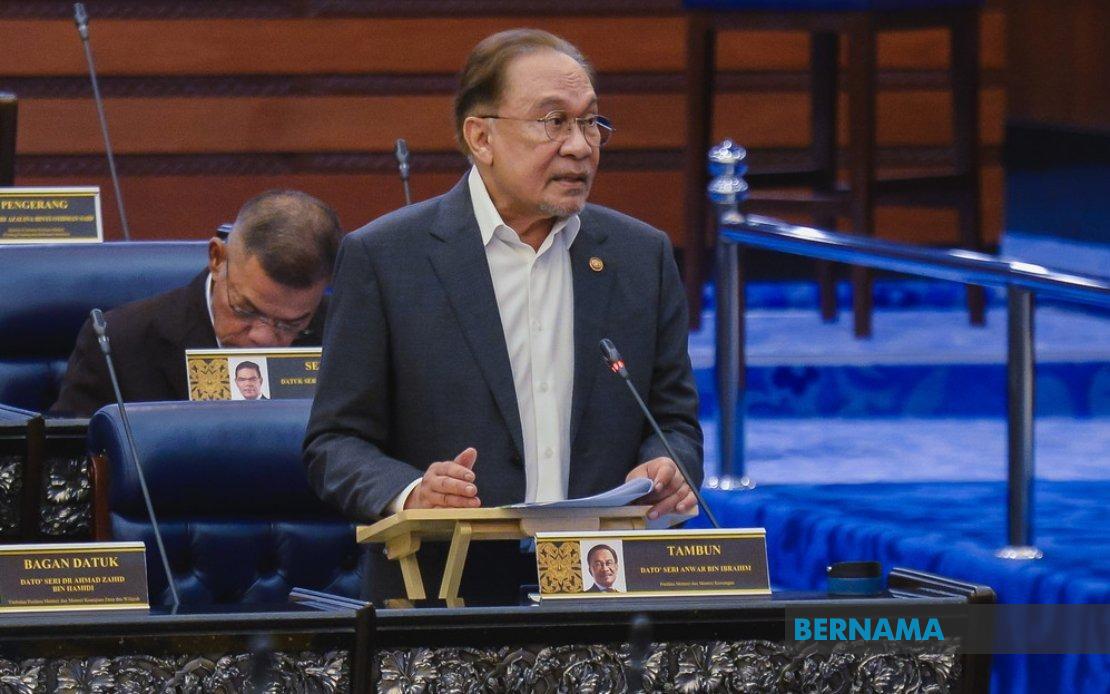
Prime Minister Datuk Seri Anwar Ibrahim has established a firm policy requiring renegotiation of any additional funding requests from state governments for development projects that trigger a Notice of Change (NOC), signalling a tighter approach to managing federal finances during infrastructure expansion. The announcement, made during parliamentary proceedings on June 30, underscores the federal administration's determination to scrutinise cost escalations rather than rubber-stamp state demands for extra allocations or loans.
The clarification emerged during questioning about Kedah's bid for supplementary funds to support the Pulau Bunting Water Treatment Plant project, which necessitates issuing an NOC. Anwar emphasised that the issuance of any Notice of Change carries substantial financial ramifications that cannot be absorbed casually by the federal purse without proper examination of underlying causes and circumstances.
The Prime Minister outlined two principal considerations that must guide any renegotiation process. Initially, authorities must establish whether contractors bear responsibility for cost increases or whether unforeseen circumstances beyond their control triggered the escalation. This investigative step proves crucial for determining accountability and establishing precedent, particularly as Malaysia continues investing heavily in water infrastructure and other development initiatives across multiple states.
Second, Anwar stressed that federal authorities cannot be bound by prior commitments or arrangements negotiated exclusively between state governments and project contractors. The federal government maintains ultimate authority over disbursement of additional funds, and this power cannot be delegated or circumscribed by state-level decisions. This position reflects broader concerns about fiscal discipline and preventing ad-hoc spending that could undermine national budget targets.
The approach carries significant implications for state administrations across Malaysia, particularly those managing substantial infrastructure programmes. States accustomed to receiving supplementary allocations relatively quickly may now face extended timelines as each request undergoes comprehensive reassessment. This shift could impact project timelines and require greater upfront planning and contingency budgeting at the state level.
For water sector projects specifically, the policy proves particularly relevant given Malaysia's ongoing efforts to upgrade treatment facilities and distribution networks across states. Projects like the Pulau Bunting facility represent essential investments in ensuring adequate water supply, yet Anwar's directive indicates such importance alone will not justify automatic federal top-ups. States must demonstrate that cost increases stem from legitimate factors rather than poor initial estimates or contractor underperformance.
The Prime Minister delegated detailed elaboration of the framework to Deputy Prime Minister and Energy Transition and Water Transformation Minister Datuk Seri Fadillah Yusof, who holds direct oversight of water-related policy matters. This assignment suggests the government may develop specific guidelines or assessment criteria for evaluating state requests, potentially creating standardised procedures that replace more ad-hoc historical practices.
The stance reflects broader fiscal consolidation efforts undertaken by the current administration. As Malaysia navigates ongoing economic challenges and infrastructure demands, the federal government appears determined to ensure that cost control remains a shared responsibility among all stakeholders rather than falling disproportionately upon federal coffers. States bear significant responsibility for managing contractor relationships and project specifications, making it appropriate that they absorb certain cost risks.
For Kedah specifically, the water treatment facility expansion addresses critical infrastructure needs in a state that has occasionally faced water supply constraints. However, securing additional federal funds now requires demonstrating that cost increases resulted from unavoidable circumstances rather than planning shortcomings or contractor inefficiency. This distinction will prove important as Kedah officials prepare documentation supporting their funding request.
The policy also sends signals to federal agencies and state governments about the importance of rigorous project planning and cost estimation during initial phases. Future projects should incorporate more realistic contingency allowances and stronger contractual safeguards that clearly allocate risk between the government entity and contractors. States adopting such discipline may face fewer funding obstacles when legitimate cost increases do materialise.
Beyond the immediate water sector context, Anwar's directive establishes principle applicable across all infrastructure categories involving NOCs. From road construction to healthcare facility development, states will encounter similar requirements for renegotiation and fresh assessment. This comprehensive approach aims to promote consistency and prevent selective application that might favour certain states or sectors.
The federal-state fiscal relationship has historically proved complex in Malaysia's federal structure, with persistent tensions over resource allocation and financial authority. Anwar's clarification seeks to inject greater transparency and standardisation into processes that previously may have involved more negotiation or special treatment. While this may prove frustrating for states seeking rapid funding approvals, it establishes clearer rules that potentially reduce uncertainty over the medium term.
Looking forward, state governments may need to enhance their project management capabilities and financial planning to succeed under this more demanding framework. Engaging experienced quantity surveyors, conducting thorough risk assessments, and negotiating stronger fixed-price contracts could all help states minimise NOCs and the associated renegotiation burdens. The policy thus creates incentives for improving governance standards across Malaysia's subnational administrations.

