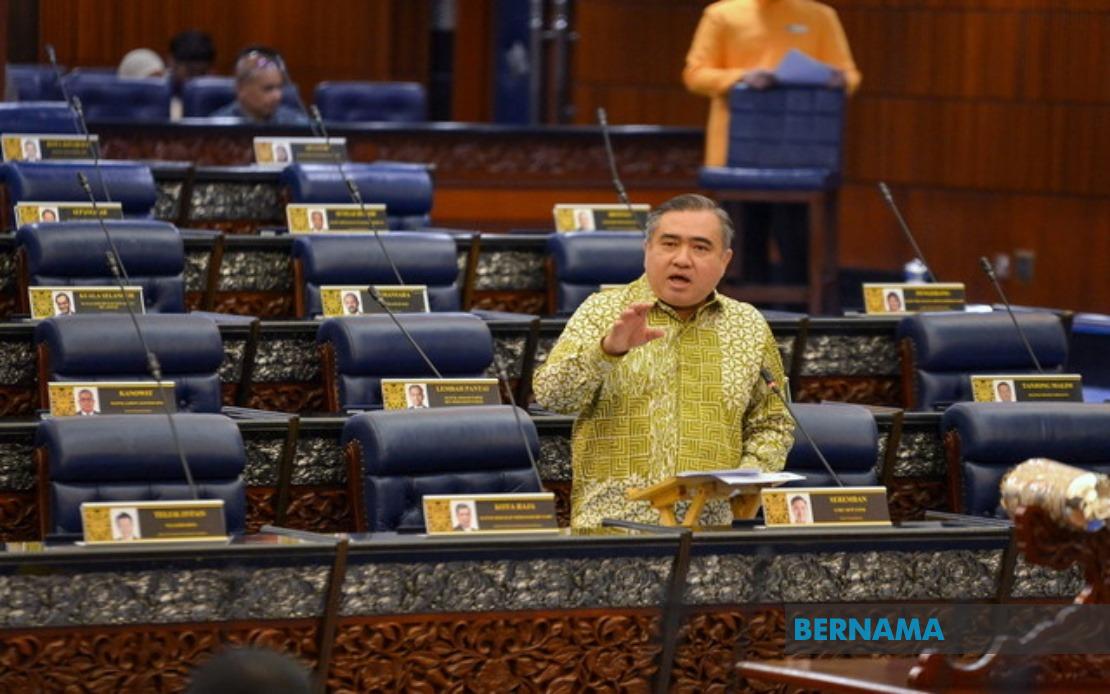
Transport Minister Anthony Loke confirmed on July 2 that the Federal Government will shoulder the financial burden of Johor's Elevated Autonomous Rapid Transit (E-ART) project, marking a significant shift in the financing approach for this ambitious regional transport initiative. While the appointed consortium will initially bear the project costs, a comprehensive assessment has revealed that this massive infrastructure undertaking cannot sustain itself purely through private investment, prompting federal intervention to ensure the project's viability.
The minister disclosed that negotiations remain ongoing regarding the precise financing structure, the extent of federal financial commitment, and the repayment terms that will apply across the concession period. These negotiations will culminate in a comprehensive package that requires Cabinet approval before any formal Concession Agreement can be executed. The E-ART project is anticipated to reach completion within four years following the issuance of the Letter of Acceptance, positioning it as a critical element in Johor's long-term transport infrastructure strategy.
Loke's announcement came during parliamentary questioning from Datuk Seri Dr Wee Ka Siong, who sought clarity on whether federal involvement would manifest as direct government funding or through a mixed private-public concession model. Dr Wee also pressed for traffic impact assessments, particularly concerning potential congestion when the Johor Bahru-Singapore Rapid Transit System Link commences operations in January 2027—notably before the E-ART project completion. This timing concern reflects growing anxiety among policymakers about managing the interim period when new cross-border connectivity arrives without the supporting autonomous rapid transit infrastructure.
The decision to inject federal funding underscores a broader recognition that purely market-driven financing for sophisticated rapid transit systems can prove inadequate, particularly in developing economies where user fares must remain affordable to ensure public accessibility. The transport ministry has acknowledged that maintaining fare caps—essential for social equity—necessitates government support to bridge revenue shortfalls. This approach aligns with regional transit policy trends in Southeast Asia, where governments increasingly recognise that modern urban mobility infrastructure requires hybrid financing models combining private operational efficiency with public financial guarantees.
Parallel to the E-ART commitment, Loke outlined a comprehensive complementary transport strategy designed to decongest Johor Bahru's roads through expanded public transit networks. The BAS.MY service network will expand substantially to encompass 28 routes operated by 254 buses, including a growing electric bus fleet. Additionally, the Stage Bus Service Transformation 2.0 programme will dedicate 157 buses specifically to JB Sentral and Bukit Chagar routes, anticipated to commence operations in early 2027. These peripheral improvements aim to distribute passenger demand across multiple transit modes before the E-ART system becomes operational.
The ministry is simultaneously pursuing procurement of 12 KTM Komuter Southern train sets to strengthen southern corridor rail capacity. Pending formal approval, the Transport Ministry has already launched the Shuttle Selatan service connecting Kulai-Kempas-Johor Bahru and Kempas-Pasir Gudang routes as an interim solution, offering 14 daily trips. This measured, phased approach acknowledges that comprehensive transport transformation requires multiple concurrent initiatives rather than reliance on a single flagship project.
For Malaysian readers, the E-ART project carries particular significance as evidence of federal commitment to modernising transport infrastructure beyond the Klang Valley. Johor's economic importance as a manufacturing and logistics hub, coupled with its role as Malaysia's primary southern gateway for cross-border commerce, justifies substantial infrastructure investment. The federal funding decision signals that the government recognises how lagging transport capacity in secondary economic regions constrains national productivity and competitiveness.
The timing nexus between the RTS Link opening and E-ART completion also illustrates interconnected transport planning challenges that Southeast Asian nations increasingly confront. Cross-border infrastructure creates temporal mismatches when complementary domestic systems lag, potentially undermining economic benefits and stranding investment value. By committing to E-ART financing now, the government attempts to synchronise these major projects more effectively, though the January 2027 RTS inauguration leaves minimal margin for addressing implementation delays.
The minister's emphasis on fare control as a government responsibility reflects political commitment to maintaining public transport accessibility during a period of rising operational costs across the region. By absorbing financing risks that private consortiums cannot bear, the government essentially positions itself as guarantor of affordable mobility—a policy stance with implications for how Malaysia positions itself against regional competitors in attracting working-age populations to secondary cities. If Johor can offer reliable, affordable rapid transit alongside better wages than competing jurisdictions, migration patterns and labour market dynamics could shift significantly.
The E-ART project's phased implementation also mirrors broader lessons from ambitious transit projects across Asia. Staging completion timelines, establishing interim services, and layering multiple transport modes creates resilience against individual project delays while providing earlier benefits to commuters. This approach contrasts with earlier infrastructure megaprojects that offered no interim value while consuming resources for extended periods.
Moving forward, the cabinet's formal consideration of the financing terms will represent the next critical juncture. Parliamentary scrutiny of the specific financial arrangements, repayment mechanisms, and government liability exposure appears likely, particularly given opposition interest in monitoring large public commitments. The transport minister's candour regarding private sector financing inadequacy may also influence how future infrastructure proposals are framed and debated within government circles.

